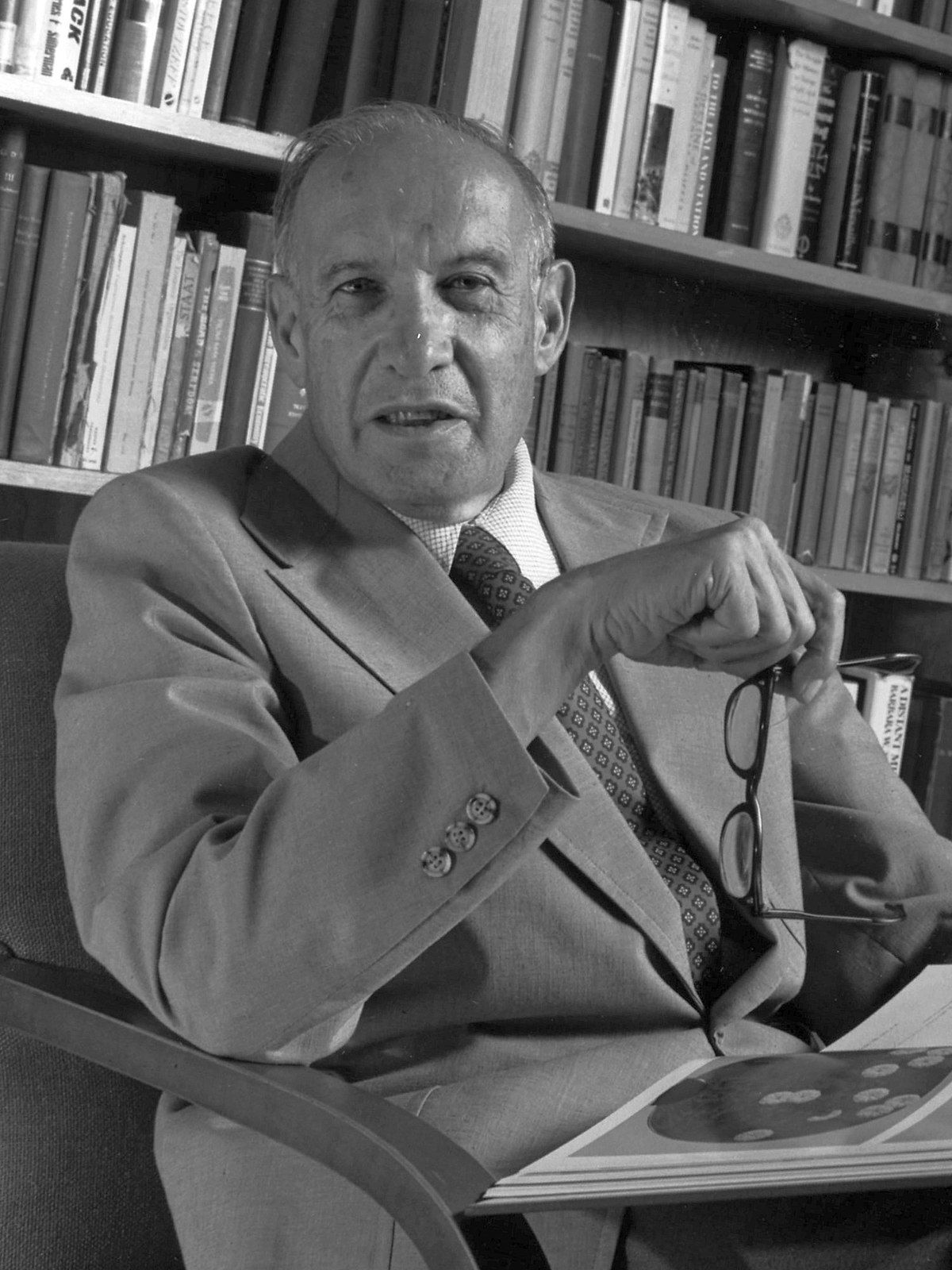
Peter Drucker
Peter Drucker (1909–2005) was an influential Austrian-American management consultant, educator, and author, widely regarded as the "father of modern management." Over his career, Drucker revolutionized the field of management and business leadership, providing key insights that shaped the way organizations operate today.
Born in Vienna, Austria, Drucker studied law at the University of Frankfurt before moving to the United States in 1937. He became an American citizen in 1943. He began his career in academia, first as a professor at Bennington College and later as a faculty member at the Claremont Graduate University, where he spent much of his professional life.
Drucker's work was groundbreaking in its focus on the human side of management and organizational behavior. He was one of the first to recognize that employees are an organization’s most valuable asset and that effective leadership is about empowering people and fostering creativity. He introduced concepts such as "management by objectives" and "decentralization," which have become core principles in business today. Drucker’s teachings also extended beyond the business world, influencing non-profits, government, and education.
Drucker was a prolific writer, publishing more than 30 books and countless articles on business management, economics, and society. Some of his most influential works include The Effective Executive (1966), Management: Tasks, Responsibilities, Practices (1973), and Innovation and Entrepreneurship (1985). His books continue to be read by business leaders, academics, and entrepreneurs alike.
Peter Drucker was also a visionary thinker about the social responsibilities of business, advocating for a balance between profit and ethical considerations. His legacy extends beyond management theory, influencing leadership, organizational development, and even public policy.
Drucker passed away in 2005, but his ideas continue to shape modern business practices, cementing his place as one of the most influential thinkers of the 20th century.