Luke 2:29-32, Luke 1:78-79, John 8:12, Matthew 4:16, Acts 13:47, Psalm 98:2-3, John 1:9, Revelation 21:23, Isaiah 42:6-7, Isaiah 9:2, Luke 2:10-11
Lord, you now have set your servant free to go in peace as you have promised; For these eyes of mine have seen the Savior, whom you have prepared for all the world to see: A Light to enlighten the nat...
In A Life Worth Living , C.A. Roberts tells of meeting W.C. Coleman, founder of the Coleman Lantern Company. At eighty-four, Coleman recalled how he went from pauper to millionaire overnight. ...
Luke 2:29-32, Luke 1:78-79, Isaiah 9:2, John 8:12, Matthew 4:16, Acts 13:47, Psalm 98:2-3, Luke 2:10-11, John 1:9, Revelation 21:23
Lord, now lettest thou thy servant depart in peace, according to thy word; For mine eyes have seen thy salvation, which thou hast prepared before the face of all people, To be a light to lig...
John 14:16-17, Matthew 26:36-46, Psalm 32:8, 2 Corinthians 12:7-10, Acts 9:1-19, 1 Corinthians 2:2, 1 Timothy 1:17
Lord, may your glorious Majesty surround us, the blessed Trinity protect us, and the eternal Godhead preserves us. Your unlimited mercy support us; your loving kindness encompass us; your favor c...
Genesis 18:10-14 , Isaiah 7:14 , Exodus 4:1-5, Psalm 139:13-16 , Luke 1:26-38, John 20:24-29, Matthew 1:22-25
To a twentieth-century mind the notion of a virgin birth is intrinsically and preposterously inconceivable. If a woman claims–such claims are made from time to time–to have become pregnant without sex...
Matthew 5:14-16 , 1 John 4:18-19 , Acts 4:29-31 , Romans 12:9-11 , 2 Corinthians 3:12, Esther 4:14, James 2:14-17
Gracious God, you have called us to be light in a dark world, and we have remained hidden. Thinking of ourselves first, we have withheld courage and compassion. Merciful God, hear our confessions and ...
1 Peter 3:8-9, Galatians 3:28, Proverbs 31:8-9, Matthew 5:9, Romans 12:18
Just as Socrates felt that it was necessary to create a tension in the mind so that individuals could rise from the bondage of myths and half-truths to the unfettered realm of creative analysis and ob...
Psalm 19:null, Psalm 1:null, Psalm 119:null, Exodus 20:2-3, Galatians 3:24-26, John 14:6, Matthew 22:37-40
Ancient Lens What can we learn from the historical context? The Books of the Psalms and David The Book of Psalms is divided into five books, like the five books of the Torah. While it is not obvi...
Matthew 5:13-16, Ephesians 5:8-9, Colossians 4:6, John 8:12-20, Luke 14:34-35
Salt and light are indispensable household commodities. Several commentators quote Pliny’s dictum that nothing is more useful than ‘salt and sunshine’ (sale et sole). The need for light is obvious. Sa...
Psalm 19:, Psalm 1:null, Psalm 119:null, Exodus 20:2-3, Galatians 3:24-26, John 14:6, Matthew 22:37-40
Lent 2021: A 40-day Heart Restoration Nature, Law, & Holiness Bonus Content: Video prep session with Austin Hill on Psalm 19 . Password: %h+CNTJ7 AIM Commentary Ancient Lens What can we ...
In 1889, the French novelist Paul Bourget penned The Disciple , where he depicted the life of a renowned philosopher and psychologist, whose existence was marked by a seemingly monotonous routine...
1 Samuel 16:7, Proverbs 11:3, Matthew 5:8 , Philippians 4:8, Psalm 15:1-2
Bernard de Fontenelle (1657–1757), was a French author and philosopher, and was once engaged in conversation with the “Sun King”, Louis XIV. Louis began expressing his skepticism about the existence...
The challenge each of these faced in their deconstruction—and what we may face—is walking the tightrope between becoming our own person and honoring our past. In The Homeless Mind , sociologist P...
In the land whose founding metaphor was the mutuality of John Winthrop’s seventeenth-century vision of a “city set on a hill,” we live more and more in estranged, hostile, exclusive enclaves, linked o...
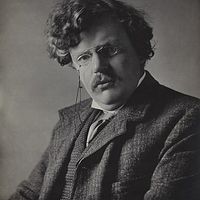
G. K. Chesterton was well-known (and iconoclastic) in his defense of tradition in a time when progress was all the rage in Western Europe- in technology, in the sciences, in philosophy. Chesterton, on...
Matthew 5:18, John 1:1-14, Colossians 2:9, 1 Corinthians 15:20-22, Philippians 2:9-11, 2 Timothy 3:16-17, Hebrews 4:12, 2 Peter 1:20-21
The great American statesman and president Thomas Jefferson was a man of science who did not believe in miracles but really liked Jesus. Unfortunately, right next to Jesus’ ethical teachings are stori...
Noteworthy in this regard is the contribution of the Reformers, particularly Martin Luther, though John Calvin’s contribution is also very significant. Both called for a spirituality in the world that...
Have you ever heard of the Greatest Books of the Western World collection? Published by Encyclopedia Britannica in 1954, this comprehensive series was edited by Robert Hutchins and Mortimer J. A...
Every five hundred years, give or take a decade or two, Western culture, along with those parts of the world that have been colonized or colonialized by it, goes through a time of enormous upheaval, a...
Exodus 1:15–21, Daniel 3:16–18 , 1 Kings 3:16–28 , Matthew 4:1–11, Galatians 1:6–10, Psalm 73:
Pragmatism may be defined simply as the approach to reality that defines truth as “that which works.” The pragmatist is concerned about results, and the results determine the truth. The problem with t...
Philippians 2:3-4, Matthew 23:11-12, Galatians 5:13, 1 Corinthians 10:24
Writer Philip Yancey notes that toward the end of his life, Albert Einstein removed the portraits of two scientists–Newton and Maxwell–from his wall. He replaced those with portraits of Gandhi and Sch...
Isaiah 53:3–5, Daniel 3:16–18, Micah 6:6–8, Matthew 23:23–24, Luke 4:16–30, Psalm 2:1
Jesus, as always, gets caught in the middle—along with a good number of his followers. Many people in America today were brought up in strict Christian homes and churches of one sort or another. There...
In one of his letters, the philosopher and psychologist William James shares a conviction regarding his focus not on big, grand things, but with the small “almost invisible” decisions: I am done wit...
Matthew 5:48, 1 John 3:2-3, Galatians 5:16-17, Philippians 3:13-14, Colossians 3:1-2, Ephesians 4:22-24
The scholastics used to say: Homo non proprie humanus sed superhumanus est —which means that to be properly human, you must go beyond the merely human.
Matthew 23:11, Mark 9:35, Luke 17:33, 2 Corinthians 6:10, James 1:2
Paradox...comes from two ancient Greek words, para meaning “beyond” and doxa meaning “opinion.” Literally, it means “beyond opinion,” but it originally conveyed the sense of “being beyond the pale of ...
Matthew 5:17-18, Ecclesiastes 12:13-14, Romans 6:23, Proverbs 14:12, James 4:17, 1 John 1:8-9
Postmodernism (the thinking of our age) is fiercely antinomian (without law). It is admitted that people make mistakes, but the word ‘sin’ is seldom mentioned and the idea that we all sin against God ...
Philippians 3:13-14, Matthew 11:12, Galatians 1:10, Daniel 3:18, 1 Corinthians 1:27, Acts 17:6
The reasonable man adapts himself to the world; the unreasonable one persists to adapt the world to himself. Therefore all progress depends on the unreasonable man.










![[The decay of Logic results from an]](https://images.unsplash.com/photo-1709399610754-921b7a9ef3b7?ixid=M3w1NzU0OTZ8MHwxfHNlYXJjaHw0NXx8bG9naWN8ZW58MHwwfHx8MTcxMjA3NTI4Mnww&ixlib=rb-4.0.3&q=80&auto=compress&fit=crop&w=200&h=200)