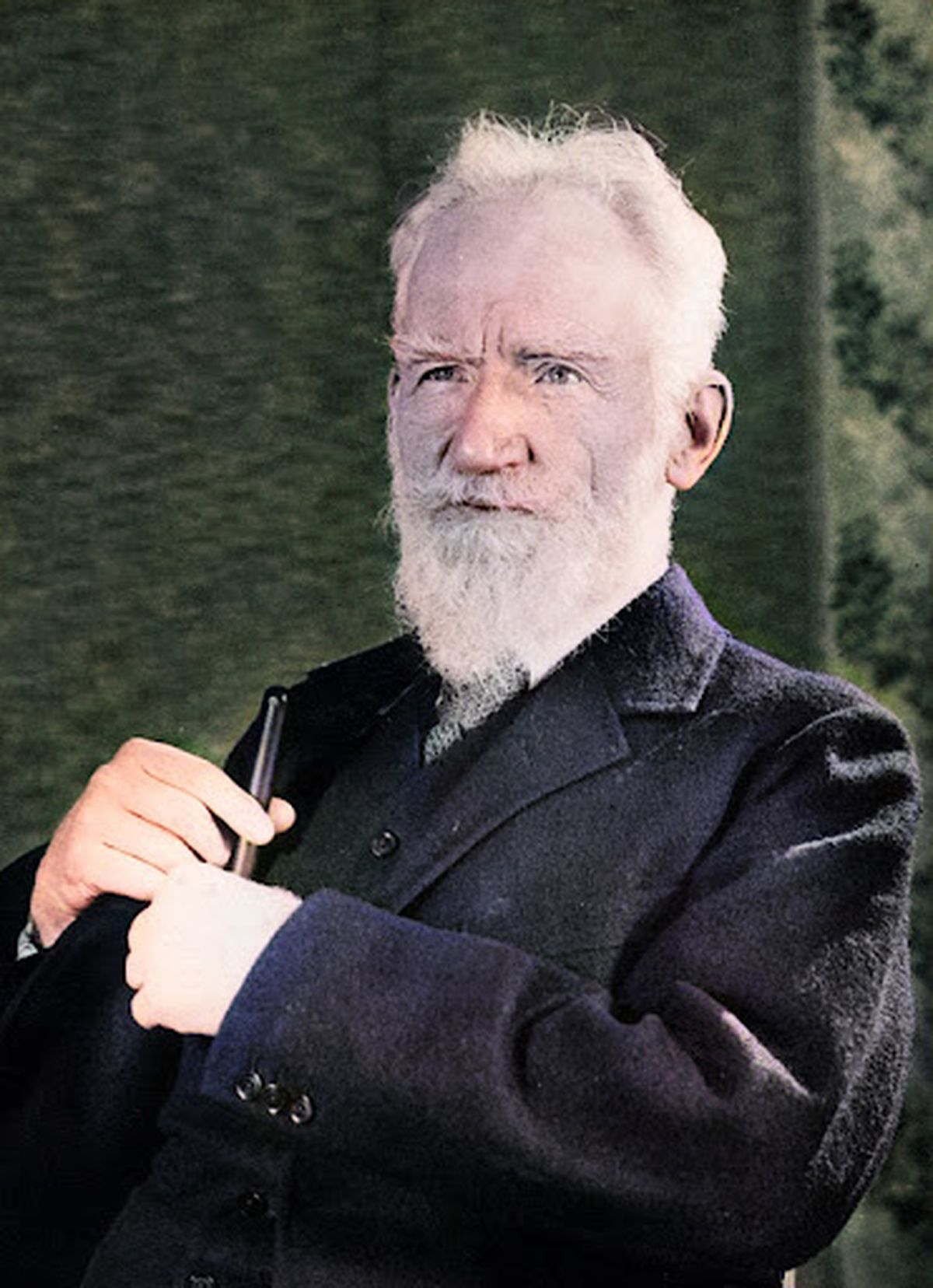
George Bernard Shaw
George Bernard Shaw (1856–1950) was an Irish playwright, critic, and polemicist, renowned for his sharp wit, social commentary, and influence on both literature and drama. One of the most prominent playwrights of his time, Shaw is best known for works such as Pygmalion, Man and Superman, Arms and the Man, and Major Barbara. His plays often explored social issues, class distinctions, and human nature, challenging the norms of his day and offering incisive critiques of society, politics, and morality.
Born in Dublin, Ireland, Shaw moved to London in the late 19th century, where he quickly became involved in the city's intellectual and artistic circles. He initially pursued a career in journalism and music criticism but soon turned to playwriting, where he would make his mark as a master of the dramatic arts. His early plays were marked by satire and a deep engagement with social and political issues, including critiques of war, colonialism, and the class system.
Shaw's most famous work, Pygmalion, which was later adapted into the beloved musical My Fair Lady, centers on the transformation of a poor flower girl into a lady of society, exploring themes of language, identity, and class mobility. His other plays, such as Man and Superman and Saint Joan, further solidified his reputation for tackling controversial subjects with humor, sharp dialogue, and intellectual rigor.
In addition to his work as a playwright, Shaw was a committed social reformer and an outspoken critic of organized religion, politics, and the social structures of his time. He was awarded the Nobel Prize in Literature in 1925 for his work, and his ideas continue to shape the worlds of theater, literature, and social thought. Shaw’s legacy endures as a towering figure in English literature, recognized for his wit, originality, and thought-provoking dramas.