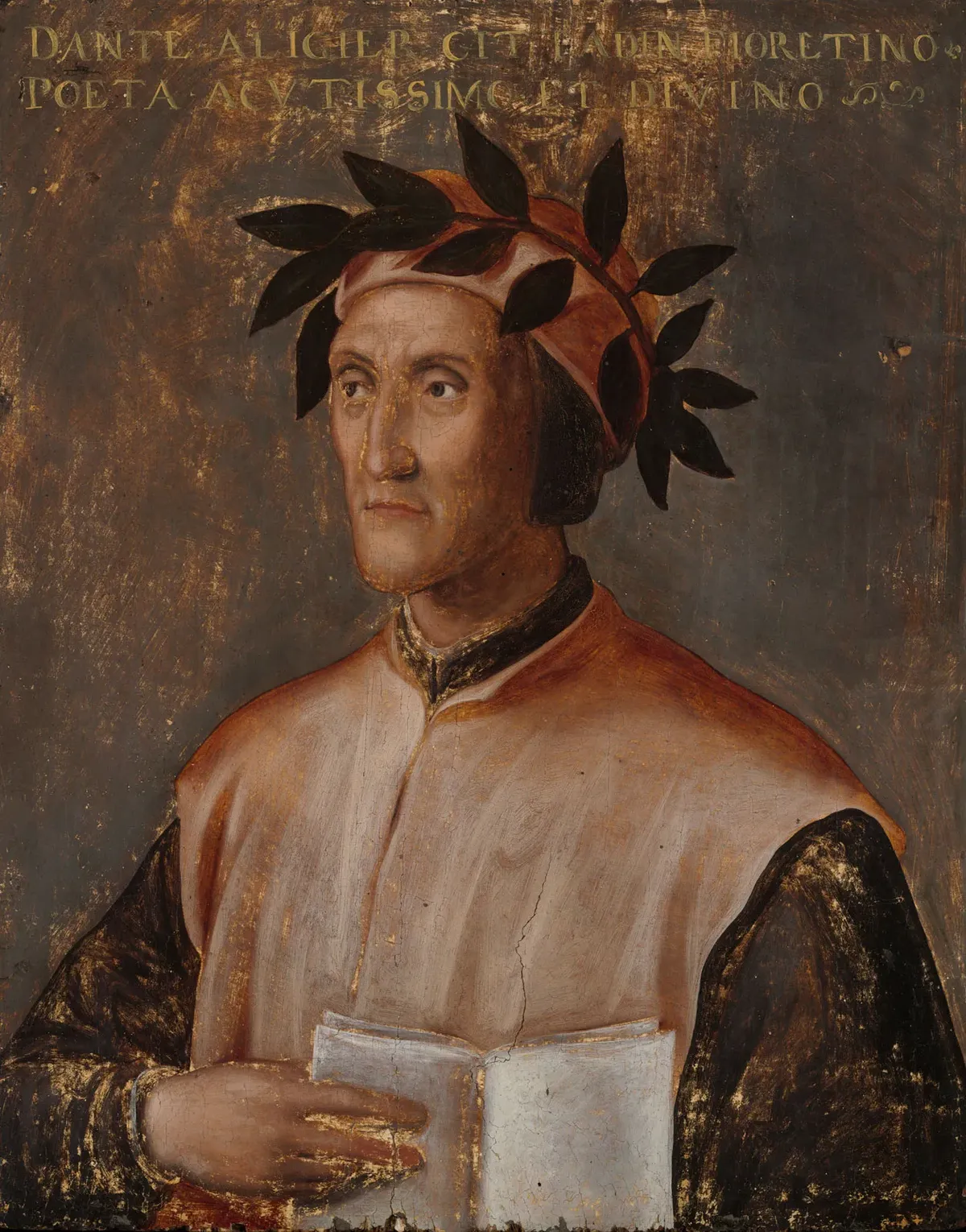
Dante Alighieri
Dante Alighieri (1265–1321) was an Italian poet, philosopher, and political figure, best known for his epic poem The Divine Comedy, one of the most important works in world literature. Born in Florence, Dante's life was marked by personal and political struggles, including his involvement in the political factions of his time, which eventually led to his exile from Florence in 1302. Despite the challenges he faced, Dante's literary work has had a lasting impact on both Italian literature and the broader Western literary tradition.
The Divine Comedy is Dante’s magnum opus and consists of three parts: Inferno (Hell), Purgatorio (Purgatory), and Paradiso (Paradise). This allegorical journey through the afterlife is not only a profound exploration of medieval Christian theology but also a deeply personal work reflecting Dante’s own spiritual journey. Through the character of Dante the Pilgrim, the poem examines themes of sin, redemption, divine justice, and the nature of the soul's relationship with God. The Commedia (as it is sometimes called) is notable for its innovative use of the Tuscan dialect, which helped establish it as the standard for the Italian language.
Dante’s influence extended beyond The Divine Comedy. He wrote other important works, including La Vita Nuova (The New Life), a collection of poems and prose about his love for Beatrice, a woman who became an important symbol in his writing. Dante's ideas on politics, philosophy, and love shaped the intellectual landscape of the Renaissance and continue to influence literature, theology, and philosophy to this day.
Dante's legacy endures as a towering figure in world literature, and his exploration of the human experience remains a touchstone for readers and scholars seeking to understand the complexity of the human soul, morality, and the search for divine truth.