Luke 15:11-32, Matthew 18:22-35, Luke 16:19-31, Matthew 13:3-8, Matthew 20:1-16, Matthew 13:24-33, Matthew 13:44-50, Mark 4:26-29
The thrust of the parables is to subvert the distorted myths in which people live their lives. To understand what we mean by “living in a myth” just think of a couple of our own contemporary myths. Ta...
Mark 4:35-41, Job 38:1-11, Psalm 107:, Jonah 1:, Genesis 1:, Matthew 8:23-27, Luke 8:22-25, Psalm 74:14, Psalm 104:26, Genesis 1:21
A Sopping Wet Week in the Lectionary Today’s readings are thoroughly wet. In Job, God is master of the sea, Psalm 107 concerns mariners in the storm, Paul is a little drier, but still gets shipwrecke...
Stories are inherently interesting. Discourse we tolerate; to story we attend. Story entertains, informs, involves, motivates, authenticates, and mirrors existence. By creating a narrative world, stor...
Matthew 28:19-20, 1 Corinthians 2:4-5, Ephesians 6:19-20, 2 Corinthians 4:2-4, Romans 1:16, Mark 16:15
With his fabulous tale to proclaim, the preacher is called in his turn to stand up in his pulpit as fabulist extraordinary, to tell the truth of the Gospel in its in its highest and wildest and holies...
Matthew 23:11, Mark 9:35, Luke 17:33, 2 Corinthians 6:10, James 1:2
Paradox...comes from two ancient Greek words, para meaning “beyond” and doxa meaning “opinion.” Literally, it means “beyond opinion,” but it originally conveyed the sense of “being beyond the pale of ...
Mark 12:37, Matthew 19:24, Matthew 7:5, Mark 3:25, Mark 7:27, Mark 8:15, Luke 15:11–32, Luke 10:25–37, Luke 18:9–14-, 25:31–46
One of my daughters has been singing a song about Jesus that contains the line “Jesus was a story-tellin’ man.” When I first heard that line it seemed a bit flip, as so many contemporary Christian son...
Matthew 5:14-16, Acts 1:8 , Mark 5:18-20, 1 Peter 3:15, John 4:28-30; 39-42, Romans 1:16 , 2 Timothy 1:7-8
Merciful God, you have moved and changed our lives in amazing ways, yet we have kept these stories to ourselves. We confess the times we have kept these stories to ourselves out of fear of rejection a...
1 John 3:18, John 13:1-17, Luke 10:25-37, Matthew 4:18-22, James 1:22, Romans 12:1, Mark 10:15
It is possible also to come at Christianity from a rather different point of view as well, seeing it as something not too difficult but too simple for us, too basic, something to be apprehended theref...
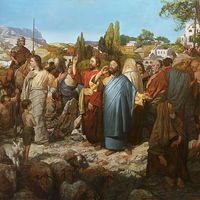
The key to interpreting most allegories [i.e., parables] lies in recognizing what a small handful of characters, actions or symbols correspond to and then fitting the rest of the story in with them.
Context This text comes near the midpoint of the Gospel of Mark, and its central narrative position is more than matched by its pivotal thematic content. Jesus has turned from his focus on ministry i...
Context This text comes near the midpoint of the Gospel of Mark, and its central narrative position is more than matched by its pivotal thematic content. Jesus has turned from his focus on ministry i...
Mark 5:36, Psalm 34:4, Isaiah 41:10, Matthew 9:22, Philippians 4:6-7, Job 3:25
Medical literature is replete with case reports of patients dying, not from actual illness, but from believing they were sick, from the fear they were going to die.
Luke 15:11-32, Matthew 18:22-35, Luke 16:19-31, Matthew 13:3-8, Matthew 20:1-16, Matthew 13:24-33, Matthew 13:44-50, Mark 4:26-29
The child became a man and the man became a preacher whose sermons were full of commonplace things: seeds and nets, coins and fishes, lilies of the field, and birds of the air. Wherever he was, he had...
Mark 7:1-23, Mark 7:1-12, Isaiah 29:13, Exodus 12:6-20, Deuteronomy 6:20-25, Joshua 4:1-9
Context Ritual Purity The most important broad contextual issue to address with this passage is the concept of ritual purity, and the ways in which this served as a boundary and identity marker for ...
Mark 7:1-8, 14-15, 21-23, Mark 7:11-12, Isaiah 29:13, Exodus 12:6-20, Deuteronomy 6:20-25, Joshua 4:1-9
Context Ritual Purity The most important broad contextual issue to address with this passage is the concept of ritual purity, and the ways in which this served as a boundary and identity marker for ...
Matthew 14:31, John 20:29, 2 Corinthians 5:7, Proverbs 3:5-6, Mark 9:24, James 1:5-6
We live in an age when belief comes hard because we’re much more afraid of being gullible (believing something that’s not true) than we are of being skeptical (not believing something that is true). W...
Ecclesiastes 7:10, Colossians 2:8, Matthew 9:17, 1 Thessalonians 5:21, Romans 12:2, Mark 7:8-9, Isaiah 43:19
It’s funny how sometimes members of the church can associate anything new with “heresy.” We often make the mistake of confusing technological innovations or scientific discoveries for changes to the g...
Luke 4:21-30, Mark 6:2-3, 1 Kings 17:7-34, 2 Kings 5:
Leaving Home I moved away from my hometown for graduate school when I was just shy of 30. I never went back. When I struck out from home, I lived in cities larger and more diverse than anything I had...
Mark 9:24, Romans 10:17, John 20:27, 1 John 4:1, 1 Thessalonians 5:21, Proverbs 3:5-6
Have you ever noticed that the phrases in our culture favor doubt over faith? The famed missionary and theologian Lesslie Newbigin pointed this out when we speak of “Honest doubts” and “blind faith”. ...
Mark 6:14-29, Mark 6:6b-13, Mark 6:30, John 1:14, Mark 6:30, Mark 8:29, Mark 6:4, Mark 8:27-28, 1 Kings 19:1-10, 1 Kings 21:17-26, Mark 9:13, Romans 7:18-25, Mark 14:1-12
Between the Sending and Return of the Twelve The fate of John the Baptist appears in a Markan ‘sandwich,’ where the story is told almost as a detour between the sending (ἀποστέλλω) of the Twelve (6...
Mark 6:1-13, Isaiah 11:2, 1 Peter 2:8, Mark 9:42-47, Mark 14:27-29, Mark 4:16-17, 1 Corinthians 1:23
Context As we read the opening chapters of Mark, it becomes clear that Mark is not primarily interested in telling us things about Jesus but showing Jesus to us. We see Jesus the healer, the exor...
Mark 6:1-13, Isaiah 11:2, 1 Peter 2:8, Mark 9:42-47, Mark 14:27-29, Mark 4:16-17, 1 Corinthians 1:23
Context As we read the opening chapters of Mark, it becomes clear that Mark is not primarily interested in telling us things about Jesus but showing Jesus to us. We see Jesus the healer, the exor...
The Text The Short Ending or the Long ending? This is not the Easter story we’re looking for. The short ending of Mark is not what we want or expect on Easter Sunday. We want celebration, big music,...
Mark 4:35-41, Psalm 107:, Jonah 1:, Genesis 1:, Matthew 8:23-27, Luke 8:22-25, Psalm 74:14, Psalm 104:26, Genesis 1:21
Note: This was originally part of a guide for the Fifth Sunday after Pentecost (RCL Year B) , which includes Job 38:1-11 and Mark 4:35-11. I have adapted the discussion of each of these two...
Luke 20:27-38, Mark 12:18-27, Matthew 22:23-33, 1 Corinthians 15:, Genesis 2:18-25
Ancient Lens What can we learn from the historical context? Worldviews Collide In this passage, we have a clash of worldviews similar to some that we find today. While the Sadducees were not mat...








![The key to interpreting most allegories [i.e., parables]](https://a-us.storyblok.com/f/1016915/1200x800/02a9b3a0ca/parables.jpg/m/200x200/smart)