I can lose my job; I might be released from a position. My career can come to an end when I retire from the organization I work in. But my vocation comes from God; it remains and is not in the end som...
The wonderful word master used to describe the person who is at the top of his or her craft, whatever the profession. It was a title that one could work toward and with some degree of confidence ascri...
The challenge each of these faced in their deconstruction—and what we may face—is walking the tightrope between becoming our own person and honoring our past. In The Homeless Mind , sociologist P...
Excellence is an art won by training and habituation: we not act rightly because we have virtue or excellence, but rather have these because we have acted rightly; these virtues are formed in man by d...
Micah 6:8, Exodus 23:2–3, 6, Proverbs 31:8–9, James 2:12–13 , Luke 6:36–37, Psalm 103:8–10
Christian civility does not commit us to a relativistic perspective. Being civil doesn’t mean that we cannot criticize what goes on around us. …Civility is a different matter, though. I can treat ...
Exodus 1:15–21, Daniel 3:16–18 , 1 Kings 3:16–28 , Matthew 4:1–11, Galatians 1:6–10, Psalm 73:
Pragmatism may be defined simply as the approach to reality that defines truth as “that which works.” The pragmatist is concerned about results, and the results determine the truth. The problem with t...
Peter Drucker suggests that we should always sustain two streams of learning and self-improvement. And though he is speaking specifically about work and career, what he says is equally applicable whet...
Exodus 5:1–2, 1 Kings 18:21–39, Daniel 3:16–18, Matthew 5:14–16, Acts 4:19–20, Psalm 2:1–2, 10–12
Most secularists are too politically savvy to attack religion directly or to debunk it as false. So what do they do? They consign religion to the value sphere—which takes it out of the realm of true a...
Leadership is lifting a person’s vision to higher sights, raising of a person’s performance to a higher standard, of building a personality beyond its normal limitations.
The problem is not recognizing the importance of the individual. The problem is the glorification of the individual. When the individual self is glorified over the greater good of the community, right...
Stop being so sure that you are always right, and others wrong. Don't trust your own opinion, when you find it contrary to that of older men, and especially to that of your own parents. Age gives ...
1 Peter 2:2, 1 Thessalonians 3:12, Genesis 37:50, Exodus 3:11–12 , Isaiah 40:29–31 , John 15:1–5, Romans 5:3–5, Psalm 1:1–3, Luke 2:40, 52; 1
Christian character is not an act but a process, not a sudden creation but a development. It grows and bears fruit like a tree; it requires patient care and unwearied cultivation.
...work is not, primarily, a thing one does to live, but the thing one lives to do. It is, or it should be, the full expression of the worker’s faculties, the thing in which he finds spiritual, mental...
John 3:30, Galatians 2:20, Matthew 5:14-16, Luke 9:23-27, James 4:10, Exodus 3:, Luke 1:38
Michelangelo, the celebrated Renaissance artist, is said to have worn a lighted candle on his cap while he worked, which worked by casting light over the marble or canvas so that no shadow of himself ...
Mark 7:1-23, Mark 7:1-12, Isaiah 29:13, Exodus 12:6-20, Deuteronomy 6:20-25, Joshua 4:1-9
Context Ritual Purity The most important broad contextual issue to address with this passage is the concept of ritual purity, and the ways in which this served as a boundary and identity marker for ...
Exodus 3:11-14, Isaiah 6:5-8 , 1 Kings 19:11-13 , John 15:4-5 , Luke 10:38-42 , Psalm 46:10
Historically the West has tended to throw its chief emphasis upon doing and the East upon being. . . . Were human nature perfect there would be no discrepancy between being and doing. The unfallen man...
Mark 7:1-8, 14-15, 21-23, Mark 7:11-12, Isaiah 29:13, Exodus 12:6-20, Deuteronomy 6:20-25, Joshua 4:1-9
Context Ritual Purity The most important broad contextual issue to address with this passage is the concept of ritual purity, and the ways in which this served as a boundary and identity marker for ...
Noteworthy in this regard is the contribution of the Reformers, particularly Martin Luther, though John Calvin’s contribution is also very significant. Both called for a spirituality in the world that...
Exodus 3:7-10, Isaiah 58:6-7, Esther 4:13-16, Luke 4:18-19, Matthew 25:34-40, Psalm 82:3-4
I hold that in every situation of injustice and oppression, the Christian—who cannot deal with it by violence—must make himself completely a part of it as representative of the victims.
Exodus 24:null, Philippians 4:9, James 1:22-23, James 1:22, Matthew 7:24
Practice is to Judaism what belief is to Christianity. That is not to say that Judaism doesn’t have dogma or doctrine. It is rather to say that for Jews, the essence of the thing is a doing, an action...
The point of discourse is to learn with and from one another. I used to tell my students that at least 20 percent of what I was telling them was wrong, but I didn't know which 20 percent it was: I...
Living in a society governed by technique conditions us to believe that in every way life is easier than it ever has been. Technique is the use of rational methods to maximize efficiency, and we...
Daniel 1:8, Genesis 37:39–50, Exodus 2:4, 14–17, Matthew 4:1–11, 2 Corinthians 11:23–29, Psalm 46:
Resilience is not something that can be mustered in a moment of “rising to the occasion.” It is formed over a long period before the crisis of testing so that it can continue the transformation during...
Human flourishing is first and foremost a flourishing of relationships—our relationship with God and with others. But human flourishing is also a product of fruitful work that reflects our God who wor...
Here is the heart of the paradox: Technology is a brilliant, praiseworthy expression of human creativity and cultivation of the world. But it is at best neutral in actually forming human beings who ca...
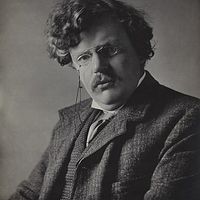
G. K. Chesterton was well-known (and iconoclastic) in his defense of tradition in a time when progress was all the rage in Western Europe- in technology, in the sciences, in philosophy. Chesterton, on...
James 3:17-18, 1 Timothy 3:2-3, John 8:32, Jeremiah 23:5, Isaiah 1:17, Proverbs 29:4, Exodus 18:21
If your success is defined as being well adjusted to injustice and well adapted to indifference, then we don’t want successful leaders. We want great leaders who love the people enough and respect the...
Resilience is not about becoming smarter or tougher; it’s about becoming stronger and more flexible. It’s about becoming tempered. Which takes us back to the blacksmith’s shop. Tempered. Let the word ...