Romans 12:1-2, Colossians 2:8, 1 John 2:15-17, 1 Corinthians 10:23-33, Mark 7:8-9
When my grandparents were in their eighties, their television developed a fault that made the screen permanently bright green. It was good for viewing garden shows or nature programs, but it was prett...
“Association breeds assimilation.” In other words, there is no such thing as a casual relationship. All relationships are consequential. They are catalytic. They push us forward or hold us back. They ...
Context matters. According to the Terman Study, which followed one thousand study participants from childhood until their death, the people we surround ourselves with are who we become. We see those a...
Giving Matters In 2 Corinthians 9:6-15, Paul provides us with four crucial lessons on Christian giving: 1) How we give; 2) What we give; 3) What happens when we give; and 4) Why we give. How We Give...
The Greek word used here (1 Cor. 13:4) for patience is a descriptive one. It figuratively means “taking a long time to boil.” Think about a pot of boiling water. What factors determine the speed at wh...
One of [Lamin] Sanneh's key arguments is that while the spread of Islam has drawn ever-increasing numbers to the globalizing influence of Arabic, the spread of Christianity binds ever-increasing n...
A Tough Way to Start Ministry You don’t have to spend much time on Twitter or Facebook to be reminded that schadenfreude (taking joy from another's misfortune) is alive and well. Depending on w...
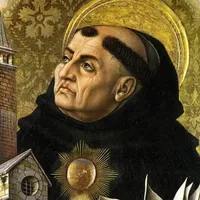
Of the medieval church’s many intellectual leaders, none has had more influence than the philosophical theologian Thomas Aquinas. He was born to a noble family near Naples, Italy, and joined the Domin...
Peter Ustinov, the British actor, director, and playwright, once received an indignant letter from the headmaster of his son’s school. The letter complained that his son frequently disrupted lessons b...
preaching commentary A Tough Way to Start Ministry You don’t have to spend much time on Twitter or Facebook to be reminded that schadenfreude (taking joy from another's misfortune) is alive a...
Preaching Commentary Different Levels of Maturity? There is an interesting dynamic I have noticed that often occurs as people begin to mature into adults. In my life it was a stage that took place ...
I wasn’t raised in a Christian family. I only entered the “Christian bubble” of a Southern Baptist youth group in junior high, where I pledged myself to abstinence before marriage at a True Love Waits...
Matthew 22:37-39, 1 Corinthians 8:1-3, Ezekiel 36:26-27, Colossians 1:9-10, Philippians 3:10-14, James 1:22, John 14:21
In a journal entry by the Danish Philosopher Søren Kierkegaard, the great existentialist philosopher describes the importance not simply of grasping the truth of the Christian faith, but having the tr...
Ancient Lens What's the historical context? The Gospel in a Pagan World Paul writes this letter to the Christians in the church at Corinth, which he founded during his second missionary journ...
1 John 4:7-11, Matthew 22:36-40, 1 Corinthians 13:4-7, John 15:12-13, Romans 5:8, Luke 19:1-10 , Ephesians 3:17-19
All-loving God, we confess our motivations are often not influenced by your love. We act according to what will bring us the best outcome. We love ourselves before we love you. Help us to grow deeper ...
Ancient Lens What's the historical context? The Gospel in a Pagan World Paul writes this letter to the Christians in the church at Corinth, which he founded during his second missionary journ...
Matthew 13:1, 1 Corinthians 3:6, Romans 12:2, Matthew 7:22, Hebrews 6:4-5, Isaiah 6:9-10, Matthew 12:34-35
Preaching Angle: Preach the Word, Rest in God’s Work Maybe I tend to focus on the negative, but when I read the parable of the soils, I tend to focus on the soils that struggle (the soil too close to...
Matthew 13:1-9, 18-23, 1 Corinthians 3:6, Romans 12:2, Matthew 7:22, Hebrews 6:4-5, Isaiah 6:9-10, Matthew 12:34-35
Preaching Commentary Preaching Angle: Preach the Word, Rest in God’s Work Maybe I tend to focus on the negative, but when I read the parable of the soils, I tend to focus on the soils that struggle...
I challenge those who come to me for marriage counseling this way: “If you do what I tell you to do for an entire month, I can promise you that by the end of the month, you will be in love with your m...
I sometimes hear people talk about leaders as people who make things happen. But it takes followers to make Jesus' agenda happen. My friend Julie tells me that physicists define a leader as an ext...
The most powerful choices we will make in our lives are not about specific decisions but about patterns of life: the nudges and disciplines that will shape all our other choices. This is especially tr...
The Power—the Spirit—is thus a social power, working to bring all minds into its own unity, sometimes by similarity and at other times by contrast. There is a diversity of gifts, but the same spirit.
The success of every culture hinges not on big points of morality—there will always be issues like abortion or school prayer over which people differ—but on smaller values, like being considerate of o...
Matthew 18:12-14, 1 Corinthians 12:12-27, 1 Peter 4:10, Philippians 4:13, Luke 12:48
Edward Everett Hale (1822-1909), an American Unitarian minister and writer, who lived and worked in Boston, Massachusetts, and inspired many by his story Ten Times One Is Ten : I’m only one, but I ...
Culture is like gravity. We never talk about it, except in physics classes. We don’t include gravity in our weekly planning processes. No one gets up thinking about how gravity will affect their day. ...
Every time we say we believe in the Holy Spirit, we mean we believe that there is a living God able and willing to enter human personality and change it.
Romans 8:9-11, John 14:15-18, John 14:23, Romans 8:16-17, 1 Corinthians 6:19-20
We have a tendency to think of the Spirit as an impersonal divine power or energy that somehow gets into people…. The Spirit is not some magical ‘something’ that gets into us but Someone who comes to ...
In one of his letters, the philosopher and psychologist William James shares a conviction regarding his focus not on big, grand things, but with the small “almost invisible” decisions: I am done wit...
Intellect is therefore a vital force in history, but it can also be a dissolvent and destructive power. Out of every hundred new ideas ninety-nine or more will probably be inferior to the traditional ...
We have the best materials, media, and methods, but we lack spiritual power. Christians of the apostolic era had none of our advantages; they didn't even have the New Testament. Still, they turned...





![One of [Lamin] Sanneh's key arguments](https://images.unsplash.com/photo-1634128221889-82ed6efebfc3?ixid=M3w1NzU0OTZ8MHwxfHNlYXJjaHwxfHxsYW5ndWFnZXxlbnwwfDB8fHwxNzEzMjc2NzUwfDA&ixlib=rb-4.0.3&q=80&auto=compress&fit=crop&w=200&h=200)