Matthew 23:25-26, Ezekiel 36:26-27, Colossians 2:6-7, Jeremiah 31:33
Spiritual nourishment cannot be seen purely in our outward behavior. The process of sanctification is a deeply internal process. Outside growth is merely a symptom, and acting better does not mean our...
Zechariah 9:9, Matthew 21:1-11, Mark 11:8-11, Luke 19:36-44, John 12:16-19, Revelation 19:11-16
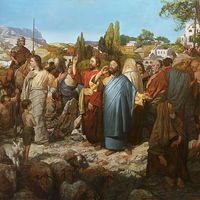
Two thousand years ago, triumphal processions were massively popular. It was, in all likelihood, the only chance most people would have to see the leaders and heroes of the day. For the Romans they t...
Mark 12:37, Matthew 19:24, Matthew 7:5, Mark 3:25, Mark 7:27, Mark 8:15, Luke 15:11–32, Luke 10:25–37, Luke 18:9–14-, 25:31–46
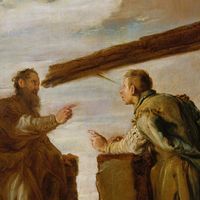
One of my daughters has been singing a song about Jesus that contains the line “Jesus was a story-tellin’ man.” When I first heard that line it seemed a bit flip, as so many contemporary Christian son...
Ancient lens What’s the historical context? A Historical Clue The superscript of Psalm 51 gives us a historical clue about the composition of this Psalm, “A Psalm of David. When Nathan the prophe...
Saul's Confident Error Last week, we considered Abram and the way that God may send us out on a journey, waiting to see his will without knowing the destination. Today we move forward to Saul on...
A Special Kind of Story Most Christians have some idea of what a parable is. Ask an adult Sunday school class and you might hear: “It’s a story!” Another might chime in, “with a moral message!” Mer...
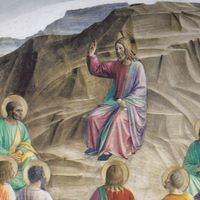
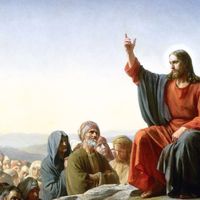
Pastor and Professor Darrell W. Johnson sets the scene for the Sermon on the Mount with great description. This could serve as a model for the beginning of a sermon on the S.O.M. They were sitting i...
Reaching back to the tradition of virtues and vices can also give us fresh eyes and expose new layers of meaning in our reading of scripture. Before I read Aquinas on sloth, I would have associated it...
In 1995, the gray wolf was reintroduced to Yellowstone National Park after a seventy-year hiatus. Scientists expected an ecological ripple effect, but the size and scope of the trophic cascade took th...
Luke 12:33-34, Luke 18:28-30, Acts 2:44-45, Matthew 19:21, Mark 10:29-30, Luke 14:26
Family and property, then, were not for the ancient Jew simply what they are to the modern western world. Both carried religious and cultural significance far beyond personal, let alone “individual,” ...
Genesis 2:1-3, Exodus 20:8-11, Deuteronomy 5:12-15, Mark 2:27-28, Matthew 12:8, Luke 6:5
For the most part, contemporary Christians pay little attention to the Sabbath. We more or less know that the day came to reflect, in U.S. culture, the most stringent disciplinary faith of the Puritan...
Leader: Blessed are those whose way is blameless, who walk in the law of the Lord! People: Blessed are those who keep his testimonies, who seek him with their whole heart, Leader: Blessed are thos...
Luke 7:36-50, Romans 5:8, John 4:7-26, Matthew 11:19, Luke 19:5-10, Mark 2:15-17
Why did it disturb the religious leaders that Jesus ate with “sinners”? To eat with someone is an important symbol of fellowship. And in those days, the Jews had a rule: one is not to have such fellow...
In this excerpt by the Roman historian Tacitus, we get insight into the Jewish faith from an ancient, extra-Biblical account. We also see how the Israelites took the first commandment seriously: The...
The poor in Judaism referred to those in desperate need (socio-economic element) whose helplessness drove them to a dependent relationship with God (religious element) for the supplying of their needs...
Matthew 22:37-39, Matthew 25:35-40, Luke 3:11, Ephesians 5:2, Acts 2:42-47, James 2:14-17, Galatians 2:10, Psalm 72:12-14
A passage often referred to in order to describe the sacrificial, countercultural quality of the early church comes to us interestingly enough, from one of its strongest critics, known later to histor...
Matthew 25:35-40, John 8:1-11, Luke 19:1-10, John 4:1-26, John 8:10-11, Luke 19:10
In these acts of love Jesus created a scandal for devout, religious Palestinian Jews. The absolutely unpardonable thing was not his concern for the sick, the cripples, the lepers, the possessed . . . ...
Rabbis spoke of parables as handles for understanding Torah; before parables no one understood the Torah, but when Solomon and others created parables, then people understood.
When Jesus came to earth, demons recognized him, the sick flocked to him, and sinners doused his feet and head with perfume. Meanwhile he offended pious Jews with their strict preconceptions of what G...
Saul of Tarsus did not intend to be a pilgrim when he set off to go from Jerusalem to Damascus. Indeed, why would any pilgrim make that journey? Pilgrims went to Jerusalem, not away from it. No: Saul,...
We can “know” something to be true, and then find it is not true after all. I recall confidently assertive to a student that, of course, the name of the region Perea (to the east of the Dead Sea) appe...
Luke 2:22-24, 2 Corinthians 8:9, Isaiah 9:6-7, Philippians 2:6-8, John 1:14, Isaiah 61:1
They were poor. We know this because the two young turtledoves Joseph and Mary brought was the smallest offering they were allowed as devout Jews and yet the largest they likely could afford. With tw...
Leader: Praise the Lord! Blessed are those who fear the Lord, who greatly delight in his commands. People: their offspring will be mighty in the land; the generation of the upright will be blessed. ...
Luke 19:1-10, Luke 7:36-50, Matthew 14:13-21, Matthew 26:20-25, 1 Corinthians 11:28-29, Luke 15:1-2
We have seen some gatekeeping or fencing-the-table language already beginning to rear its head in this context. One needed to be baptized to take the meal; one needed to repent to take the meal; one n...
A rabbi’s followers, known as his talmidim in Hebrew, went everywhere with him, not just to hang on his every word and learn theology from him. They followed him everywhere so that they could mimic wh...
Why would the apostles lie?....Liars always lie for selfish reasons. If they lied, what was their motive, what did they get out of it? What they got out of it was misunderstanding, rejection, persecut...
James 1:27, Hebrews 13:2-3, 1 Peter 2:12, Galatians 6:10, Romans 12:13, Acts 2:44-45
The fourth-century emperor Julian (AD 331-336) feared [Christians] might take over the empire. Referring to Christians as “Galileans” and Christianity as “atheism” (because of their denial of the exis...
By describing his disciples as poor in spirit, Jesus points to their relationship with God. Their poverty has touched their inmost being so that they now depend entirely upon God.