John 8:12, John 1:, Psalm 27:, Isaiah 9:2, Psalm 119:105, 2 Corinthians 4:6, Proverbs 3:5-6, Isaiah 60:1, Matthew 5:14-16
All: Gracious God, you promise that your light drowns out darkness, yet the darkness is so persistent. We cannot see in front of us, so we look to our own knowledge and ways. Forgive us for turning to...
1 John 1:9, 2 Timothy 2:22, Romans 12:2, Isaiah 1:16-17, Proverbs 1:7, James 1:5
Therefore let us repent and pass from ignorance to knowledge, from foolishness to wisdom, from licentiousness to self-control, from injustice to righteousness, from godlessness to God.
A number of mature Christians have described the Christian journey as one in which the follower of Jesus experiences different levels of grace. Let us imagine . . . that there are many rooms in t...
Philippians 2:6-8, John 1:10-11, Isaiah 53:3-4, Matthew 11:19, Mark 15:34, Isaiah 53:12, Luke 15:20-24, Revelation 7:13-14
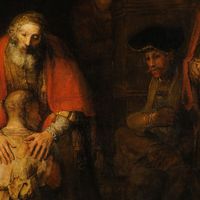
In this excerpt, the French monastic leader Frere Pierre Marie, shares an interpretation of Jesus as the true prodigal son—bringing all of us home with him: He, who is born not from human stock, or ...
Luke 15:11-32, 1 John 1:9, Mark 2:1-12, 2 Corinthians 5:17, Luke 4:18, Ephesians 2:8, 2 Corinthians 12:9
Leader: Jesus knows our every weakness, and loves us still. Awaken to the promise of Christ's amazing grace. Leader: Friends, believe the good news of the gospel. People: In Jesus Christ we are f...
Luke 15:11-32, Romans 8:1, 1 John 1:9, 2 Corinthians 12:9, Joshua 1:9, Psalm 103:12
Leader: The good news in Christ is that when we face ourselves and God with the awareness of our need, we are given grace to grow, and courage to continue the journey. Friends, believe the good news o...
A close friend who started a financial loan business took thirty of his executives to the poverty- and violence-filled section of Montreal where he grew up in order to introduce them to the section of...
Julian of Norwich was a fourteenth-century mystic-theologian who maybe understood the belovedness of creation and new creation better than anyone. In the fifth chapter of her book Revelations of Divin...
Sometime in the last decade or so I started hearing the phrase “all that good stuff.” I think it happened first when I was ordering dinner at a restaurant. The waitress summarized the menu briefly, en...
Psalm 14:2-3, Ecclesiastes 7:20, Luke 18:9-14, 1 John 1:8, Romans 3:23, Jeremiah 17:9, Isaiah 64:6
Dear Everybody, We have a serious problem: All of us think we’re good people. But Jesus says we’re not. Sincerely, Brant P. Hansen …PS. IF YOU THINK I’M WRONG—about how we think we’re good people...
C.S. Lewis on the Incarnation: We catch sight of a new key principle—the power of the Higher, just in so far as it is truly Higher, to come down, the power of the greater to include the less. . . . ...
Psalm 32:5, Luke 12:2, Proverbs 10:9, Psalm 139:23-24, 1 John 1:9, James 5:16
Arthur Conan Doyle, the ingenious creator of the Sherlock Holmes mysteries, once found great humor in a practical joke he played on 12 famous friends. Each of these men was virtuous and highly respect...
Isaiah 53:5, Romans 5:8, John 14:27, 1 John 1:9, Colossians 1:13-14
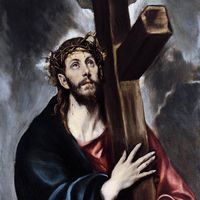
Hear the good news: For the joy set before him, Jesus Christ endured the shame of the cross, taking all our weakness and failure. Jesus went to the cross for the joy of having you as part of God’s Kin...
Truth-oriented Christians love studying Scripture and theology. But sometimes they’re quick to judge and slow to forgive. They’re strong on truth, weak on grace. Grace-oriented Christians love forgive...
John 1:14, Matthew 9:36, Luke 19:10, John 15:15, Mark 10:45, Philippians 2:5-7, 1 John 4:9-10
The ways Jesus goes about loving and saving the world are personal: nothing disembodied, nothing abstract, nothing impersonal. Incarnate, flesh and blood, relational, particular and local. The ways em...
Leader: In the beginning was the Word, and the Word was with God, and the Word was God. People: Jesus was in the beginning with God. All things came into being through Him, and without Him not one t...
Take refuge in our God who knows we are mere mortals. He forgives us for our sins, even though they were aimed at his loving heart. Rejoice that the Lord, out of his grace, will not remember our sins ...
Jonah 1:4, Psalm 51:, John 4:7-26, Genesis 3:7-10, 2 Corinthians 12:9, Matthew 11:28-29, 1 John 1:8-9
Our inclination is to reveal to God only what we feel comfortable in sharing. Naturally, we want to love and be loved by God, but we also want to keep a little corner of ourselves, where we can hide a...
The idea that there’s a force of love and logic behind the universe is overwhelming to start with, if you believe it. Actually, maybe even far-fetched to start with, but the idea that that same love a...
Matthew 18:21-22, John 21:15-17, Matthew 18:21-35, 1 John 1:9, Colossians 3:13, Matthew 6:14-15, Ephesians 4:32
Forgiveness is the name of love practiced among people who love poorly. The hard truth is that all people love poorly. We need to forgive and be forgiven every day, every hour increasingly. That is th...
John 1:1-14, Ephesians 5:5-20, Isaiah 60:1-5, Matthew 5:13-16, Matthew 4:12-17, John 8:12-20, Colossians 4:6
In these two little Illustrations, C.S. Lewis demonstrates how a life of discipleship, of following Jesus, does not lead to uniformity and a drab existence, but rather the opposite. Jesus takes our li...
Acts 11:1-18, John 14:6, Colossians 1:13-14, Psalm 103:12, Isaiah 1:18, 1 John 1:9, Micah 7:18
The “grammar of the gospel” is the grammar of grace and response, the life-changing and life-giving intrusion of God into our midst, our lives, and our communities.
John 1:14, Exodus 40:34-35, Colossians 1:19, Revelation 21:3, John 15:4, 2 Corinthians 3:118
N.T. Wright takes some time in his book, How God Became King , to connect the idea of the logos (the eternal Word), with the idea of “dwelling,” or abiding in God’s presence: The Word became flesh ...
Ezekiel 47:9, Galatians 6:2, Romans 12:4-5, Matthew 28:19-20, 1 John 1:7
The ancient Greek word for intimate fellowship is koinonia. In the church, we can suffer from what might be called koinonitus: fellowship turned in on itself; cliques and enclaves and tight-knit group...
Did you know that the history of the word “fellowship,” is, rather simply, a relationship among fellows? The idea of a fellowship being that two or more people have been bonded together in some signif...