This summer, millions of people across the world will be absorbed in a highly anticipated, years-in-the-making, high-fantasy adventure featuring evil sorcerers, legendary swords, dragons, and a classi...
It’s perfectly possible to have an orthodox Christianity that understands itself to be at the center of making human culture, while interacting with non-Christians and their cultural products who are ...
Tradition is a willingness to read Scripture, taking into account the ways in which it has been read in the past. It is an awareness of the communal dimension of Christian faith, which calls shallow i...
Christianity is without doubt the earthiest of all religions. Unlike most other religions, it doesn’t call you out of the physical, out of the body, or out of the world. Rather it tells you that God e...
Our modern theology, which in many ways has ceased to be personal, i.e. centered on the Christian experience of "person," nevertheless - and maybe as a result of this - has become utterly in...
Many in the church have turned their back on serious study, and have embraced an anti-intellectualism which refuses to learn anything from scholarship at all lest it corrupt their pure faith. It is ti...
A Christianity that reflects its culture, whether that culture is Smith College or NASCAR, only lasts as long as it is useful to its host . That’s because it’s, at root, idolatry, and people turn from...
How do you deliver the authentic faith and great wisdom of the past into the new cultural situation of the twenty-first century? The way into the future, I argue, is not an innovative new start for th...
Creeds must disagree: it is the whole fun of the thing. If I think the universe is triangular, and you think it is square, there cannot be room for two universes. We may argue politely, we may argue h...
Western Christianity has long taught that we are changed by what we believe and what we choose—that is, by the human will responding to God. Attachment to God would functionally replace the will as th...
The current context of cultural and religious pluralism magnifies this development. After the disintegration of Christendom-a historical topical apparatus that gave cultural pride of place to Christia...
Most people who assert the equality of religions have in mind the major world faiths, not splinter sects. This was the form of the objection I got from the student the night I was on the panel. He con...
James 1:27, Isaiah 1:17, Psalm 68:5, Matthew 25:34-40, 1 Timothy 5:3-4, Zechariah 7:9-10, Matthew 12:48-50, Romans 8:14-17, Luke 4:18, Acts 4:34-35, James 2:15-16
Christianity revitalized life in Greco-Roman cities by providing new norms and new kinds of social relationships able to cope with many urgent urban problems. To cities filled with the homeless and im...
We have been so soaked in the individualism of modern Western culture that we feel threatened by the idea of our primary identity being that of the family we belong to-especially when the family in qu...
In this short excerpt, the abolitionist and former slave Frederick Douglass describes the tension between faith in Christ and faith in a form of Christianity willing to enslave an entire race of peopl...
Romans 12:2, Galatians 6:1, Proverbs 9:10, James 1:4, Isaiah 61:3
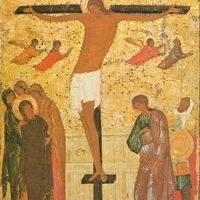
Think of an ancient icon of Christ. Imagine that a thousand-year-old Christ Pantocrator painted on a wooden panel is discovered in some forgotten monastery. The image of Christ is there, but it’s cove...
Whether we like it or not, the moment we confess Jesus Christ as our Lord and Savior, that is, from the time we become a Christian, we are at the same time a member of the Christian church … Our membe...
It is in Christianity that our arts have developed; it is in Christianity that the laws of Europe--until recently--have been rooted. It is against a background of Christianity that all of our thought ...
God built into the creation a variety of cultural spheres, such as the family, economics, politics, art, and intellectual inquiry. Each of these spheres has its own proper "business" and nee...
Christ followers were first called Christians at Antioch—about fifteen years after the birth of the church at Pentecost. There must have been something remarkable about this particular group of believ...
God did not canonize Israel’s culture. Rather, he simply used that culture as a vehicle through which to communicate the eternal truth of his character and his will for humanity.
I often found myself preferring the company of people outside my congregation, men and women who did not follow Jesus. Or worse, preferring the company of my sovereign self. But soon I found that my p...