Karl Barth (1886-1968), the famous Swiss theologian, once wrote that all human sin finds its roots in three basic human problems. He included pride (hubris), dishonesty and slothfulness in his list of...
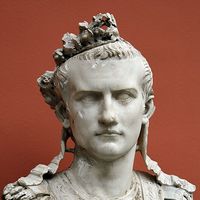
During each full moon, believing himself equal to the Roman gods, the Roman emperor Caligula would summon the moon goddess to share his bedchamber. When he asked Aulus Vitellius—a member of the Roman ...
Matthew 23:12, Romans 12:3, 1 Peter 5:5, Daniel 4:37, Philippians 2:3-4
One of the great ironies of sin is that when human beings try to become more than human beings, to be as gods, they fall to become lower than human beings. To be your own God and live for your own glo...
Titus 1:7, Psalm 131:1, Galatians 6:3, Matthew 23:12, Philippians 2:3, James 4:6
In his highly insightful work, Inside Job , Stephen W. Smith shares the sobering truth of what happens to many leaders when they climb the “ladder of success”: The ground at the foot of the ladde...
Isaiah 9:6-7, Hebrews 1:1-3, Colossians 1:15-17, Philippians 2:6-8, John 3:16-17, John 1:1-4, Luke 1:30-35
In the ancient world, a place where the veil between the earthly and spiritual was easily pierced, rumors and gossip about great leaders being born of the gods, especially amongst royals, was somewhat...
Luke 18:14, Proverbs 29:23, Isaiah 2:11, 1 Peter 5:5, Romans 12:3, James 4:6, Proverbs 16:18
Up until the twentieth century, traditional cultures (and this is still true of most cultures in the world) always believed that too high a view of yourself was the root cause of all the evil in the w...
In Greek mythology, Narcissus was a handsome young man who caught sight of his reflection in a pond, fell in love with his own image, toppled into the water and drowned. So “narcissism” is an excessiv...
Proverbs 16:18, Proverbs 11:2, James 4:6, 1 Peter 5:5-6, Philippians 2:3-4, Luke 18:9-14, Matthew 23:1-12
In his thoughtful book, Our Good Crisis: Overcoming Moral Chaos with the Beatitudes , Jonathan K. Dodson points out our blind-spots with respect to pride: We rarely think of ourselves as proud. I...
James 4:6, Mark 8:36, 1 John 2:17, 1 Corinthians 4:7, Jeremiah 9:23-24, Revelation 3:17
Who, then, are we, we prideful late-twentieth-century creatures? Lord knows, we no longer think of ourselves as belonging to anyone or anything. We do not belong – we own; we possess. And that, to say...
James 4:1-10, Jeremiah 9:23-24, Mark 7:20-23, Proverbs 15:25-33, Proverbs 16:18, 1 Samuel 18:null, Luke 18:9-11
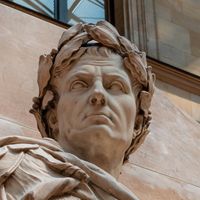
When Julius Caesar returned to Rome after many years of fighting its battles abroad, he planned great festivities and triumphal processions to celebrate his victories over Gaul, Egypt, Pontos, and Afr...
Advertising how humble we are will raise some eyebrows. Advertising your humility with a vanity license plate on a luxury car takes a special sort of hutzpah. But that’s what I (Stu) saw today whi...
1 Samuel 15:10-23 , 2 Chronicles 26:16-21 , Ecclesiastes 2:4-11, Mark 10:35-45 , Luke 18:9-14 , Psalm 49:16-20
William James, in a famous letter to H. G. Wells in 1906, credited what he called American “moral flabbiness” to “the exclusive worship of the bitch-goddess Success. That—with the squalid cash interpr...
In a sermon delivered at Christ Church Cathedral in Nashville, Tennessee, Christian ethicist Stanley Hauerwas turns his attention to the dangerous seduction of crowds: It is a terrible thing to fall...
I know most of us have probably heard enough stories about the Titanic, but it does stand as an amazing monument to the famous saying, slightly altered, “pride goes before the fall/destruction.” (Prov...
I am convinced that C. S. Lewis is correct in the point he makes in his remarkable speech “The Weight of Glory” that the cure for pride is not the humiliation of a person so that pride is broken. Rat...
Over the next few years I collected data to suggest that we have seen a broad shift from a culture of humility to the culture of what you might call the Big Me, from a culture that encouraged people t...
“Whom the gods wish to destroy,” Cyril Connolly famously said, “they first call promising.” Twenty-five hundred years before that, the elegiac poet Theognis wrote to his friend, “The first thing, Kurn...
Proverbs 16:18, Psalm 103:14-16, Luke 14:11, Micah 6:8, 1 Peter 5:5-6, James 4:6-10, Jeremiah 9:23-24
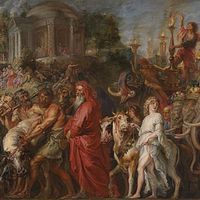
If you were to travel back in time to the city of Rome (either during the Republic or the Empire), you may have had the opportunity to witness the Triumph, a colossal spectacle in which the greatest m...
The word worship comes from the Old English weorthscipe, which combines two words meaning “ascribe worth.” The Trinity can be said to be always at worship because the three persons of the Godhead perf...
In 1717 when France’s Louis XIV died, his body lay in a golden coffin. He had called himself the “Sun King,” and his court was the most magnificent in Europe. To dramatize his greatness, he had given ...
People often think of Narcissus as the symbol of excessive self-regard, but in fact, he exemplifies the opposite. As the Renaissance philosopher Marsilio Ficino observed in the 1500s, Narcissus did no...
A colleague of mine often says that ministry is a magnet for narcissistic personality—who else would want to speak on behalf of God every week? While the vast majority of people struggle with public s...
Isaiah 57:15, Mark 10:43-45, James 4:6, Ephesians 4:2, Micah 6:8, Matthew 23:12
In the Greco-Roman world of Paul’s day, humility was a despised trait. They viewed it as a sign of weakness. And our culture today is no different from that world of two thousand years ago. Maybe it’s...
2 Timothy 2:12, James 1:2-4, Matthew 5:11-12, Philippians 1:29, Romans 8:18, 2 Corinthians 4:17, John 15:20
Nevertheless, what was shameful, even odious, to the critics of Christ, was in the eyes of his followers most glorious. They had learnt that the servant was not greater than the master, and that for t...
Proverbs 16:18–19, 2 Chronicles 26:16–21 , Daniel 4:28–37, Luke 14:7–11, Philippians 2:3–8, Psalm 25:8–9
At eighteen, a self-assured Benjamin Franklin returned to Boston, the city he had fled just seven months earlier. Dressed in a fine new suit, with a watch on his wrist and a pocket full of coins, he p...
J.B. Phillips was a successful pastor and prolific author in the mid-twentieth century. He was a colleague and friend of C. S. Lewis’s, and it was Lewis who personally endorsed Phillips’s translation ...
Habakkuk 2:5, James 3:16, Mark 8:36, Luke 12:15, Isaiah 57:20, 1 Timothy 6:9, 1 John 2:16
Restlessness keeps the pedal to the metal. To offer a suggestive analogy in this vein: several years ago there was a recall on some Toyota vehicles. Evidently the cars would be given to sudden and unc...
Exodus 33:18-23, Isaiah 6:1-4 , Daniel 4:28-37, John 17:1-5 , 2 Corinthians 3:7-18, Psalm 19:1
What resonance does the word glory have in today’s English language? How often is it used, and with what meaning? The adjective glorious is familiar enough—we might say that we saw a “glorious” sunset...
In His book When Narcissism Comes to Church, Chuck DeGroat shares about a unique phenomenon that occurs in organizations: Collective Narcissism: Churches are particularly susceptible to a phenomenon...
A businessman well known for his ruthlessness once announced to writer Mark Twain, “Before I die I mean to make a pilgrimage to the Holy Land. I will climb Mount Sinai and read the 10 Commandments alo...