Revelation 5:1-14, Matthew 25:31, Revelation 21:3-4
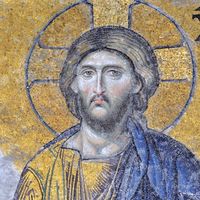
When you go into one of the great homes of the late Roman empire and you see a mosaic of Christ enthroned at the far end, you’re looking at the place where the emperor would sit. And the emperor would...
Did you know the United States once had an emperor? Believe it or not, it’s true – at least, it was in the rather confused mind of Joshua A. Norton. Norton lived in San Francisco during the gold-rush...
During his time as commander in the Roman army, Caesar Augustus (who would become the first Roman Emperor) had to relieve a soldier from duty for bad behavior. The man begged to remain in military ser...
Caesar Augustus, the first Roman emperor, had quite the sharp wit. After hearing about a Roman nobleman who had passed away with enormous debts (which were kept private throughout his lifetime), he se...
Luke 3:8, 1 Samuel 16:7, Isaiah 1:17, Micah 6:8, James 2:1
In the Christian faith, we frequently take for granted how radically Jesus evens the playing field. No matter your wealth, your position, let alone your race or gender, all of us are equal in God’s ey...
Acts 8:1-3, 2 Timothy 3:12, 1 Peter 4:12-16, Matthew 5:10-12, Luke 6:41-42, Genesis 3:8-19, Genesis 39:6-20, Job 2:11-13, Job 42:7-9
Most of us are aware of various persecutions that took place during the first few centuries of the church’s existence. One particularly brutal local persecution took place during the reign of Nero, wh...
John 14:27, Matthew 2:2, Revelation 19:16, John 18:36-37, Revelation 17:14, Zechariah 9:9, Isaiah 9:6, Psalm 24:7-10, Colossians 1:15-20, Matthew 21:1-11, Mark 11:1-11, Luke 19:28-40, John 12:12-16
In a culture, the most important things usually go without being said. We Westerners don’t talk all the time about being individualists or about the importance of efficiency or why we prefer youth ove...
Nakedness is the subject of one of the most famous folk parables of power: Hans Christian Andersen’s tale “The Emperor’s New Clothes.” A vain emperor is visited by two “weavers” who promise that their...
Adoption was clearly not a foreign concept in the Greco-Roman world. But it’s important to note how differently Paul and his communities would have heard that word! Our contemporary concept of adoptin...
In this excerpt by the Roman historian Tacitus, we get insight into the Jewish faith from an ancient, extra-Biblical account. We also see how the Israelites took the first commandment seriously: The...
One of the earliest forms of Christian art isn’t a painting, sculpture or even a catacomb fresco. It’s a patch of graffiti on plaster, discovered in the Paedagogium on the Palatine Hill in Rome and da...
What would you think if a woman came to work wearing earrings stamped with an image of the mushroom cloud of the atomic bomb dropped over Hiroshima? What would you think of a church building adorned w...
In AD 312, the Roman emperor Constantine became a Christian. On the night before he led his army into the massive Battle of the Milvian Bridge, he had a vision of the Christian God. They won that batt...
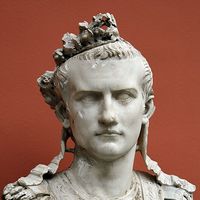
During each full moon, believing himself equal to the Roman gods, the Roman emperor Caligula would summon the moon goddess to share his bedchamber. When he asked Aulus Vitellius—a member of the Roman ...
Revelation 19:16, Matthew 2:2, John 18:36-37, Revelation 17:14, Zechariah 9:9, Isaiah 9:6, Psalm 24:7-10, Colossians 1:15-20, Matthew 21:1-11, Luke 19:28-40, Mark 11:1-11, John 12:12-16
In 1987 director Bernardo Bertolucci released the film The Last Emperor to raving reviews. It was based on the autobiography of the last living emperor of the Manchu dynasty in China, Henry Aisin-Gior...
Exodus 1:8–22, 1 Kings 21:, Daniel 5:, Luke 22:24–27 , Acts 12:20–23, Psalm 2:
Gaius Caesar, more commonly known as Caligula (AD 12–41), was a Roman emperor notorious for his cruelty. He developed an insatiable appetite for gladiatorial games and other violent spectacles. On one...
James 4:1-10, Jeremiah 9:23-24, Mark 7:20-23, Proverbs 15:25-33, Proverbs 16:18, 1 Samuel 18:null, Luke 18:9-11
When Julius Caesar returned to Rome after many years of fighting its battles abroad, he planned great festivities and triumphal processions to celebrate his victories over Gaul, Egypt, Pontos, and Afr...
Revelation 11:15, Matthew 28:19, Galatians 3:28, Matthew 8:10-11, 1 Corinthians 15:25-26
What shall I say of the Romans themselves, who fortify their own empire with garrisons of their own legions, nor can extend the might of their kingdom beyond these nations? But Christ’s name is extend...
Proverbs 16:18, Psalm 103:14-16, Luke 14:11, Micah 6:8, 1 Peter 5:5-6, James 4:6-10, Jeremiah 9:23-24
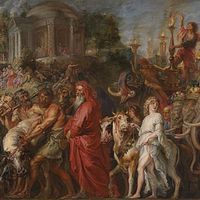
If you were to travel back in time to the city of Rome (either during the Republic or the Empire), you may have had the opportunity to witness the Triumph, a colossal spectacle in which the greatest m...
2 Samuel 12:13, Isaiah 6:5-7, Luke 18:13-14, 1 John 1:8-9, Psalm 51:1-2
There is a famous story about Emperor Frederick the Great visiting Potsdam Prison. As he spoke with the prisoners, each one insisted they were completely innocent of the crimes that led to their impri...
James 1:27, Hebrews 13:2-3, 1 Peter 2:12, Galatians 6:10, Romans 12:13, Acts 2:44-45
The fourth-century emperor Julian (AD 331-336) feared [Christians] might take over the empire. Referring to Christians as “Galileans” and Christianity as “atheism” (because of their denial of the exis...
In the years 1014-1035 there ruled over England a Danish king named Canute. King Canute tired of hearing his retainers flatter him with extravagant praises of his greatness, power and invincibility. H...
Genesis 45:1-15, Matthew 18:21-35, Ephesians 4:32, Romans 5:10, Mark 11:25, Colossians 3:13, Matthew 5:44
Frederick William I was a king of Prussia in the early 18th century. Personality-wise, he was described as exacting, frugal and austere. He was known to beat his children when they disappointed him. H...
It is recorded that Frederick the Great, of Prussia, was once walking down a road outside Berlin when he came face to face with an unusual looking old man. “Who are you?” Frederick asked. “I am a ki...
Job 1:42, Daniel 3:, Matthew 5:10-12, Romans 8:35-39, Psalm 23:4
John Chrysostom, the eloquent Church Father, had incurred the wrath of the Byzantine (aka Roman) Emperor Arcadius. Enraged, the emperor consulted his counselors on how to punish the powerful preacher....
James 2:13, Matthew 5:7, Zechariah 7:9-10, Proverbs 21:3, Micah 6:8
Zaleusus flourished as king of the ancient Greek Locrians in about 500 B.C. His government over the Locrians was severe but just. In one of his decrees he forbade the use of wine unless it were prescr...
The Athenian general and politician Themistocles eventually alienated a large number of Greek City-States that came under their rule in the late 6th and early 5th centuries B.C. With his fleet of ship...
Revelation 17:14, Matthew 8:25-27, Mark 10:21-22, John 11:25-26, Luke 6:46-48, Isaiah 32:1-2
Though lords still exist today in some parts of the world, the term is used mostly as an honorary badge, so it’s easy to forget what the term even means. Throughout history, lords were rulers who had ...
Exodus 23:2, Daniel 3:16-18, 2 Chronicles 24:20-21, Matthew 5:9-10, Romans 12:19-21 , Psalm 82:3-4
In the early fifth century, even as Rome had officially embraced Christianity, the brutal spectacle of gladiatorial combat continued in the Colosseum, drawing massive crowds. One day, a Christian herm...
Elite athletes will sometimes say that “game recognizes game” (or occasionally more grammatically suspect variants of that). By this is meant that someone who is particularly skilled at something is u...