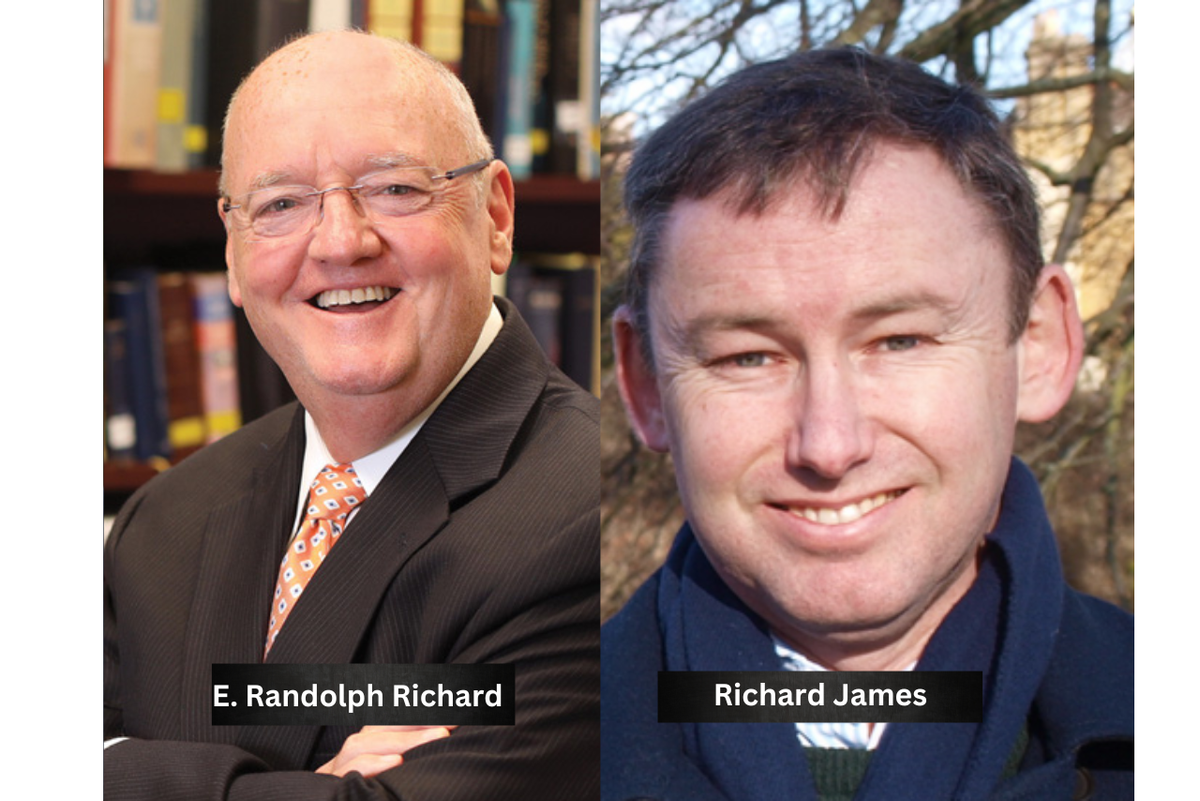
E. Randolph Richards and Richard James
E. Randolph Richards and Richard James are biblical scholars and authors known for their collaborative work on understanding the cultural and historical context of the New Testament. Their writing focuses on bringing to light the world of the early Christian church and how its teachings and practices were influenced by the cultures of the time. Through their work, they seek to bridge the gap between modern readers and the ancient world of the Bible, providing insights that help Christians today better understand the messages of the New Testament.
E. Randolph Richards, a seasoned scholar, holds a Ph.D. in Biblical Studies and has taught at various institutions, including Palm Beach Atlantic University. He has a deep interest in the social and cultural context of the New Testament, particularly in the areas of biblical interpretation and the role of women in early Christianity. His passion for teaching is matched by his commitment to making scholarly insights accessible to a wider audience. Richards has written extensively on the cultural background of the Bible, and his work has been featured in numerous academic journals.
Richard James is a biblical scholar and theologian whose research focuses on the New Testament and the historical context of early Christian communities. He has collaborated with E. Randolph Richards on several projects, including their popular book, Misreading Scripture with Western Eyes. This book examines how modern Western cultural assumptions can skew our understanding of biblical texts, encouraging readers to recognize their own biases and approach Scripture with fresh perspectives. James has also written extensively on how to interpret the Bible in ways that respect its original context while maintaining its relevance to modern life.
Together, E. Randolph Richards and Richard James have made significant contributions to the field of biblical scholarship, particularly in making the cultural and historical backgrounds of Scripture more accessible to both scholars and laypeople.