Job 38:1–11, Jonah 1:4–17 , Exodus 14:21–31 , Mark 4:35–41, Acts 27:13–44 , John 20:24–29
It was late October 1991. The crew of the fishing boat Andrea Gail , out of Gloucester, Massachusetts, had taken the vessel five hundred miles out into the Atlantic. A cold front moving along the...
Genesis 18:10-14 , Isaiah 7:14 , Exodus 4:1-5, Psalm 139:13-16 , Luke 1:26-38, John 20:24-29, Matthew 1:22-25
To a twentieth-century mind the notion of a virgin birth is intrinsically and preposterously inconceivable. If a woman claims–such claims are made from time to time–to have become pregnant without sex...
In this excerpt, author David Zahl challenges the common belief that religion is “in decline.” He argues that while Westerners, particularly younger generations, may be distancing themselves from the ...
Exodus 3:7-10, Isaiah 58:6-10, Micah 6:6-8, Matthew 23:27-28 , James 1:26-27, Psalm 146:7-9
A major stumbling block for many earnest seekers is the compelling evidence throughout history that terrible things have been done in the name of religion. This applies to virtually all faiths at some...
Now, technology is everywhere. I don’t mean just glowing screens and digital devices; I mean the whole apparatus of “easy everywhere” that has come into existence in just over the span of one human li...
Exodus 5:1–2, 1 Kings 18:21–39, Daniel 3:16–18, Matthew 5:14–16, Acts 4:19–20, Psalm 2:1–2, 10–12
Most secularists are too politically savvy to attack religion directly or to debunk it as false. So what do they do? They consign religion to the value sphere—which takes it out of the realm of true a...
Whether the Hebrew Genesis account was meant to be science or not, it was certainly meant to convey statements of faith. As will be shown it is part of the biblical polemic against paganism and an int...
Genesis 15:1-6, Exodus 14:10-14, Joshua 1:9, Psalm 23:, James 2:14-26
There’s no shortage of the religiously faithless who seem eager to tell us what faith is. Many of these characterizations of faith are reminiscent of Mark Twain’s precocious schoolboy who quipped, “Fa...
Noteworthy in this regard is the contribution of the Reformers, particularly Martin Luther, though John Calvin’s contribution is also very significant. Both called for a spirituality in the world that...
When the Reformers broke with Rome and claimed the view that the Bible was to be the supreme authority of the church (sola Scriptura), they were very careful to define basic principles of interpretati...
Mark 7:1-23, Mark 7:1-12, Isaiah 29:13, Exodus 12:6-20, Deuteronomy 6:20-25, Joshua 4:1-9
Context Ritual Purity The most important broad contextual issue to address with this passage is the concept of ritual purity, and the ways in which this served as a boundary and identity marker for ...
We confess, “I believe in God.” That confession is not an expression of a creative imagination or an instance of projection, but a response to the One who manifests himself in creation, in history, in...
Mark 7:1-8, 14-15, 21-23, Mark 7:11-12, Isaiah 29:13, Exodus 12:6-20, Deuteronomy 6:20-25, Joshua 4:1-9
Context Ritual Purity The most important broad contextual issue to address with this passage is the concept of ritual purity, and the ways in which this served as a boundary and identity marker for ...
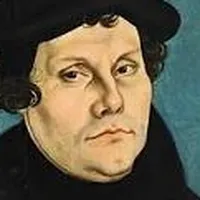
When asked to recant of his writings, Luther replied, “Unless I am convinced by sacred Scripture or by evident reason, I cannot recant. For my conscience is held captive by the word of God and to act ...
Many people have misinterpreted the separation of church and state to mean that religious views shouldn’t play a role in public discussions and lawmaking. Someone might say, “We shouldn’t restrict abo...
When we fight this work-six-days, Sabbath-one-day rhythm, we go against the grain of the universe. And to quote the philosopher H. H. Farmer, “If you go against the grain of the universe, you get spli...
Exodus 5:1-21, 1 Samuel 8:4-22, Isaiah 1:10-17 , Matthew 23:23-28 , Galatians 3:26-29, Psalm 146:3-9
One of the gravest dangers to the Christian faith is its wholesale appropriation of the larger culture. When this happens, the citizens of those places cannot recognize the difference between their cu...
Mark 2:23-28, Mark 3:1-6, Acts 12:12, Acts 12:25, Acts 15:37-39, Colossians 4:10, 2 Timothy 4:11, Philemon 1:24, 1 Peter 5:13, Mark 1:14-15, Mark 2:1-22, Exodus 20:8-11, Deuteronomy 5:12-15, Exodus 34:21, 1 Samuel 21:1-6, Luke 11:37-54, Mark 2:1-17, Genesis 1:26-31, Genesis 2:1-2, Genesis 3:null, John 19:30
Context Authorship of Mark Mark’s account of the story of Jesus is commonly held to be the earliest of the four canonical Gospels. Early church tradition identifies the author as Mark (or John Mark)...
My friend Scot McKnight is a New Testament professor in Chicago. For years, he taught a class on Jesus, and he would start every semester with two surveys. The first was a set of questions about the s...
Many have heard of the polymath and famous atheist Bertrand Russell (1872-1970), whose career as a public intellectual touched on a variety of disciplines, including philosophy (he is considered one o...
Romans 5:18-19, Exodus 1:14, Luke 15:11-32, John 3:16-17, 1 Corinthians 15:22, Romans 3:23-24, Genesis 3:1-7
The first attempt at a response: there must have been a fall, a decline, and the road to salvation can only be the return of the sensible finite into the intelligible infinite.
In this short excerpt, Father Roderick Strange speaks to those who want to write off the church. It is written primarily to a Roman Catholic audience, but it relates quite well to Protestants as well:...
Genesis 1:26-27 , Exodus 33:11-23 , Isaiah 43:1-4, John 10:1-15 , Luke 7:36-50, Psalm 139:1-6, 13-16
I am convinced that the scourge of our scientific and technological age is depersonalization. There is a heartbeat pulsating at the center of the universe, giving life and meaning to everything, but o...
Martin Luther said that every Christian ought to read the Bible from cover to cover every year. But, likening the Bible to a forest, he also said that reading the Bible doesn’t become really enjoyable...
Exodus 14:10-16, 1 Kings 18:21-39, Matthew 14:28-31, James 1:5-6, Psalm 121:1-2
An atheist fell off a cliff. As he tumbled downward, he caught hold of the branch of a small tree. There he hung between heaven above and the rocks a thousand feet below, knowing he wasn’t going to be...
Exodus 32:1-6 , 1 Samuel 4:3-10, Isaiah 40:18-25, Matthew 16:13-20, Acts 5:1-11 , Psalm 115:4-8
A. W. Tozer once wrote, Left to ourselves we tend immediately to reduce God to manageable terms. We want to get Him where we can use Him, or at least know where He is when we need Him. We want a ...
Exodus 24:null, Philippians 4:9, James 1:22-23, James 1:22, Matthew 7:24
Practice is to Judaism what belief is to Christianity. That is not to say that Judaism doesn’t have dogma or doctrine. It is rather to say that for Jews, the essence of the thing is a doing, an action...
Exodus 3:7–10, Isaiah 58:6–10 , Amos 5:21–24, Luke 4:16–21, James 2:1–7, Psalm 9:9–10
I can count on the fingers of one hand the number of times that I have heard a sermon on the meaning of religion, of Christianity, to the man who stands with his back against the wall. It is urgent th...