Exodus 5:1–2, 1 Kings 18:21–39, Daniel 3:16–18, Matthew 5:14–16, Acts 4:19–20, Psalm 2:1–2, 10–12
Most secularists are too politically savvy to attack religion directly or to debunk it as false. So what do they do? They consign religion to the value sphere—which takes it out of the realm of true a...
In this excerpt, author David Zahl challenges the common belief that religion is “in decline.” He argues that while Westerners, particularly younger generations, may be distancing themselves from the ...
In 1882—seven years before his descent into madness—Friedrich Nietzsche published a parable called The Madman . In the parable, a madman comes into a village on a bright, sunny morning holding al...
Ancient Lens What can we learn from the historical context? A Letter to Real People In the understanding of, and preaching on, any section of the Revelation of John , it is critical to know that t...
Preaching Commentary Ancient Lens What can we learn from the historical context? A Letter to Real People In the understanding of, and preaching on, any section of the Revelation of John , it is ...
Many people have misinterpreted the separation of church and state to mean that religious views shouldn’t play a role in public discussions and lawmaking. Someone might say, “We shouldn’t restrict abo...
Genesis 2:1-3, Exodus 20:8-11, Deuteronomy 5:12-15, Mark 2:27-28, Matthew 12:8, Luke 6:5
For the most part, contemporary Christians pay little attention to the Sabbath. We more or less know that the day came to reflect, in U.S. culture, the most stringent disciplinary faith of the Puritan...
Exodus 5:1-21, 1 Samuel 8:4-22, Isaiah 1:10-17 , Matthew 23:23-28 , Galatians 3:26-29, Psalm 146:3-9
One of the gravest dangers to the Christian faith is its wholesale appropriation of the larger culture. When this happens, the citizens of those places cannot recognize the difference between their cu...
Noteworthy in this regard is the contribution of the Reformers, particularly Martin Luther, though John Calvin’s contribution is also very significant. Both called for a spirituality in the world that...
Exodus 3:7-10, Isaiah 58:6-10, Micah 6:6-8, Matthew 23:27-28 , James 1:26-27, Psalm 146:7-9
A major stumbling block for many earnest seekers is the compelling evidence throughout history that terrible things have been done in the name of religion. This applies to virtually all faiths at some...
Exodus 8:11, Mark 2:27, Genesis 2:3, Matthew 5:12-15
Sunday observance of the Sabbath was the subject of forty-seven acts of Parliament and often debated by American legislators in the nineteenth and early twentieth centuries.
The problem is not recognizing the importance of the individual. The problem is the glorification of the individual. When the individual self is glorified over the greater good of the community, right...
The Hebrew cosmology represents a revolutionary break with the contemporary world, a parting of the spiritual ways that involved the undermining of the entire prevailing mythological world-view... The...
Richard Attenborough’s movie Gandhi has a scene set in South Africa where the young Indian lawyer and a white clergyman are walking together on a boardwalk, contrary to South African law at the time. ...
Exodus 32:1–4, 1 Samuel 8:6–9, Daniel 6:6–10, Matthew 22:20–21, Acts 5:29, Psalm 146:3–5
Followers of Jesus should not be in bed with any of the political parties. Even if one affiliates with a particular party, may we maintain a posture to collaborate, listen, hold accountable, and engag...
Exodus 3:7–10, Isaiah 58:6–10 , Amos 5:21–24, Luke 4:16–21, James 2:1–7, Psalm 9:9–10
I can count on the fingers of one hand the number of times that I have heard a sermon on the meaning of religion, of Christianity, to the man who stands with his back against the wall. It is urgent th...
The challenge each of these faced in their deconstruction—and what we may face—is walking the tightrope between becoming our own person and honoring our past. In The Homeless Mind , sociologist P...
When we fight this work-six-days, Sabbath-one-day rhythm, we go against the grain of the universe. And to quote the philosopher H. H. Farmer, “If you go against the grain of the universe, you get spli...
An attempt to wrest from God the prerogatives of absolute freedom and infinity leads to the inversion of Pentecost and what is in effect a new Babel. 'Postmodernism' represents that Babel perf...
“If there is no God, never was a God, why do we miss him so much?” asked one agnostic European Jew as he looked back on the horrors of the twentieth century.
Mark 2:23-28, Mark 3:1-6, Acts 12:12, Acts 12:25, Acts 15:37-39, Colossians 4:10, 2 Timothy 4:11, Philemon 1:24, 1 Peter 5:13, Mark 1:14-15, Mark 2:1-22, Exodus 20:8-11, Deuteronomy 5:12-15, Exodus 34:21, 1 Samuel 21:1-6, Luke 11:37-54, Mark 2:1-17, Genesis 1:26-31, Genesis 2:1-2, Genesis 3:null, John 19:30
Context Authorship of Mark Mark’s account of the story of Jesus is commonly held to be the earliest of the four canonical Gospels. Early church tradition identifies the author as Mark (or John Mark)...
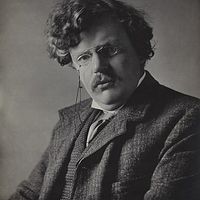
G. K. Chesterton was well-known (and iconoclastic) in his defense of tradition in a time when progress was all the rage in Western Europe- in technology, in the sciences, in philosophy. Chesterton, on...
The Barna Research Group reports that in the United States about 10 million self-proclaimed, born-again Christians have not been to church in the last six months, apart from Christmas or Easter.
Ignoring God's Stop Sign Have you ever been driving and inadvertently blown right through a stop sign? It happened to me recently. Anne and I were down in San Francisco meeting some friends, I w...
Mark 7:1-23, Mark 7:1-12, Isaiah 29:13, Exodus 12:6-20, Deuteronomy 6:20-25, Joshua 4:1-9
Context Ritual Purity The most important broad contextual issue to address with this passage is the concept of ritual purity, and the ways in which this served as a boundary and identity marker for ...
Leviticus 23:, Exodus 15:1-21, Nehemiah 8:9-12, Luke 15:22-24, John 2:1-11, Psalm 100:1-2
People of our time are losing the power of celebration. Instead of celebrating we seek to be amused or entertained. Celebration is an active state, an act of expressing reverence or appreciation. To b...
Exodus 20:3-7, 12-17, Deuteronomy 5:12-15, Mark 2:27-28, Matthew 12:8, Luke 6:5, Hebrews 4:9-10, Isaiah 58:13-14
Interpretation series editor Patrick Miller has shrewdly observed that the fourth commandment on Sabbath is the “crucial bridge” that connects the Ten Commandments together. The fourth commandment loo...