Adam was called by God to take care of Eden. But it was too much work for one man. Eden was massive. Adam was incapable of gardening the whole thing. He needed help. That’s why God created Eve. Go...
The [Mesopotamian ancient texts] serve as sources of information for us to formulate the shape of each culture’s ways of thinking. In most areas there is more similarity between Israel and its neighbo...
In love . What does that even mean? “Love” is a junk drawer we dump all sorts of ideas into, just because we don’t have anywhere else to put them. I “love” God, and I “love” fish tacos. See ...
For years, Bible scholars have danced around the matter by saying slavery in Rome was far different from slavery in the first few centuries of American history. No doubt their observations carry a mea...
Exodus 1:15–22, 1 Samuel 1:20–28, 2 Kings 4:18–37, Matthew 2:16–18, Mark 10:13–16, Psalm 127:3–5
Pharaoh viewed the Hebrews as a growing threat to the Egyptian way of life, so he ordered all Hebrew baby boys killed. King Herod feared that a future king would arise from Bethlehem, so he ordered al...
The Hebrew cosmology represents a revolutionary break with the contemporary world, a parting of the spiritual ways that involved the undermining of the entire prevailing mythological world-view... The...
Names in the ancient world were associated with identity, role and function. Consequently, naming is a typical part of the creation narratives. The Egyptian Memphite Theology identifies the Creator as...
“When Abram came to Egypt, the Egyptians saw that Sarai was a very beautiful woman” (Gen 12:14). What is considered beautiful is one of those things that often goes without being said. Sarah was about...
Genesis 12:1–3, Exodus 3:1–12, Isaiah 53:, Matthew 22:15–22 , John 4:1–42 , Acts 17:16–34
The world of Jesus was not the Old Testament Hebrew world. Like the United States now, Israel was multicultural, including a combination of Aramaic, Greek, and Roman influences. The people looked Jewi...
The idea of covenant is fundamental to the Bible’s story. At its most basic, covenant presents God’s desire to enter into relationship with men and women created in his image. This is reflected in the...
Ancient lens What's the historical context? Original Passover If you frequent any web sites that have thread or message board formats, you occasionally run into the acronym “OP,” meaning “ori...
The Rabbi Jonathan Sacks, in his book The Home We Build Together , points out to the reader that in scripture the description of the creation of the universe in Genesis is given a mere thirty-fou...
Exodus 23:2, Daniel 3:16-18, 2 Chronicles 24:20-21, Matthew 5:9-10, Romans 12:19-21 , Psalm 82:3-4
In the early fifth century, even as Rome had officially embraced Christianity, the brutal spectacle of gladiatorial combat continued in the Colosseum, drawing massive crowds. One day, a Christian herm...
God blessed them, and God said to them, ‘Be fruitful and multiply, and fill the earth' Lord be with those who work and worship The Lord God took the man and put him in the Garden of Eden to ti...
Joy must be morally clean. God warned Israel not to be tempted by the kind of debauched “joy” of the Canaanite festivals, which included sexual immorality, drunkenness, gluttony, and idolatry. They ha...
Mark 7:1-23, Mark 7:1-12, Isaiah 29:13, Exodus 12:6-20, Deuteronomy 6:20-25, Joshua 4:1-9
Context Ritual Purity The most important broad contextual issue to address with this passage is the concept of ritual purity, and the ways in which this served as a boundary and identity marker for ...
Genesis 3:1-7 , Exodus 32:1-6 , Ecclesiastes 2:1-11, Psalm 73:25-26, Matthew 4:1-11 , James 1:13-15
The church fathers consistently acknowledged the beauty and goodness of desire (e.g., Augustine, above), but they were not naive to the potential for desire to be bent by sin. They knew that our longi...
Mark 7:1-8, 14-15, 21-23, Mark 7:11-12, Isaiah 29:13, Exodus 12:6-20, Deuteronomy 6:20-25, Joshua 4:1-9
Context Ritual Purity The most important broad contextual issue to address with this passage is the concept of ritual purity, and the ways in which this served as a boundary and identity marker for ...
Ancient lens What's the historical context? Covenant first These words spoken by God to the people of Israel were spelled out within the covenant-making process. God has promised to be with t...
Exodus 12:1-14, Psalm 31:9-16, Philippians 2:5-11, Mark 11:1-11
AIM commentary Ancient lens What's the historical context? Original Passover If you frequent any web sites that have thread or message board formats, you occasionally run into the acronym “...
Whether the Hebrew Genesis account was meant to be science or not, it was certainly meant to convey statements of faith. As will be shown it is part of the biblical polemic against paganism and an int...
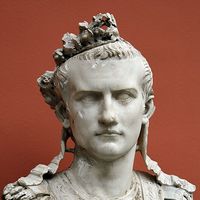
During each full moon, believing himself equal to the Roman gods, the Roman emperor Caligula would summon the moon goddess to share his bedchamber. When he asked Aulus Vitellius—a member of the Roman ...
There were three annual festivals in Israel—Passover along with the Feast of Unleavened Bread, The Feast of Weeks (Pentecost), and the Feast of Tabernacles. You can read about them in Leviticus 23 and...
The Hebrew word yada (“to know”) is, in fact, used for both sexual intercourse as well as our relationship with God. Every relational event is a stage that affords one a glimpse into the consumm...
Luke 1:26-38, Luke 1:46-55, Genesis 18:10-15, 1 Samuel 1:, 1 Samuel 2:, Exodus 2:1-10, 2 Timothy 1:5
We understand why Proverbs 31 gets so much attention on Mother's Day. But as we argued in the first part of this series, it isn't actually about mothers. And if you aren't careful, you...
Genesis 2:1-3, Exodus 20:8-11, Deuteronomy 5:12-15, Mark 2:27-28, Matthew 12:8, Luke 6:5
For the most part, contemporary Christians pay little attention to the Sabbath. We more or less know that the day came to reflect, in U.S. culture, the most stringent disciplinary faith of the Puritan...
Road Trips in Scripture While the definitions of “oceans” and “lakes” had to be qualified a bit in order to relate biblical locations to our present-day vacations, road trips—like mountains—can be fo...
Exodus 18:13-24 , Nehemiah 6:1-4, Ruth 1:16-17 , Matthew 6:24, Luke 10:38-42, Psalm 127:1-2, Luke 14:16-23
Jesus’ parable [of the banquet in Luke 14:16-23] makes it clear that there are business and career invitations . Some people had real estate that demanded attention, and others had invested in ox...
Mark 2:23-28, Mark 3:1-6, Acts 12:12, Acts 12:25, Acts 15:37-39, Colossians 4:10, 2 Timothy 4:11, Philemon 1:24, 1 Peter 5:13, Mark 1:14-15, Mark 2:1-22, Exodus 20:8-11, Deuteronomy 5:12-15, Exodus 34:21, 1 Samuel 21:1-6, Luke 11:37-54, Mark 2:1-17, Genesis 1:26-31, Genesis 2:1-2, Genesis 3:null, John 19:30
Context Authorship of Mark Mark’s account of the story of Jesus is commonly held to be the earliest of the four canonical Gospels. Early church tradition identifies the author as Mark (or John Mark)...