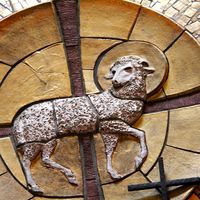
The mere fact that a belief is unpopular at present (or at some other time) is interesting from a sociological point of view but evidentially irrelevant.
1 Peter 1:8-9, Philippians 3:20, 1 Corinthians 2:9, John 20:29, 2 Corinthians 5:7
Faith is not something that goes against the evidence, it goes beyond it. The evidence is saying to us, 'There is another country. There is something beyond mere reason'.
The evidence repeatedly shows that for all its sales the Bible remains a foreign book for the vast majority of us. And this is not only a problem in the United States: global mission agencies are now ...
1 Peter 4:12-13, 2 Corinthians 12:9, Psalm 34:18, Luke 9:23, Philippians 3:10
Suffering is not evidence of God’s absence, but of God’s presence, and it is in our experience of being broken that God does his surest and most characteristic salvation work. There is a way to accept...
James 2:18, Romans 10:17, John 20:29, 1 Peter 3:15, Romans 1:20
Faith is the great cop-out, the great excuse to evade the need to think and evaluate evidence. Faith is belief in spite of, even perhaps because of, the lack of evidence…. Faith, being belief that isn...
There was once a court case that was lost because of the silence of an attorney. The distinguished lawyer Samuel Hoar (1778-1856) was representing the defendant. When it was time to present his case, ...
Now, in our lifetime, scientists are finding ever newer evidence for what some religious people called presence in the very organizing energy of the universe—from fractals, to holograms, to electro-ma...
John 1:14, Colossians 1:15-16, Philippians 2:5-11, Hebrews 1:1-3, Acts 4:12
In the Christian view, the ultimate evidence for the existence of God is Jesus Christ. If there is a God, we characters in his play have to hope that he put some information about himself in the play....
The simple fact that the Christian fellowship, founded on belief in Jesus' resurrection, came into existence and flourished in the very city where he was executed and buried is powerful evidence f...
Psalm 19:1-2, 2 Timothy 1:12, John 14:11, Proverbs 3:5-6, James 2:18, Romans 1:20, 1 Peter 3:15
In his book, A Peculiar Glory , John Piper provides an illustration of the kind of faith we are called to. This is no “blind faith,” in which we are supposed to simply believe without using our minds...
The very existence of the Bible is incontrovertible evidence of the God who refused to forsake his rebellious creation, who refused to give up, who was and is determined to redeem and restore fallen c...
Matthew 3:16-17, Mark 1:10-11, Luke 3:21-22, John 14:9-11
Some years ago the Court of Appeal of British Columbia, Canada, was hearing a case about a man accused of arson. During his trial in a lower court a microphone had picked up something he had murmured ...
Genesis 15:1-6, Exodus 14:10-14, Joshua 1:9, Psalm 23:, James 2:14-26
There’s no shortage of the religiously faithless who seem eager to tell us what faith is. Many of these characterizations of faith are reminiscent of Mark Twain’s precocious schoolboy who quipped, “Fa...
Colossians 1:15-17, Hebrews 1:3, 2 Corinthians 4:4, John 1:18, John 10:30, John 14:9
Christmas in May I’m pretty sure it was Stephen Covey, back in the day ( The Seven Habits of Highly Effective People ) who originally said, “The main thing is to let the main thing be the main thing...
Psalm 22:, Matthew 27:46, Mark 15:34, Hebrews 2:12
Ancient lens What’s the historical context? A Structured Complaint The Psalmist organizes his complaint against God in three sections. The first two sections dramatize the complaint (vv. 1-11 and...
Psalm 24:1, Genesis 1:26, James 1:27, Matthew 25:40, Amos 5:24, Isaiah 1:17
God, the fact that we feel uncomfortable is evidence that we perceive the injustices in our world. We don’t ask you to help us hear the cries of injustice, but rather to give us courage to act against...
Over the years, I have led hundreds of retreats that have at their center a few hours to be alone and quiet in listening prayer. At one such retreat, one participant shared a conversation she had wit...
While sexual sin, financial scandals, and toxic work environments hurt pastoral credibility, a more subtle, and probably more common danger is carelessness with the truth. Intellectual integrity matte...
John 21:15-19, 1 Corinthians 13:12, Luke 19:1-10, Romans 8:1-2, Luke 23:39-43, Matthew 11:28
In his book The Case for Grace , pastor and author Lee Strobel describes a dream he had as a child after having a significant argument with his father. Strobel does what most of us would do at that...
I can’t stress enough that this important process of examination can only be properly done in the context of a local church. You need other Christians who are committed to your spiritual well-being. T...
The first ministers were the twelve disciples. There is no evidence that Jesus chose them because they are brighter or nicer than other people. Their sole qualification seems to have been their initia...
In his enjoyable little book on Christian pilgrimage, British scholar N.T. Wright shares three propositions on the value that pilgrimage can bring to a Christian’s life: First, pilgrimage to holy pla...
Edwards [Jonathan Edwards] calls the deeper, primary form of thankfulness ‘gracious gratitude.’ It gives thanks not for goods received, but for who God is: for His character -- His goodness, love, pow...
In More Give to Live, Dr. Douglas Lawson provides evidence that the urge toward generosity begins early in life. He describes a continuum that he calls the “Giving Path.” This path begins with parents...
Psalm 30:5, Romans 8:18, John 16:20-22, 1 Peter 1:6-8, Isaiah 35:10, Revelation 21:4
When God Talks Back, psychological anthropologist T. M. Luhrmann sets out to explain how sensible people believe in an immaterial God. One aspect of evangelical Christianity that she finds particularl...
Atonement is secure when life is surrendered, released, set free for a new function…. When a sacrifice was offered, we should see it as a killing of the animal in place of the worshipper and the manip...
In the OT sacrificial system, the worshipper himself would kill the animal used for the sacrifice. First they would bring the animal near, indicating their desire to be made clean and worship. Next th...









![Edwards [Jonathan Edwards] calls the](https://images.unsplash.com/photo-1542318332-034f3136b62f?ixid=M3w1NzU0OTZ8MHwxfHNlYXJjaHwxfHxUaGFua2Z1bG5lc3N8ZW58MXwyfHx8MTcxMDUzMTk5MXww&ixlib=rb-4.0.3&q=80&auto=compress&fit=crop&w=200&h=200)