John Henry Newman
John Henry Newman (1801–1890) was a towering figure in 19th-century theology, philosophy, and education, whose legacy continues to shape Christian thought. Born in London, Newman began his spiritual journey in the Church of England, becoming a leading voice in the Oxford Movement, which sought to revive the Catholic roots of Anglicanism. His influential writings during this period, including Tracts for the Times, challenged prevailing notions of church authority and doctrine.
In 1845, Newman made the momentous decision to convert to Roman Catholicism, a move that caused a sensation in Victorian England. Ordained as a Catholic priest in 1847, he went on to establish the Oratory of St. Philip Neri in England, providing a space for prayer, study, and service. Newman’s theological contributions reached their pinnacle with works such as An Essay on the Development of Christian Doctrine (1845), where he articulated his understanding of the organic growth of church teaching, and The Idea of a University (1852), a seminal exploration of liberal education.
Newman’s writings reflect his commitment to the harmony of faith and reason, his pastoral sensitivity, and his deep personal devotion. His sermons and essays resonated widely, bridging gaps between intellectual rigor and spiritual depth.
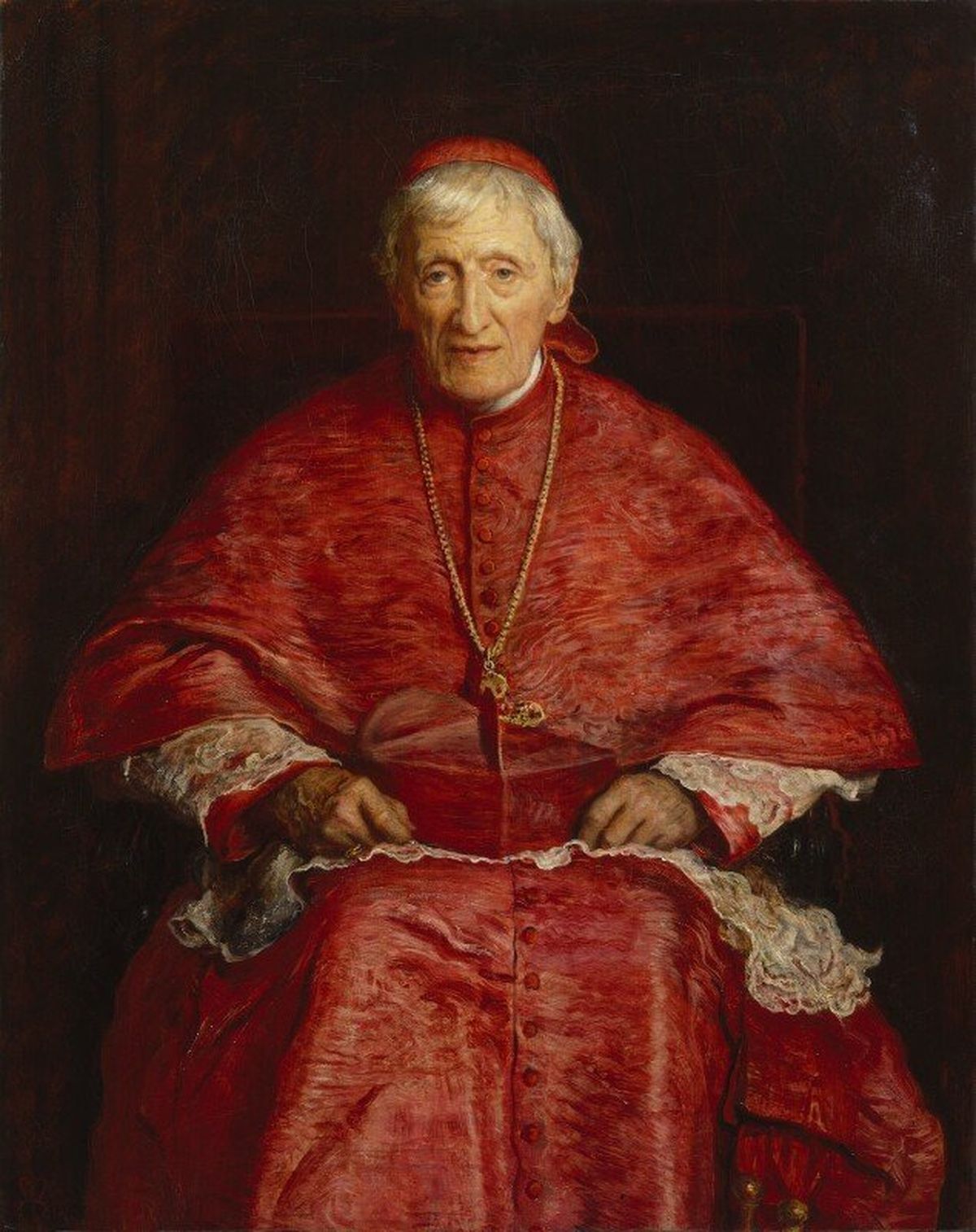
Elevated to the rank of cardinal by Pope Leo XIII in 1879, Newman continued to influence theological and educational thought. His motto, Cor ad cor loquitur (“Heart speaks to heart”), epitomized his approach to faith as deeply relational and personal.
Canonized as a saint by Pope Francis in 2019, John Henry Newman is celebrated for his enduring wisdom, profound spirituality, and the clarity with which he navigated the complexities of faith in an age of change. His life remains an inspiring testament to intellectual integrity, humility, and the pursuit of truth.