Acts 10:34-35, Acts 2:1-12, John 4:1-42, Romans 12:10, 1 John 4:20-21
God and Father of all, in your love you made all the nations of the world to be a family, and your Son taught us to love one another. Yet our world is riven apart with prejudice, arrogance, and pride....
My friend Ray McMillan introduced me to the Liberty Bell as a perfect object lesson for America’s racial divide. In addressing why “the bell won’t ring,” Ray describes the crack as a perfect illustrat...
Far too many people, especially within evangelicalism, think that the individual is all that matters, and that the corporate dimension is a distraction or diversion. Of course Christianity is deeply p...
John 15:5, Matthew 7:24, Romans 12:1-2, Luke 6:46, James 1:22, Colossians 2:6-7
The great danger of Christian discipleship is that we should have two religions: a glorious, biblical Sunday gospel that sets us free from the world, that in the cross and resurrection of Christ makes...
1 John 1:7, James 5:16, Matthew 18:20, John 15:12-14, Hebrews 10:19-25, 1 Peter 2:9-10, 1 Corinthians 12:25-27, Ephesians 4:1-6, Romans 12:2-8, Galatians 6:1-2, Acts 2:42-47, Colossians 3:11-17, 1 Corinthians 12:12-20, Psalm 133:1, John 13:34-35
Christian community means community through Jesus Christ and in Jesus Christ. There is no Christian community that is more than this, and none that is less than this.
Preaching Commentary Context Paul in Ephesus: His Third Missionary Journey This passage describes Paul’s arrival in Ephesus during his third missionary journey. He finds there some disciples who k...
Context Paul in Ephesus: His Third Missionary Journey This passage describes Paul’s arrival in Ephesus during his third missionary journey. He finds there some disciples who know only of John’s bapt...
Matthew 22:39, Philippians 2:3-4, 1 Corinthians 10:24, Romans 15:1-2, Galatians 6:10, Romans 12:10, Acts 20:35, Matthew 25:35-40, Isaiah 58:6-7, Proverbs 19:17, Luke 10:30-37, James 2:15-16, 1 John 3:17, Proverbs 31:8-9, Matthew 25:40, Acts 11:29-30, 2 Corinthians 8:13-15, Acts 2:44-45, Acts 4:32-35, 1 Corinthians 12:25-26
Pursuing the common good has been a strong marker of the Christian church from the very beginning. The early church had many habits that they became known for, of course—including meeting frequently, ...
Galatians 5:13-14, Matthew 16:24-25, Romans 12:4-5, Philippians 2:3-4, Ephesians 2:8-10
In her excellent book on following Jesus in the suburbs, Ashley Hales describes one of the ways in which our discipleship has been influenced by modern secular trends such as the desire for self-actua...
Matthew 5:43-45, Romans 12:17-21, Luke 17:20-21, Matthew 6:25-33, Acts 4:18-20, 2 Corinthians 10:3-4, Isaiah 2:4, James 3:17-18, Philippians 3:20, John 18:36
A young Russian, deeply moved by the teachings of Tolstoy and the New Testament, had become a conscientious objector. Standing before a magistrate, he spoke passionately about a life that loves its en...
It was this…intention that made the primitive Christians such eminent instances of piety, that made the goodly fellowship of the Saints and all the glorious army of martyrs and confessors. And if you ...
2 Corinthians 11:2, Acts 13:50, James 4:13-15, Philippians 2:3-4, Romans 12:17-19, 1 Peter 2:23, 2 Timothy 4:2, 1 Peter 5:2-3, John 21:15-17, 2 Corinthians 4:5, 1 Corinthians 2:1-5
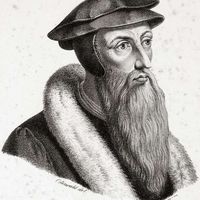
The Protestant Reformer John Calvin (1509-1564) arrived in Geneva to lead the city’s church in 1536, but not, as we might imagine, to universal acceptance. Rather, there was significant resistance and...
Preaching Commentary Background to the Letter and Passage Paul’s letter to the Ephesians was probably intended for wider distribution and use among the various churches around Ephesus. As such, the...
John 3:6-17 , Ephesians 2:8-10, Acts 16:31-34, 1 John 1:7, Philippians 2:5-8 , Matthew 5:14-16, Romans 12:1-2
O Lord God, You have commanded us to believe in Jesus; and I would flee to no other refuge, wash in no other fountain, build on no other foundation, receive from no other fullness, res...
1 Corinthians 6:1-8, Matthew 18:15-17, Romans 12:18, James 3:17-18, Proverbs 15:1
Former Supreme Court Associate Justice Antonin Scalia argues how Christians ought to resolve conflict based on 1 Corinthians 6: I think this passage [1 Cor. 6:1–8] has something to say about the pro...
2 Corinthians 10:1, Ephesians 4:2-3, Romans 12:3, Colossians 4:6, Matthew 23:11-12, Proverbs 11:2, James 1:19
In a statement created by Christian leaders across the world, the Lausanne Willowbank Report calls for church leaders to return to the humility and servanthood that Jesus manifested in His earthly min...
Romans 12:1, Isaiah 58:10, Philippians 2:3-4, Matthew 20:26-28, 1 Timothy 6:17-19, Luke 9:23
Merciful Jesus Give us courage to deny privilege to lay down favor and safety in order to take up the cross of opportunity and justice Too often we fail to do this Merciful Jesus Give us courage to d...
By misinterpreting the Enlightenment and the corresponding rise of empiricism as an existential threat to Christian faith, many frightened Christians sequestered themselves into rooms of certitude.
2 Corinthians 5:21, Philippians 3:9, 1 Corinthians 10:13, James 4:7, Matthew 6:13, Romans 12:2, 1 Peter 1:15-16, Galatians 2:20
Pastor: Heavenly Father, save me from sin! I know I am righteous only through Jesus’ righteousness, but I greatly desire to be more like him! I am your child, so help me to resist the temptation to si...
Preaching Commentary Introduction Believed to be some of Paul’s last words of his long ministry, 2 Tim. 4:6ff are Paul’s closing remarks to his beloved disciple, Timothy. Imprisoned in Rome by this...
James 1:27, Hebrews 13:2-3, 1 Peter 2:12, Galatians 6:10, Romans 12:13, Acts 2:44-45
The fourth-century emperor Julian (AD 331-336) feared [Christians] might take over the empire. Referring to Christians as “Galileans” and Christianity as “atheism” (because of their denial of the exis...
Introduction Believed to be some of Paul’s last words of his long ministry, 2 Tim. 4:6ff are Paul’s closing remarks to his beloved disciple, Timothy. Imprisoned in Rome by this point, Paul concludes ...
Background to the Letter and Passage Paul’s letter to the Ephesians was probably intended for wider distribution and use among the various churches around Ephesus. As such, there is no particular cri...
Faith according to our Lord’s teaching in this paragraph is primarily thinking; and the whole trouble with a man of little faith is that he does not think. He allows circumstances to bludgeon him. . ....
Isaiah 26:3, 2 Corinthians 5:17, John 15:5, Colossians 3:3-4, Luke 9:23, Philippians 2:3-5, Romans 12:1-2
The word eccentric comes from a combination of the Greek terms ex (out of) and kentron (center). When combined, ekkentros means “out of center.” The term gained currency in the late Middle Ages, when ...
Faith and pessimism are incompatible. To be sure, we are not starry-eyed idealists; we are down to earth realists. We know well that sin is ingrained in human nature and in human society. We are not e...
1 Samuel 24:10-12, Proverbs 16:8, Romans 12:17-18, Psalm 72:1-4, Micah 6:8, Matthew 5:13-16
When in conflict we should demonstrate that our public witness is more important than winning a political battle. This means that if our side has to do something unloving or corrupt to win, then it’s ...
2 Thessalonians 3:3, Romans 12:12, Psalm 91:4-5, 2 Corinthians 10:4-5, James 4:7, Matthew 6:13, 1 Peter 5:8-9
We Christians must be armed and expect every day to be under continuous attack. . . . At such times our only help and comfort is to run here and seize hold of the Lord’s Prayer and speak to God from o...
Philippians 3:7-8, Galatians 2:20, Romans 12:1-2, John 12:24-25, Matthew 7:14, Luke 14:27, Matthew 11:28-30
You have noticed, I expect, that Christ Himself sometimes describes the Christian way as very hard, sometimes as very easy. He says, “Take up your Cross”—in other words, it is like going to be beaten ...