Children have a tendency to say, “Look at me!” On the tricycle: “Look at me go!” On the trampoline: “Look at me bounce!” On the swing set: “Look at me swing!” Such behavior is acceptable for children....
The word “acceptance” has an interesting origin. It comes from the Latin ad capere, which means to “take to oneself.” What does that mean? It’s a paradoxical truth, but in order for us to accept other...
The animal behavior scientist Temple Grandin, who achieved significant success while struggling with autism, has this to say on the subject of progress: People are always looking for the single ma...
Genesis 32:24-28, Genesis 32:30, Hosea 12:3-4, Hebrews 5:12-14, 1 Corinthians 3:1-2, Romans 5:3-5, James 1:2-4, Luke 9:23-24, 2 Corinthians 12:9-10
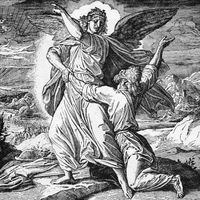
Maturation is a lifelong journey with different phases, human and spiritual. And it has many setbacks. What can be helpful is to have a grasp of the natural seasons of our lives and how these interfac...
2 Corinthians 12:9, Luke 15:11-32, Ephesians 2:8, Genesis 32:10, James 4:10, James 4:6, Isaiah 6:1-8
Growth in grace is growth downward. It is the forming of a lower estimate of ourselves. It is a deepening realization of our nothingness. It is a heartfelt recognition that we are not worthy of the le...
The Texas-based pastor Matt Chandler spent a decade working with teenagers, and during that time, he realized how a specific change takes place between sixth graders and ninth graders. As Chandler say...
There is a great difference between successfulness and fruitfulness. Success comes from strength, control, and respectability. A successful person has the energy to create something, to keep control o...
Daniel 1:8, Genesis 37:39–50, Exodus 2:4, 14–17, Matthew 4:1–11, 2 Corinthians 11:23–29, Psalm 46:
Resilience is not something that can be mustered in a moment of “rising to the occasion.” It is formed over a long period before the crisis of testing so that it can continue the transformation during...
Proverbs 15:1, Genesis 24:17-20, Daniel 1:8-9, Colossians 4:6, 1 Peter 3:15-16, Psalm 34:13-14
Manners are what vex or soothe, corrupt or purify, exalt or debase, barbarize or refine us, by a constant, steady, uniform, insensible operation, like that of the air we breathe in. They give their wh...
Genesis 11:4 , Ecclesiastes 4:4, 1 Samuel 18:6-9 , Matthew 6:1-2 , Luke 10:38-42, Psalm 127:1-2
I lust after recognition, I am desperate to win all the little merit badges and trinkets of my profession, and I am of less real use in this world than any good cleaning lady.
The first three items in Paul’s fruit basket sound very spiritual. Heavenly almost. Very nice for Sundays, at least. But his next one, patience, brings us back down to earth on a Monday. What are we l...
We must learn to see our limits as the entrance into the good life, not what bars us from it. But as we grow older, waiting feels like an inconvenience or affront. We take out our phones when we’re...
1 Peter 2:2, 1 Thessalonians 3:12, Genesis 37:50, Exodus 3:11–12 , Isaiah 40:29–31 , John 15:1–5, Romans 5:3–5, Psalm 1:1–3, Luke 2:40, 52; 1
Christian character is not an act but a process, not a sudden creation but a development. It grows and bears fruit like a tree; it requires patient care and unwearied cultivation.
The mystery of perfection as an aspect of beauty is its transcendence. It points to a glory beyond itself. I knew that when I held my children, I didn’t simply cradle flesh and blood. I held a living ...
Genesis 2:2-3, Exodus 20:8-11, Leviticus 25:4-5, Mark 2:27, Isaiah 40:30-31
Sabbath honors the necessary wisdom of dormancy. If certain plant species, for example, do not lie dormant for winter, they will not bear fruit in the spring. If this continues for more than a season,...
The earth had been completely unformed and empty; in the six-day process of development God had formed it and filled it—but not completely. People must now carry on the work of development: by being f...
God uses our identity crises to reveal who we are and who he is. Sometimes these crises come out of nowhere. Something devastating happens. Someone close to us dies. We are diagnosed, or someone we kn...
Genesis 15:1-6, Exodus 14:10-14, Job 1:42, Matthew 14:22-33, Psalm 23:
We should aim for rational confidence in these sorts of pursuits because certainty is a mere will-o’-the-wisp. Finite minds simply can’t pull it off. Though the distinction between aiming at certainty...
The following story by professor and author A. J. Swoboda is a vivid example of how shame works in our lives, often causing us to hide and run away from the pain and embarrassment: One of the greate...
Shame makes its way into our stories at an early age. So early, in fact, that we usually have no conscious memory of our initial encounters with it. This can take place as early as fifteen to eighteen...
We will have to start over, with a different and much older premise: the naturalness and, for creatures of limited intelligence, the necessity of limits.