Exodus 5:1-21, 1 Samuel 8:4-22, Isaiah 1:10-17 , Matthew 23:23-28 , Galatians 3:26-29, Psalm 146:3-9
One of the gravest dangers to the Christian faith is its wholesale appropriation of the larger culture. When this happens, the citizens of those places cannot recognize the difference between their cu...
Romans 12:2, Galatians 6:1, Proverbs 9:10, James 1:4, Isaiah 61:3
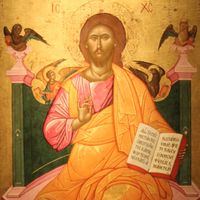
Think of an ancient icon of Christ. Imagine that a thousand-year-old Christ Pantocrator painted on a wooden panel is discovered in some forgotten monastery. The image of Christ is there, but it’s cove...
1 Peter 2:12, Galatians 3:26-28, 1 Corinthians 12:12-13, John 13:34-35, Acts 2:42-47, Matthew 28:19-20, James 2:17-18
In Silence, Shusaku Endo writes of the journey of Portuguese Jesuits journeying to Japan. It is a conversation about those who intend to take the path of Jesus, only to find they are on the path of Ju...
The success of every culture hinges not on big points of morality—there will always be issues like abortion or school prayer over which people differ—but on smaller values, like being considerate of o...
Galatians 1:10, Jeremiah 29:7, Matthew 5:13-14, Colossians 2:8, John 17:15-16, Acts 17:22-23, Romans 12:2
To reach people we must appreciate and adapt to their culture, but we must also challenge and confront it. This is based on the biblical teaching that all cultures have God's grace and natural rev...
Isaiah 49:6, Revelation 7:9, John 3:16, Galatians 3:28, Romans 10:12, Acts 1:8, Matthew 28:19-20
The Gospel as such has no native country. He who goes out humbly with Christ in the world of all races will perpetually discover the multiple, but constant, relevance of what he takes. It takes a whol...
James 2:1-17, James 1:27, Galatians 3:16, Colossians 3:11, Romans 2:11, Ephesians 6:9, Colossians 3:25
A Highly Practical Text Often we come to scripture passages that require a bit of interpretive twists and turns to find ways of connecting the text to our modern-day lives in the 21st century. But oc...
Matthew 28:18-20, Acts 1:8, Acts 10:34-35, Galatians 3:28, Romans 1:16, John 4:21-24, Psalm 22:27-28
[Speaking of the early church] A cosmopolitan spirit grew, particularly in the cities, that transcended national barriers. Old tribal distinctions and identities were breaking down, leaving people rip...
Acts 17:6, Revelation 5:9-10, Galatians 3:28, Romans 8:17, Matthew 5:3
The kingdom of God turns the Darwinist narrative of the survival of the fittest upside down (Acts 17:6–7). When the church honors and cares for the vulnerable among us, we are not showing charity. We ...
Editors Note: This is perhaps less a review as a jumping off part to articulate some thoughts I developed while reading The Minority Experience. For a full review of the title, a cursory google search...
Luke 18:10-14, Matthew 6:1, Ephesians 2:8-9, James 4:10, Galatians 6:4, Micah 6:8, Romans 12:3
In the Christian subculture, there is an unspoken standard, a notorious goal to “win the contest.” It’s there, the contest. We don’t say it out loud, because it sounds ludicrous spoken into the open a...
Galatians 5:14-15, John 8:32, Micah 6:8, 1 Corinthians 1:10, Matthew 7:3-5, Romans 12:2, James 3:17
People bind themselves into political teams that share moral narratives. Once they accept a particular narrative, they become blind to alternative moral worlds.
I am not perfect, and I will struggle with the “old Jim,” who was and is influenced by American culture, narratives and values. But the key is that identity comes before behavior. We almost always do ...
Matthew 6:1-2, John 5:44, Romans 12:2, Galatians 1:10, 1 Thessalonians 2:4, Titus 3:4-7, Psalm 37:4
In her book Invitation to Retreat, Ruth Haley Barton shares some of the many insights she has had since she began intentionally taking inattentional retreats to re-connect with God and her own desires...
A 2014 study by Wendy Wood found that approximately 40% of people’s daily activities are performed out of habit. According to Wood, “an important characteristic of a habit is that it’s automatic…We fi...
Galatians 5:22-23, Ruth 1:16, Luke 10:38-42, Luke 10:25-37, Colossians 3:17, 1 John 3:18, Matthew 22:37-40
Identities—what makes us who we are, the kind of people we are—is what we love. More specifically, our identity is shaped by what we ultimately love or what we love as ultimate—what, at the end of the...
Matthew 5:46-47, Romans 15:7, Galatians 3:28, 1 Peter 3:8, Colossians 3:11
Most men and women fall in love with individuals of the same ethnic, social, religious, educational and economic background, those of similar physical attractiveness, a comparable intelligence, simila...
The myth seems to be that you’re born with some magic combination of parents, DNA, and lucky breaks, and they conspire to determine what you accomplish in life. Nonsense. And a good thing, too, becaus...
The Law The ambiguous place of the law in Christian thought can be seen historically in battles between antinomians and legalists, each side finding New Testament support, and the present text would ...
John 15:4-5, 1 John 3:18-19, Matthew 7:21, Romans 10:9-10, Hebrews 11:1, Galatians 2:20
I do not put much stock in "believing in God." The grammar of "belief" invites a far too rationalistic account of what it means to be a Christian. "Belief" implies propos...
We might not say we believe a Jesus-plus-our-efforts idea of the gospel, but when we place our performances on the pedestal of personal progress, we’re not relying on the grace of God. We’re worshipin...
Perhaps the greatest irony in the life of continual comparison is that while it involves so much attention to the attributes and gifts of other people, it’s actually quite self-focused. From that hype...
Proverbs 16:9, Jeremiah 29:11, John 15:1-27, Proverbs 3:5-6, Galatians 2:20, Matthew 6:25-34
In their excellent book Invitation to a Journey , M. Robert Mulholland and Ruth Haley Barton describe the foundation of life as being spiritual in nature. This means we are constantly be “formed” s...
Psalm 19:null, Psalm 1:null, Psalm 119:null, Exodus 20:2-3, Galatians 3:24-26, John 14:6, Matthew 22:37-40
Ancient Lens What can we learn from the historical context? The Books of the Psalms and David The Book of Psalms is divided into five books, like the five books of the Torah. While it is not obvi...
Galatians 6:2-3, Matthew 6:1-4, Romans 12:10, Isaiah 58:6-7, 1 Peter 5:5-6, James 4:10, Micah 6:8
In the context of justice, I think what Christians need to confess about their pride isn’t so much about taking credit away from God but from the people we help. One version of this is sometimes refer...
Exodus 1:15–21, Daniel 3:16–18 , 1 Kings 3:16–28 , Matthew 4:1–11, Galatians 1:6–10, Psalm 73:
Pragmatism may be defined simply as the approach to reality that defines truth as “that which works.” The pragmatist is concerned about results, and the results determine the truth. The problem with t...
These, then, are the two points I wanted to make. First, that human beings, all over the earth, have this curious idea that they ought to behave in a certain way, and cannot really get rid of it. Seco...







![[Speaking of the early church] A](https://a-us.storyblok.com/f/1016915/1200x801/ed572a4861/the-early-church.jpg/m/200x200/smart)