Exodus 3:10-12, Esther 4:14, 1 Samuel 16:12-13, Luke 15:17-20, 1 Peter 2:9, Psalm 139:14, Matthew 1:
On March 11, 1830, a young English girl was studying a lesson on the royal family with her tutor. As she examined the genealogical chart, she suddenly realized the astonishing truth—she was next in li...
[Jonathan] Sacks comments on this passage, tying it back to his study of adaptive leadership concepts. In the first occasion, Moses was faced with a technical challenge: the people needed food. On the...
Leadership is lifting a person’s vision to higher sights, raising of a person’s performance to a higher standard, of building a personality beyond its normal limitations.
Ambiguity may keep people up nights, but anyone seeking exquisite simplicity in his or her career ought to look for a non-leadership position. Leaders, by definition, have followers. Followers need di...
Exodus 16:3, Numbers 14:4, Luke 5:37-38, Isaiah 43:19, Joshua 1:9
Churches, seminaries, and nonprofit organizations are notorious for saying they need change and then resisting the very leader they called to bring it. One of my consulting clients told me that he cal...
Resilience is not about becoming smarter or tougher; it’s about becoming stronger and more flexible. It’s about becoming tempered. Which takes us back to the blacksmith’s shop. Tempered. Let the word ...
Exodus 3:1-12, Mark 4:35-41, Luke 10:25-37, Matthew 25:35-36, Acts 1:8
Triune God–Father, Son and Holy Spirit: our Creator, Redeemer and Sustainer; you created, redeemed, and sustain all who call on Your name in any language, place and time. We come to you as Lord of all...
I know quite certainly that I myself have no special talent. Curiosity, obsession, and dogged endurance, combined with self-criticism, have brought me to my ideas. Especially strong thinking powers (...
Acts 4:32-35, Luke 10:25-37, Matthew 14:13-21, 1 Kings 17:8-16, Exodus 16:1-36, John 6:35, 2 Corinthians 1:3-5
God—Father, Son and Spirit; You are a God of compassion and love. Like the Israelites in the wilderness, we’ve known Your love, and experienced Your care and provision. Repeatedly You’ve answered our ...
The Lord says, “I am the God of thy father, the God of Abraham, the God of Isaac, and the God of Jacob. I have surely seen the affliction of my people. I have heard their cry, for I know their s...
Exodus 18:13-27, Judges 6:14, Psalm 23:1-3, Philippians 2:3-4, Matthew 20:25-28
Leadership is not about problems and decisions; it is a profoundly relational enterprise that seeks to motivate people toward a vision that will require significant change and risk on everyone’s part.
The problem is not recognizing the importance of the individual. The problem is the glorification of the individual. When the individual self is glorified over the greater good of the community, right...
Deuteronomy 6:4-5, Exodus 19:5-6, Matthew 7:24-27, Luke 11:28, John 14:23, Psalm 40:6-8
It would seem that hearing is but a narrow channel pouring into the deep sea of doing. Yet the etymological dictionary taught me that the sharp distinction between hearing and doing is the result of h...
Peter Drucker suggests that we should always sustain two streams of learning and self-improvement. And though he is speaking specifically about work and career, what he says is equally applicable whet...
James 3:17-18, 1 Timothy 3:2-3, John 8:32, Jeremiah 23:5, Isaiah 1:17, Proverbs 29:4, Exodus 18:21
If your success is defined as being well adjusted to injustice and well adapted to indifference, then we don’t want successful leaders. We want great leaders who love the people enough and respect the...
Statistics show that 80 percent of new pastors leave the ministry within five years. A friend once remarked, “If they were able to pastor churches without people, they might last ten years.” Most past...
The wonderful word master used to describe the person who is at the top of his or her craft, whatever the profession. It was a title that one could work toward and with some degree of confidence ascri...
A student who had recently lost his sight was sent to the Seeing Eye Institute for the Blind in Morristown, New Jersey, for specialized training. Upon arrival, he was greeted by another young ma...
In an old joke, people refer to seminary as cemetery. Attending one does feel like that at times, so the last thing I expected to discover in a dingy classroom in the basement of a Pasadena seminary s...
Daniel 1:8, Genesis 37:39–50, Exodus 2:4, 14–17, Matthew 4:1–11, 2 Corinthians 11:23–29, Psalm 46:
Resilience is not something that can be mustered in a moment of “rising to the occasion.” It is formed over a long period before the crisis of testing so that it can continue the transformation during...
Churches, seminaries, and nonprofit organizations are notorious for saying they need change and then resisting the very leader they called to bring it. One of my consulting clients told me that he cal...
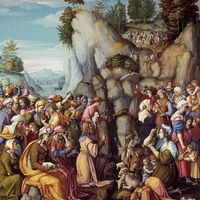
Why did Moses strike the rock? He was a man of faith, whose life had been characterized by trust in God (see, for example, the description of Moses in (Heb 11:24-29). So why did he fall into unbelief ...
Excellence is an art won by training and habituation: we not act rightly because we have virtue or excellence, but rather have these because we have acted rightly; these virtues are formed in man by d...
1 Kings 17:8-16, Exodus 16:16-18, Matthew 25:31-46 , Luke 10:25-37, 2 Corinthians 9:6-8, Psalm 41:1-3
Robert Lupton offers insight into the complexities of human impoverishment, reminding us that in spite of our best intentions sometimes our philanthropic efforts can yield unintended consequences: “Wh...
In C. S. Lewis’ classic work Mere Christianity , the English apologist compares God’s use of adversity to walking a dog on a leash. When the dog wraps its leash around a pole and tries to move fo...