Exodus 1:15–21, Daniel 3:16–18 , 1 Kings 3:16–28 , Matthew 4:1–11, Galatians 1:6–10, Psalm 73:
Pragmatism may be defined simply as the approach to reality that defines truth as “that which works.” The pragmatist is concerned about results, and the results determine the truth. The problem with t...
Leadership is lifting a person’s vision to higher sights, raising of a person’s performance to a higher standard, of building a personality beyond its normal limitations.
Genesis 1:26-27 , Exodus 33:11-23 , Isaiah 43:1-4, John 10:1-15 , Luke 7:36-50, Psalm 139:1-6, 13-16
I am convinced that the scourge of our scientific and technological age is depersonalization. There is a heartbeat pulsating at the center of the universe, giving life and meaning to everything, but o...
Desegregation was one of the big goals of the civil rights movement. “Separate but equal” in the South became “separate and unequal.” The disparities were in things as small as water fountains and as ...
Exodus 18:13-24 , Nehemiah 6:1-4, Ruth 1:16-17 , Matthew 6:24, Luke 10:38-42, Psalm 127:1-2, Luke 14:16-23
Jesus’ parable [of the banquet in Luke 14:16-23] makes it clear that there are business and career invitations . Some people had real estate that demanded attention, and others had invested in ox...
God has a definite plan set for every man, one that, being accepted and followed, will conduct him to the best and noblest end possible. You exist for a purpose high enough to give meaning to life and...
Genesis 15:1-6, Exodus 14:10-14, Job 1:42, Matthew 14:22-33, Psalm 23:
We should aim for rational confidence in these sorts of pursuits because certainty is a mere will-o’-the-wisp. Finite minds simply can’t pull it off. Though the distinction between aiming at certainty...
1 Kings 17:8-16, Exodus 16:16-18, Matthew 25:31-46 , Luke 10:25-37, 2 Corinthians 9:6-8, Psalm 41:1-3
Robert Lupton offers insight into the complexities of human impoverishment, reminding us that in spite of our best intentions sometimes our philanthropic efforts can yield unintended consequences: “Wh...
Exodus 18:13-27, Judges 6:14, Psalm 23:1-3, Philippians 2:3-4, Matthew 20:25-28
Leadership is not about problems and decisions; it is a profoundly relational enterprise that seeks to motivate people toward a vision that will require significant change and risk on everyone’s part.
The animal behavior scientist Temple Grandin, who achieved significant success while struggling with autism, has this to say on the subject of progress: People are always looking for the single ma...
Exodus 3:7-8, James 2:15-17, Luke 10:25-37, Proverbs 3:27, Micah 6:8, Matthew 5:16
At the 5-mile mark in the Old Kent Riverbank Run a guy passing me said, “Hey buddy, you dropped your key.” There was no getting home without my key. Like a salmon swimming upstream I headed back into ...
Journalist Eric Severeid recalls a valuable lesson he learned at seventeen while preparing for an ambitious journey. He and a friend had set out to canoe from Minneapolis to the historic fur-trading p...
Ambiguity may keep people up nights, but anyone seeking exquisite simplicity in his or her career ought to look for a non-leadership position. Leaders, by definition, have followers. Followers need di...
Leader: Oh God, You have been so gracious to us. You have given us so many wonderful gifts—they outnumber the stars in the sky! You have kept Your promises to us, and You have been faithful! Peop...
At the core of every project of self-salvation is the staunch unwillingness to believe that God’s love and forgiveness can be unmerited. Those who would try and save themselves prefer work to rest, ef...
Exodus 17:10–13, Leviticus 19:18, Luke 10:25–37, Matthew 25:34–40 , Philippians 2:3–4, Psalm 103:8–13
On a beautiful April afternoon in 2008, two college softball teams faced off in a decisive playoff game beneath the Cascade Mountains. The Western Oregon Wolves battled Central Washington University, ...
In an old joke, people refer to seminary as cemetery. Attending one does feel like that at times, so the last thing I expected to discover in a dingy classroom in the basement of a Pasadena seminary s...
We will have to start over, with a different and much older premise: the naturalness and, for creatures of limited intelligence, the necessity of limits.
Living in a society governed by technique conditions us to believe that in every way life is easier than it ever has been. Technique is the use of rational methods to maximize efficiency, and we...
Exodus 3:10-12, Joshua 1:9, Matthew 6:33, Romans 8:28, Psalm 121:1-2
Pastor: Lord God, we thank You that You have taught us what You would have us believe and do. Help us by Your Holy Spirit, for the sake of Jesus Christ, to hold fast Your Word in our hearts. You ha...
To frame is to put a language boundary around our experience. It is to name what happens in particular ways, to say how we see the world, and to see the world how we say it is. Framing includes tellin...
James 3:17-18, 1 Timothy 3:2-3, John 8:32, Jeremiah 23:5, Isaiah 1:17, Proverbs 29:4, Exodus 18:21
If your success is defined as being well adjusted to injustice and well adapted to indifference, then we don’t want successful leaders. We want great leaders who love the people enough and respect the...
Excellence is an art won by training and habituation: we not act rightly because we have virtue or excellence, but rather have these because we have acted rightly; these virtues are formed in man by d...
Ancient lens What's the historical context? Covenant first These words spoken by God to the people of Israel were spelled out within the covenant-making process. God has promised to be with t...
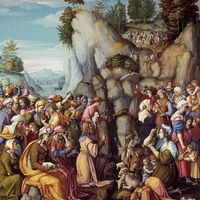
Why did Moses strike the rock? He was a man of faith, whose life had been characterized by trust in God (see, for example, the description of Moses in (Heb 11:24-29). So why did he fall into unbelief ...
Revelation 21:10, 22-22:5, Revelation 21:2, 10, 22-27, Revelation 22:1-5, 1 Kings 6:20, Genesis 12:1-3, Genesis 2:9, Genesis 3:23-24, Genesis 1:28, Genesis 2:15, Genesis 3:17-19, 1 Corinthians 15:58, Ephesians 6:5-9, Colossians 3:23, Genesis 1:26-27, Exodus 33:20-23, John 14:9, Colossians 1:15, Hebrews 1:3, Mark 15:34, 2 Corinthians 5:21, Exodus 28:15-21, 29-30, John 4:13-14, John 7:37-38, Matthew 27:46, John 3:2, Romans 8:29
Preaching Commentary Pulling Back the Curtain The Revelation of Jesus Christ is a “pulling back of the curtain” to reveal both the unseen realities of the present (what is really going on in the wo...