From a historical perspective it is atheism that was old and the Christian faith and its good news that burst on the world as new. Once commonly called “atomism,” the genealogy of atheism can be trace...
Jonathan Edwards is one of America’s most influential philosophers and theologians. Edwards wrote dozens of books, sparked the First Great Awakening, and was influential in the lives of hundreds of mi...
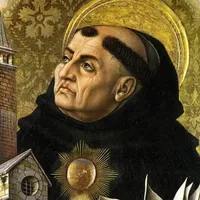
Of the medieval church’s many intellectual leaders, none has had more influence than the philosophical theologian Thomas Aquinas. He was born to a noble family near Naples, Italy, and joined the Domin...
Matthew 23:11, Mark 9:35, Luke 17:33, 2 Corinthians 6:10, James 1:2
Paradox...comes from two ancient Greek words, para meaning “beyond” and doxa meaning “opinion.” Literally, it means “beyond opinion,” but it originally conveyed the sense of “being beyond the pale of ...
2 Corinthians 12:2-10, Philippians 2:7-8, John 1:11, John 14:2-3
Inexpressible Things This chapter of Paul’s Corinthian correspondence is rich indeed, revealing so much about Paul and his relationship to the Corinthian church, a church which he himself founded. Bu...
By misinterpreting the Enlightenment and the corresponding rise of empiricism as an existential threat to Christian faith, many frightened Christians sequestered themselves into rooms of certitude.
What we need to realize, however, is that there is no such thing as autonomous or “self-grounding” knowledge. All systems of interpretation and all claims to true knowledge are ultimately grounded out...
Revelation 21:4, Psalm 34:18, Psalm 147:3, 1 Peter 4:12-19, John 16:33, 2 Corinthians 1:3-4, 1 Peter 5:10, Romans 5:3-5, Romans 8:28
Books on the problem of pain divide neatly into two groupings. The older ones, by people like Aquinas, Bunyan, Donne, Luther, Calvin, and Augustine, ungrudgingly accept pain and suffering as God’s use...
When John Stuart Mill—the influential philosopher and political economist—arrived at Thomas Carlyle's door that evening, his face drained of color, bearing the devastating news that the manuscript...
Galatians 6:10, Hebrews 11:13-16, 2 Corinthians 6:9-10, Matthew 5:44, 1 Peter 2:11-12, John 17:15-16
In an early Christian document known as the Epistle to Diognetus (c. A.D. 120-200), the author wrote a response to some propaganda circulating in the Roman Empire. People had spread false rumors about...
What we suffer from today is humility in the wrong place. Modesty has moved from the organ of ambition. Modesty has settled upon the organ of conviction, where it was never meant to be. A man was mean...
Ancient Lens What can we learn from the historical context? A letter of friendship Paul’s letter to the Philippians is from Paul and his companions to the saints in Philippi. It is a letter fro...
O God, whose reason rules the world, who formed the starry heights above, timeless, time’s chain far forth you hurled, unmoved, gave all things power to move. Prevailed on by no outside cause to fashi...
"Psychology,” Dallas said quietly, “is the care of souls. The care of souls was once the province of the church, but the church no longer provides that care.” He paused. “The most important thing...
2 Timothy 2:12, James 1:2-4, Matthew 5:11-12, Philippians 1:29, Romans 8:18, 2 Corinthians 4:17, John 15:20
Nevertheless, what was shameful, even odious, to the critics of Christ, was in the eyes of his followers most glorious. They had learnt that the servant was not greater than the master, and that for t...
Ancient Lens What’s the historical context? Mixed Loyalties Diving straight into 2 Corinthians 4:3-6 without giving a nod to 2 Corinthians 3:1-4:2 gives a strange impression, because Paul’s point...
My friend Mike Metzger of the Clapham Institute once used the following example to demonstrate how important frames are if we are to make sense of reality’s puzzle. This may seem like a head scratcher...
Those who believe that they believe in God, but without any passion in their heart, without anguish of mind, without uncertainty, without doubt, without an element of despair even in their consolation...
Matthew 22:39, Philippians 2:3-4, 1 Corinthians 10:24, Romans 15:1-2, Galatians 6:10, Romans 12:10, Acts 20:35, Matthew 25:35-40, Isaiah 58:6-7, Proverbs 19:17, Luke 10:30-37, James 2:15-16, 1 John 3:17, Proverbs 31:8-9, Matthew 25:40, Acts 11:29-30, 2 Corinthians 8:13-15, Acts 2:44-45, Acts 4:32-35, 1 Corinthians 12:25-26
Pursuing the common good has been a strong marker of the Christian church from the very beginning. The early church had many habits that they became known for, of course—including meeting frequently, ...
Matthew 18:3-4, 1 Corinthians 1:26-29, James 2:5, 2 Corinthians 12:9-10, Luke 18:17
Henri Nouwen is a well-loved writer and theologian who taught for decades at some of the most prestigious institutions in the country, but he left behind the academy to serve among the disabled popula...
Sometimes it is helpful to see what life looks like on the other side of faith, that is, for those who believe that God does not exist. Bertrand Russell, the renowned philosopher and avowed atheist, h...
Matthew 13:13, Matthew 13:1-23, Isaiah 6:9-10, John 9:39-41, 2 Corinthians 4:4, Ephesians 1:18
I have walked with people whose eyes are full of light, but who see nothing in wood, sea, or sky, nothing in city streets, nothing in books.... It were better far to sail forever in the night of blind...
1 Kings 17:8-16, Exodus 16:16-18, Matthew 25:31-46 , Luke 10:25-37, 2 Corinthians 9:6-8, Psalm 41:1-3
Robert Lupton offers insight into the complexities of human impoverishment, reminding us that in spite of our best intentions sometimes our philanthropic efforts can yield unintended consequences: “Wh...
For many of us, life can easily become disorienting and discouraging. Existential questions often emerge that never have before. As stressful as modern life can be, it is somewhat comforting to know t...
All day long, all of us are framing and reframing our lives. We talk about the memory of our adorable but sexist grandpa. We label ourselves as movie critics or introverts or justice-lovers. We say th...
Those who believe they believe in God but without passion in the heart, without anguish of mind, without uncertainty, without doubt, and even at times without despair, believe only in the idea of God,...
The man of pseudo-faith will fight for his verbal creed but refuse flatly to allow himself to get in a predicament where his future must depend upon that creed being true. He always provides himself w...