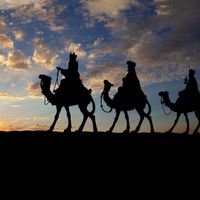
The early church was strikingly different from the culture around it in this way - the pagan society was stingy with its money and promiscuous with its body. A pagan gave nobody their money and practi...
Colossians 3:5, 2 Corinthians 10:4-5, 1 John 2:16, James 1:14-15, Romans 8:1-2, Galatians 5:16-17
The early church fathers named the primary sin patterns “passions,” borrowing a Latin term that could also be translated “sufferings ” As we live out a unique pattern or “face” of sin, we begin to thi...
Matthew 22:39, Philippians 2:3-4, 1 Corinthians 10:24, Romans 15:1-2, Galatians 6:10, Romans 12:10, Acts 20:35, Matthew 25:35-40, Isaiah 58:6-7, Proverbs 19:17, Luke 10:30-37, James 2:15-16, 1 John 3:17, Proverbs 31:8-9, Matthew 25:40, Acts 11:29-30, 2 Corinthians 8:13-15, Acts 2:44-45, Acts 4:32-35, 1 Corinthians 12:25-26
Pursuing the common good has been a strong marker of the Christian church from the very beginning. The early church had many habits that they became known for, of course—including meeting frequently, ...
Matthew 5:10-12, John 15:18-20, 2 Timothy 3:12, Acts 14:22, Romans 8:35-37, 1 Peter 4:12-14, 2 Corinthians 12:9-10, Acts 1:8, Romans 8:11, Isaiah 41:10
What is the witness of the church in times of persecution? The historical record demonstrates that persecutions of Christians were regular and prolific in the first centuries of the church, especially...
Proverbs 28:20, Revelation 2:10, Matthew 5:10-12, Matthew 10:22, 2 Corinthians 4:8-10, 1 Peter 4:12-14, Romans 8:35-37, John 15:18-20, Psalm 31:23, Matthew 25:21, 1 Corinthians 4:2, 1 Timothy 6:12, Matthew 24:45-46
Pliny, a Roman Governor serving around 112 AD, faced a challenging situation regarding Christianity. Many Church historians believe that by his time, it had become illegal to profess the Christian fai...
Matthew 16:25, Romans 8:17-18, Philippians 1:21, 2 Corinthians 4:17, Psalm 116:115, Daniel 3:, Daniel 6:
How many modern Christians consider dying to be the worst thing that can happen to them? We pray for safety, healing, and protection, and rightly so. However, do we live in the truth that death has tr...
Revelation 2:10, Psalm 71:20-21, Philippians 3:10-14, Luke 21:16-19, 2 Corinthians 4:17-18, Romans 8:17-18, James 1:12
One of the great leaders of the first generation after the apostles was a man named Polycarp. Polycarp, it is believed, was discipled by the apostle John and carried out a long and fruitful ministry i...
Revelation 12:11, Philippians 1:20-21, 2 Corinthians 4:11, Hebrews 11:35-38, Matthew 16:24, Psalm 44:22, John 14:6
Every one of the disciples faced the test of torture, and all but the apostle John were martyred for their teachings and beliefs. People will die for what they believe to be true, though it may actual...
Matthew 6:19-21, Malachi 3:10, Acts 20:35, Luke 6:38, Proverbs 3:9-10, 2 Corinthians 9:6-7
John Chrystostom was an early church father and Bishop of Constantinople from 347-407. The name “Chrysostom” is not a surname, but rather an epithet “golden tongued,” given to him because of his excel...
Matthew 13:31-33, 2 Corinthians 12:9, Matthew 6:10, Matthew 5:3, 6, 10, 1 Corinthians 1:27, Matthew 26:28, Matthew 19:24, Philippians 3:7, Hebrews 12:2, Matthew 28:19
The context The parables we hear this week are part of a collection of parables of the Kingdom collected by Matthew in chapter 13 of his gospel account. As with the Sermon on the Mount (Matthew 5-7),...
Isaiah 1:1, 10-20, 2 Corinthians 12:9, Matthew 6:10, Matthew 5:3, 10, 1 Corinthians 1:27, 2 Corinthians 12:9, Matthew 26:28, Matthew 19:24, Philippians 3:7, Hebrews 12:2, Matthew 5:6, Matthew 28:19
The context The parables we hear this week are part of a collection of parables of the Kingdom collected by Matthew in chapter 13 of his gospel account. As with the Sermon on the Mount (Matthew 5-7),...
Ancient Lens What can we learn from the historical context? Context of 2 Corinthians At times you read the soaring rhetoric of Paul and assume he is coming from a place of inner-tranquility, but ...
Matthew 13:31-33, 44-52, 2 Corinthians 12:9, Matthew 6:10, Matthew 5:3, 6, 10, 1 Corinthians 1:27, Matthew 26:28, Matthew 19:24, Philippians 3:7, Hebrews 12:2, Matthew 5:6, Matthew 28:19
preaching commentary The context The parables we hear this week are part of a collection of parables of the Kingdom collected by Matthew in chapter 13 of his gospel account. As with the Sermon on t...
In grad school, although I was studying to become a clinical psychologist, I started working at a Baptist church. I discovered then that I loved to preach . . . until one weekend when the sermon wasn’...
Regarding Ash Wednesday Note: This passage appeared as part of the lectionary for Ash Wednesday. It starts with the gospel passage for that day, but attends to the other passages and themes, so it...
Excursus on Ash Wednesday The Meaning of Ashes Ashes represent many things. The heaped up ashes in a hearth may indicate the benefit of warmth on a cold winter’s night. The charred remains of a per...
Editors Note: This is perhaps less a review as a jumping off part to articulate some thoughts I developed while reading The Minority Experience. For a full review of the title, a cursory google search...
Jesus, Lord—because you took on flesh, You know what it’s like to be us. You know what keeps us awake at night, or yanks us out of sleep in the early morning. You know what it’s like to have good days...
John 3:19-20, Luke 5:8, Isaiah 6:5, Hebrews 4:13, 2 Corinthians 5:17, Hebrews 12:29, James 1:22
I am still haunted by a long conversation I had with a man who was a member of one of my early congregations. . . . He had a stunning vision of the presence of the risen Christ . . . [and] had never t...
Christ followers were first called Christians at Antioch—about fifteen years after the birth of the church at Pentecost. There must have been something remarkable about this particular group of believ...
Galatians 6:10, Hebrews 11:13-16, 2 Corinthians 6:9-10, Matthew 5:44, 1 Peter 2:11-12, John 17:15-16
In an early Christian document known as the Epistle to Diognetus (c. A.D. 120-200), the author wrote a response to some propaganda circulating in the Roman Empire. People had spread false rumors about...
The Bible envisions the global church as one body with no national or geographic boundaries. This one body is called to steward all of its resources — spiritual, human, technological, theological, org...
The Christian religion begins in a New Birth in the power of the Spirit. It is developed under His guidance, and sustained by His presence; but ignoring the Spirit, it becomes a matter of education an...
Christians are often accused of two wrong-headed views of the body. One is that we ignore the body in favor of a disembodied, spirits-floating-on-clouds spirituality. The other is that we are obsessed...
Mark 1:4-11, Isaiah 40:3, Mark 2:7, Philippians 2:7, Isaiah 53:null, Hebrews 4:15, 2 Corinthians 8:9, Mark 1:1-3
Enter John the Baptist John the Baptist enters the stage in Mark 1 as the “voice of one crying in the wilderness,” (Isaiah 40:3) whose message and ministry is to “prepare the way of the Lord.” Mark d...
Mark 1:4-11, Mark 1:1-3, Isaiah 40:3, Mark 2:7, Philippians 2:7, Isaiah 53:null, Hebrews 4:15, 2 Corinthians 8:9
Preaching Commentary Enter John the Baptist John the Baptist enters the stage in Mark 1 as the “voice of one crying in the wilderness,” (Isaiah 40:3) whose message and ministry is to “prepare the w...
preaching commentary The Servant Leader The servant leader is the hero of this text. And the example, par excellence, is the Apostle Paul. He has never shied away from holding himself up as a pe...
Titus 3:5-6, John 3:5, 2 Corinthians 5:17, Matthew 3:16-17, Genesis 1:1-2
At the very beginning of creation, the book of Genesis tells us, there was watery chaos. And over that watery chaos there was, depending on how you read the Hebrew, the Holy Spirit hovering or a great...





















![[The Christian Faith] has its roots in](https://a-us.storyblok.com/f/1016915/2acdf93cfe/christian-rainbow-gray-cross-statue-during-nighttime-6muann08am.jpg/m/200x200/smart)