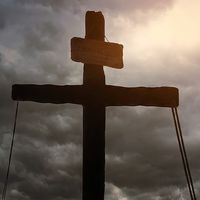
What if the solution to our society’s biggest issues has been right under our noses for the past two thousand years? When Jesus was asked to reduce everything in the Bible into one command he said: Lo...
James 4:8, Ecclesiastes 7:20, Romans 3:10-12, 1 John 1:8, Isaiah 53:6, Jeremiah 17:9, Romans 3:23
“What is wrong with the world today?” a Times newspaper editorial once asked. G. K. Chesterton wrote in reply, “Dear sirs, I am. Yours faithfully, G.K. Chesterton.”
Societies the world around are currently in desperate straits trying to produce people who are merely capable of coping with their life on earth in a nondestructive manner.
There has been a paradigm shift going on in neighborhoods in the United States since the end of WWII. For decades before the 1940s, neighborhoods were places where people were known and were active. W...
Luke 18:14, Proverbs 29:23, Isaiah 2:11, 1 Peter 5:5, Romans 12:3, James 4:6, Proverbs 16:18
Up until the twentieth century, traditional cultures (and this is still true of most cultures in the world) always believed that too high a view of yourself was the root cause of all the evil in the w...
The Seven Social Sins are: Wealth without work. Pleasure without conscience. Knowledge without character. Commerce without morality. Science without humanity. Worship without sacrifice. Politics witho...
We have conducted the previous exercise in dozens of middle-to-upper-class, predominantly Caucasian, North American churches. In the vast majority of cases, these audiences describe poverty differentl...
Yet somehow our society must make it right and possible for old people not to fear the young or be deserted by them, for the test of a civilization is in the way that it cares for its helpless members...
If we’re unable or unwilling to discern a norm to judge what is good and evil, the whole moral order will tumble into confusion. If we don’t get the moral facts straight, a variety of “crises” will co...
We really must understand that the lust for affluence in contemporary society is psychotic. It is psychotic because it has completely lost touch with reality. We crave things we neither need nor enjoy...
All crises are judgments of history that call into question an existing state of affairs. They sift and sort the character and condition of a nation and its capacity to respond. The deeper the crisis,...
Psalm 34:18, Jeremiah 29:11, Matthew 11:28-30, Romans 15:13, Isaiah 41:10
Many people are broken and without hope. It’s not surprising that a Brooking’s report in October 2019 noted how “deaths of despair” were affecting many sectors of society, particularly in America’s he...
So it is that in most Western industrialized countries church and society have lost their identity, religion has become more and more a private affair, and morality has become secular. This process af...
A social order bent on producing wealth as an end in itself cannot avoid the creation of a people whose souls are superficial and whose daily life is captured by sentimentalities. They will ask questi...
We are a society that despises lack. We despise weakness and need and insufficiency. We turn the other way and pretend to be watching oncoming traffic when the red light halts us and the beggar reache...
One way to recognize whether we suffer from this disconnection is to look at our concern for people who are dirty... people who are "other"... people who don't fit the core group's i...
The problem we face today needs very little time for its statement. Our lives in a modern city grow too complex and overcrowded. Even the necessary obligations which we feel we must meet grow overnigh...
It is a sad but true saying that our biggest problems are ignorance and apathy. It is certainly true of agriculture. With the bulk of the American population two or more generations removed from farmi...
John 15:5, Isaiah 64:6, Ecclesiastes 7:20, James 4:17, Galatians 5:17, Jeremiah 17:9, Romans 7:24-25
Jacob Needleman has been a secular philosopher and a professor of philosophy of religion for many years at San Francisco State University. Some years ago he wrote a remarkable book called Why Can’t We...
When we look for larger, broader, more sustainable analyses of evil, we find of course that the major worldviews have all had ways of addressing it. The Buddhist says that the present world is an illu...
While the language is a bit difficult, sociologist Lionel Tiger describes how different evil is interpreted in modern society. Evil used to be easily identifiable, now, it has “gone underground.” Mode...
Gregg Easterbrook wrote about this in a 2003 book called The Progress Paradox. Easterbrook’s subtitle was How Life Gets Better While People Feel Worse. He describes how affluent we have become—bett...
What many people call “psychological problems” are simple issues of idolatry. Perfectionism, workaholism, chronic indecisiveness, the need to control the lives of others—all of these stem from making ...
1 Peter 3:8-9, Galatians 3:28, Proverbs 31:8-9, Matthew 5:9, Romans 12:18
Just as Socrates felt that it was necessary to create a tension in the mind so that individuals could rise from the bondage of myths and half-truths to the unfettered realm of creative analysis and ob...
In his excellent little book, A Testament of Devotion , written almost a hundred years ago, Thomas Kelly describes the true heart of the problem related to the complexity of our lives: Let me fir...
Karl Barth (1886-1968), the famous Swiss theologian, once wrote that all human sin finds its roots in three basic human problems. He included pride (hubris), dishonesty and slothfulness in his list of...