Matthew 23:25-26, Ezekiel 36:26-27, Colossians 2:6-7, Jeremiah 31:33
Spiritual nourishment cannot be seen purely in our outward behavior. The process of sanctification is a deeply internal process. Outside growth is merely a symptom, and acting better does not mean our...
Genesis 12:1–3, Exodus 3:1–12, Isaiah 53:, Matthew 22:15–22 , John 4:1–42 , Acts 17:16–34
The world of Jesus was not the Old Testament Hebrew world. Like the United States now, Israel was multicultural, including a combination of Aramaic, Greek, and Roman influences. The people looked Jewi...
Zechariah 9:9, Matthew 21:1-11, Mark 11:8-11, Luke 19:36-44, John 12:16-19, Revelation 19:11-16
Two thousand years ago, triumphal processions were massively popular. It was, in all likelihood, the only chance most people would have to see the leaders and heroes of the day. For the Romans they t...
Ancient lens What’s the historical context? A Historical Clue The superscript of Psalm 51 gives us a historical clue about the composition of this Psalm, “A Psalm of David. When Nathan the prophe...
Gracious Lord, like Nicodemus, we come to the word with many questions. Like the Pharisees, we can be captivated by correctness, intent on right answers. As we turn to your word, Spirit of God, do not...
Saul's Confident Error Last week, we considered Abram and the way that God may send us out on a journey, waiting to see his will without knowing the destination. Today we move forward to Saul on...
John 4:7-26, 1 Corinthians 2:12, 1 Peter 12:12-23, John 6:1-15, Galatians 4:21-31, Psalm 42:7, Psalm 121:null
New Testament Mountains Like the Old Testament, the New Testament has plenty of references to mountains. There’s the Sermon on the Mount, obviously. Jesus often went onto hills or mountains to pray...
A Special Kind of Story Most Christians have some idea of what a parable is. Ask an adult Sunday school class and you might hear: “It’s a story!” Another might chime in, “with a moral message!” Mer...
Jeremiah 6:14, Jeremiah 8:11, Ezekiel 13:10, John 5:42
Peacekeepers are conflict avoiders, sweeping important issues under the carpet so no conflict manifests itself. This often happens in families and churches. This also happens between alienated ethnic ...
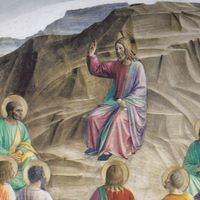
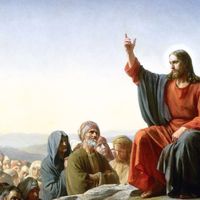
Pastor and Professor Darrell W. Johnson sets the scene for the Sermon on the Mount with great description. This could serve as a model for the beginning of a sermon on the S.O.M. They were sitting i...
Reaching back to the tradition of virtues and vices can also give us fresh eyes and expose new layers of meaning in our reading of scripture. Before I read Aquinas on sloth, I would have associated it...
In 1995, the gray wolf was reintroduced to Yellowstone National Park after a seventy-year hiatus. Scientists expected an ecological ripple effect, but the size and scope of the trophic cascade took th...
As neighbors were texting my turned-off phone about danger at Hank’s house, I was sitting at my desk, praying for Hank. I was praying for Hank’s salvation. And then I noticed it: burly men ducking aro...
John 14:6, Isaiah 55:8-9, Matthew 9:10-13, John 18:36, Luke 19:1-10
With a certain oversimplification we can trace easily enough the three options open to Jews in Jesus’ day. … First, the quietist and ultimately dualist option, taken by the writers of the Dead Sea Scr...
In ancient Judaism, discipleship was taken very seriously. It was taken so seriously that eager disciples would ty to follow their rabbi (teacher) everywhere they went. Why? Because they wanted to see...
Matthew 5:25, Matthew 23:7, Mark 5:56, Matthew 25:27, Luke 19:23, Mark 12:1-12, Matthew 8:5, Matthew 9:10, Luke 5:27
One could not live in any village in lower Galilee and escape the effects and ramifications of urbanization.” Life here was urbanized and urbane as anywhere else in the Empire. Did these urban influen...
Luke 2:46-47, Psalm 119:105, John 15:10, Matthew 4:1-11, Philippians 2:8, James 1:22
It is easy to observe that Jesus was far from uneducated. He was perfectly at home both in holy scripture and in oral tradition, and he knew how to apply this scholarly heritage.
Luke 12:33-34, Luke 18:28-30, Acts 2:44-45, Matthew 19:21, Mark 10:29-30, Luke 14:26
Family and property, then, were not for the ancient Jew simply what they are to the modern western world. Both carried religious and cultural significance far beyond personal, let alone “individual,” ...
Genesis 2:1-3, Exodus 20:8-11, Deuteronomy 5:12-15, Mark 2:27-28, Matthew 12:8, Luke 6:5
For the most part, contemporary Christians pay little attention to the Sabbath. We more or less know that the day came to reflect, in U.S. culture, the most stringent disciplinary faith of the Puritan...
Leader: Blessed are those whose way is blameless, who walk in the law of the Lord! People: Blessed are those who keep his testimonies, who seek him with their whole heart, Leader: Blessed are thos...
Luke 7:36-50, Romans 5:8, John 4:7-26, Matthew 11:19, Luke 19:5-10, Mark 2:15-17
Why did it disturb the religious leaders that Jesus ate with “sinners”? To eat with someone is an important symbol of fellowship. And in those days, the Jews had a rule: one is not to have such fellow...
In this excerpt by the Roman historian Tacitus, we get insight into the Jewish faith from an ancient, extra-Biblical account. We also see how the Israelites took the first commandment seriously: The...
The poor in Judaism referred to those in desperate need (socio-economic element) whose helplessness drove them to a dependent relationship with God (religious element) for the supplying of their needs...
Matthew 22:37-39, Matthew 25:35-40, Luke 3:11, Ephesians 5:2, Acts 2:42-47, James 2:14-17, Galatians 2:10, Psalm 72:12-14
A passage often referred to in order to describe the sacrificial, countercultural quality of the early church comes to us interestingly enough, from one of its strongest critics, known later to histor...
Matthew 25:35-40, John 8:1-11, Luke 19:1-10, John 4:1-26, John 8:10-11, Luke 19:10
In these acts of love Jesus created a scandal for devout, religious Palestinian Jews. The absolutely unpardonable thing was not his concern for the sick, the cripples, the lepers, the possessed . . . ...
Rabbis spoke of parables as handles for understanding Torah; before parables no one understood the Torah, but when Solomon and others created parables, then people understood.
Old Testament Israel had some foundational pillars of faith. They were true and robust and God given. The trouble was that people had come to trust in them merely by repeating them, without paying any...
In her book, Grateful: The Subversive Practice of Giving Thanks , Diana Butler Bass provides an insightful reflection on how Zaccheaus rose to become chief tax collector of Jericho: Since Zacchaeu...