John 18:36, Romans 14:17, Mark 4:26-29, Colossians 1:13, John 3:3, Matthew 13:33
Continually, Jesus described the Kingdom in terms that one can’t point to and identify specifically—but in every story, the Kingdom was the essential piece. The Kingdom is mixed in and present already...
There is a paradigm shift going on in the realm of forestry. For years there had been a consensus among ecologists that all trees were independent operators, each tree an island unto itself, the fores...
Matthew 13:44, Hebrews 14:26, Colossians 2:2-3, Philippians 3:8, Luke 12:33-34
A first-century Hebrew walks alone on a hot afternoon, staff in hand. His shoulders are stooped, his tunic stained with sweat. But he doesn’t stop to rest. He has pressing business in the city. He vee...
There has been a paradigm shift going on in neighborhoods in the United States since the end of WWII. For decades before the 1940s, neighborhoods were places where people were known and were active. W...
Colossians 3:16, Philippians 2:5-7, John 13:34-35, Matthew 11:29, Mark 8:34-35, Luke 9:23
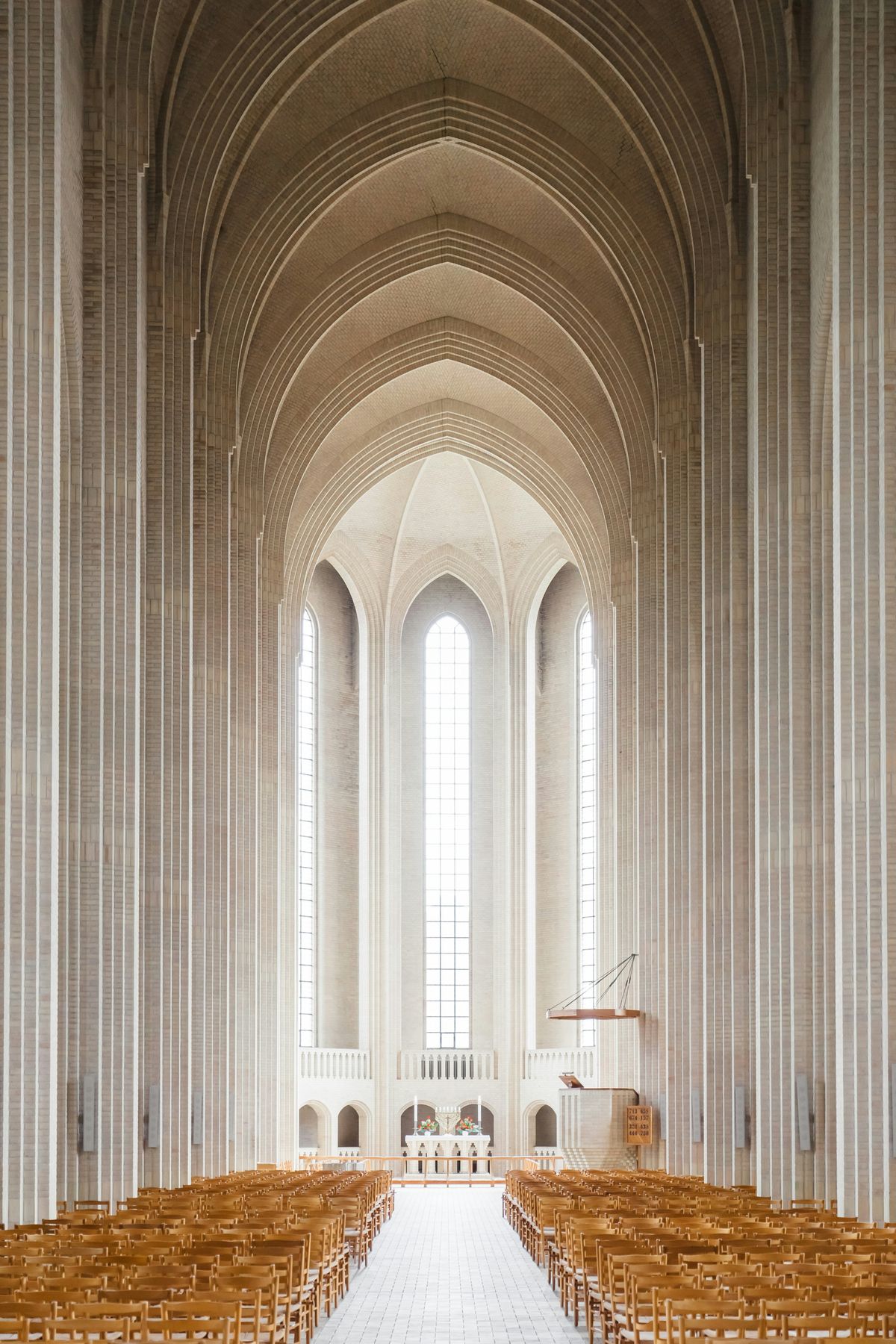
Editor’s Note: The following illustration came from one of my own (Stu’s) sermons, as I was trying to help the congregation make a paradigm shift from the church as a building, to the people of God: ...
Cultural transformation in a church or organization must go beyond interpersonal models of changing “one person at a time,” which dominates Western evangelical thinking. The goals of reconciliation ne...
I believe we all need to reframe our stories, at least parts of them, in order to heal, to discard lies, to move from partial truths to richer, fuller explanations, to see our lives as God sees them.
Walter Brueggemann writes that the movement of the psalms is from orientation to disorientation and then to new orientation. The psalms give us a language for transformation in desert spaces: we move ...
Therefore, I’m proposing a new paradigm …that involves the following three core principles: 1. Reconciliation happens by repairing broken systems. 2. Reconciliation happens by engaging power. 3. Recon...
The great Christian revolutions come not by the discovery of something that was not known before. They happen when someone takes radically something that was always there.
[We] must take the need for human transformation as seriously as do modern revolutionary movements . Reprint edition. San Francisco: HarperOne, ix 1999.
Transformation is a process, and as life happens there are tons of ups and downs. It's a journey of discovery - there are moments on mountaintops and moments in deep valleys of despair.
My worldview, my philosophy, my attitudes, my relationships, my parenting, my marriage – everything has been transformed by my relationship with Christ.
There is in us an instinct for newness, for renewal, for a liberation of creative power. We seek to awaken in ourselves a force which really changes our lives from within.
Ecclesiastes 7:10, Colossians 2:8, Matthew 9:17, 1 Thessalonians 5:21, Romans 12:2, Mark 7:8-9, Isaiah 43:19
It’s funny how sometimes members of the church can associate anything new with “heresy.” We often make the mistake of confusing technological innovations or scientific discoveries for changes to the g...
John 6:15, Matthew 5:38-39, Matthew 7:24-27, Matthew 15:1-9, Matthew 16:13-17, John 18:36, Luke 4:18-19, Acts 9:1-9, Psalm 1:
Jesus is understood in the light of the assumptions which control our culture. When “reason” is invoked as a parallel or supplementary authority to “Scripture” and “tradition,” what is happening is t...
Walter Brueggemann writes that the movement of the psalms is from orientation to disorientation and then to new orientation. The psalms give us a language for transformation in desert spaces: we move ...
1 Peter 3:8-9, Galatians 3:28, Proverbs 31:8-9, Matthew 5:9, Romans 12:18
Just as Socrates felt that it was necessary to create a tension in the mind so that individuals could rise from the bondage of myths and half-truths to the unfettered realm of creative analysis and ob...
The fatal metaphor of progress, which means leaving things behind us, has utterly obscured the real idea of growth, which means leaving things inside us.
Now we are no longer primitive. Now the whole world seems not holy….We as a people have moved from pantheism to pan-atheism...It is difficult to undo our own damage and to recall to our presence that ...
The question our century puts before us is: is it possible to regain the lost dimension, the encounter with the Holy, the dimension which cuts through the world of subjectivity and objectivity and goe...
Discipleship is transformation, not information overload or behavioral modification. When transformation occurs, there is an increasing hunger for more knowledge of Jesus and His Word, but the primary...