1 Kings 17:8-16, Daniel 6:16-23, Matthew 14:25-31, Luke 4:33-36, John 2:1-11 , Psalm 77:14-15
It is impossible to use electric light and the wireless and to avail ourselves of modern medical and surgical discoveries, and at the same time believe in the New Testament world of spirits and miracl...
Isaiah 29:13, Judges 2:10-13 , 1 Samuel 8:4-9, Matthew 23:27-28 , 2 Timothy 3:1-5 , Psalm 10:4
Even though it’s now associated with him, Nietzsche didn’t coin the phrase God is dead. As the son of a Lutheran pastor, he would have heard that line in a Lutheran Holy Saturday hymn. And although...
It is a mistake to think that faithful believers in our time are not profoundly shaped by the narratives of modernity. We certainly are, and so when you unveil these narratives and interact with them ...
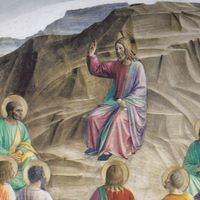
Probably nobody has hated the ‘softness’ of the Sermon on the Mount more than Friedrich Nietzsche. Although the son and the grandson of Lutheran pastors, he rejected Christianity during his student da...
In her book Keeping Place: Reflections on the Meaning of Home , Jen Pollock Michel reflects on the nature of home in a transient age. In this short excerpt, Michel reflects on the Biblical doctrine...
Matthew 5:17-18, Ecclesiastes 12:13-14, Romans 6:23, Proverbs 14:12, James 4:17, 1 John 1:8-9
Postmodernism (the thinking of our age) is fiercely antinomian (without law). It is admitted that people make mistakes, but the word ‘sin’ is seldom mentioned and the idea that we all sin against God ...
Our modern theology, which in many ways has ceased to be personal, i.e. centered on the Christian experience of "person," nevertheless - and maybe as a result of this - has become utterly in...
All these technologies have carried the promise of a boundless world. They would free us from geography, allowing us to move out of crowded cities and into lives of our own bucolic choosing. Forget th...
The two most influential characteristics of the modern self—radical individualism and expressive authenticity—create a perfect storm for relationships.
The problem we face today needs very little time for its statement. Our lives in a modern city grow too complex and overcrowded. Even the necessary obligations which we feel we must meet grow overnigh...
So it is that in most Western industrialized countries church and society have lost their identity, religion has become more and more a private affair, and morality has become secular. This process af...
Now we are no longer primitive. Now the whole world seems not holy….We as a people have moved from pantheism to pan-atheism...It is difficult to undo our own damage and to recall to our presence that ...
No truth which human beings may articulate can ever be articulated in a culture-transcending way-but that does not mean that the truth thus articulated does not transcend culture.
We were created for goodness and perfection. That’s why we innovate, progress, and change. But if our progress loses its purpose, it cannibalizes our humanity, leaving us distracted and disoriented.
In Easter Everywhere: A Memoir, Darcey Steinke recounts how she, the daughter of a Lutheran minister, left her Christian profession. Moving to New York City she entered a life of club hopping and se...
The relativism which is not willing to speak about truth but only about ‘what is true for me’ is an evasion of the serious business of living. It is the mark of a tragic loss of nerve in our contempor...
In our postmodern culture which is TV dominated, image sensitive, and morally vacuous, personality is everything and character is increasingly irrelevant.
“Since man cannot live without miracles, he will provide himself with miracles of his own making. He will believe in witchcraft and sorcery, even though he may otherwise be a heretic, an atheist, and ...
We really must understand that the lust for affluence in contemporary society is psychotic. It is psychotic because it has completely lost touch with reality. We crave things we neither need nor enjoy...
What we suffer from today is humility in the wrong place. Modesty has moved from the organ of ambition. Modesty has settled upon the organ of conviction, where it was never meant to be. A man was mean...
What will be remembered about the twenty-first century…is the great, and final, shift of human populations out of rural, agricultural life and into cities. We will end this century as a wholly urban s...
Luke 18:14, Proverbs 29:23, Isaiah 2:11, 1 Peter 5:5, Romans 12:3, James 4:6, Proverbs 16:18
Up until the twentieth century, traditional cultures (and this is still true of most cultures in the world) always believed that too high a view of yourself was the root cause of all the evil in the w...
In his excellent little book, A Testament of Devotion , written almost a hundred years ago, Thomas Kelly describes the true heart of the problem related to the complexity of our lives: Let me fir...
The question our century puts before us is: is it possible to regain the lost dimension, the encounter with the Holy, the dimension which cuts through the world of subjectivity and objectivity and goe...
Today, the church in America seems to have traded in its mandate to be eccentric and aimed instead at an unconscious conventionality. Rural norms are too quaint, urban norms too dangerous, so the chur...
We live in a fast-paced society. We’re used to quick results. It seems that much of our time and money is spent trying to save time—to do things faster, more efficient, and with less effort. We hurry ...
The future of modern society depends much more on the quiet heroism of the very few who are inspired by God. These few will greatly enjoy the divine inspiration and will be prepared to stand for the d...