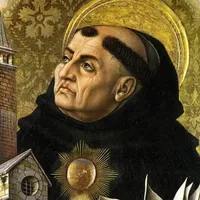
Of the medieval church’s many intellectual leaders, none has had more influence than the philosophical theologian Thomas Aquinas. He was born to a noble family near Naples, Italy, and joined the Domin...
John 14:26, Romans 12:1-2, James 1:6, Psalm 119:105, Isaiah 55:8-9, Proverbs 3:5-6
In her book, The Next Right Thing, Emily Freeman describes the difficulty in making decisions, including the decision that would eventually lead to her enrollment in Graduate school. After a prolonged...
Intellect is therefore a vital force in history, but it can also be a dissolvent and destructive power. Out of every hundred new ideas ninety-nine or more will probably be inferior to the traditional ...
Proverbs 4:5-7, Ecclesiastes 12:11-13, Isaiah 28:9-10, Matthew 7:24-27, James 1:22-25, Psalm 119:11
Gathering information without processing and applying it is counter to how the mind works and how the brain is structured and has a deleterious effect on our mental and physical well-being, creating a...
Proverbs 2:2–6, Romans 12:1–2, Isaiah 1:18, Daniel 1:17–20, Matthew 22:37, Psalm 119:97–100
At a Christian high school, a theology teacher strode to the front of the classroom, where he drew a heart on one side of the blackboard and a brain on the other. The two are as divided as the two sid...
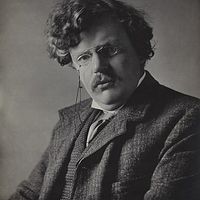
G. K. Chesterton was well-known (and iconoclastic) in his defense of tradition in a time when progress was all the rage in Western Europe- in technology, in the sciences, in philosophy. Chesterton, on...
1 Kings 3:16-28, Micah 6:8, Proverbs 3:5-7, Matthew 22:15-22 , James 1:5 , Psalm 119:105
Richard Mouw, the former president of Fuller Seminary and a professor of philosophy, shares an amusing anecdote from a lecture by the esteemed Catholic ethicist Charles Curran. During his talk, Curran...
“Moral”…is an orientation toward understandings about what is right and wrong, just and unjust, that are not established by our own actual desires or preferences but instead are believed to exist apar...
Daniel 3:16-18, 1 Kings 18:21, Isaiah 55:8-9 , Romans 14:5-8, Psalm 119:105, Matthew 7:15-16
First, most Christians attach their convictions to Christ personally. In other words, we form our convictions in order to please Jesus, not ourselves. Convictions do not express what we think or feel ...
A 2014 study by Wendy Wood found that approximately 40% of people’s daily activities are performed out of habit. According to Wood, “an important characteristic of a habit is that it’s automatic…We fi...
Daniel 3:16-18, 1 Kings 18:16-39, Matthew 16:13-17 , Romans 4:18-20, Romans 14:5-12 , Psalm 119:105
[M]ost Christians attach their convictions to Christ personally. In other words, we form our convictions in order to please Jesus, not ourselves. Convictions do not express what we think or feel or li...
There’s a story that used to make the rounds about the German theologian Paul Tillich. Tillich’s theology was considered dangerous by many Christians in the U.S. Supposedly one time after delivering a...
Romans 8:28, Psalm 119:71, Proverbs 19:20, Luke 22:61-62, Acts 9:1-9
I have learned throughout my life as a composer chiefly through my mistakes and pursuits of false assumptions, not by my exposure to founts of wisdom and knowledge.
A common question I’m hearing from folks these days is whether it is beneficial (or a moral imperative) to pay attention to the news. The Catholic nun and social activist Dorothy Day asked the same qu...
The most powerful choices we will make in our lives are not about specific decisions but about patterns of life: the nudges and disciplines that will shape all our other choices. This is especially tr...
Psalm 19:null, Psalm 1:null, Psalm 119:null, Exodus 20:2-3, Galatians 3:24-26, John 14:6, Matthew 22:37-40
Ancient Lens What can we learn from the historical context? The Books of the Psalms and David The Book of Psalms is divided into five books, like the five books of the Torah. While it is not obvi...
Proverbs 3:5-6, Micah 6:8, Matthew 7:13-14, James 1:5, Romans 12:2, Jeremiah 6:16, Psalm 119:105
A few years ago I was with my family in Washington, D.C., a wildly complex city laid out like a square wheel with broken spokes making an angular maze that is a nightmare to navigate. However, my fami...
Deuteronomy 30:19–20, Joshua 24:14–15, 1 Kings 18:21, John 14:6, Matthew 11:28–30, Psalm 119:105
When every option is available to us, we don’t actually have freedom; we tend to shut down. I experienced what sociologists call choice overload (or paralysis) and decision fatigue. If you’ve ever tri...
Genesis 3:1–7, 1 Kings 3:5–12, Daniel 1:8–17, Matthew 4:1–11, 2 Corinthians 1:13–15, Psalm 119:105
While I am not one to see a demon behind every bush or spiritual warfare in every difficulty, the fact is that we are regularly engaged in the struggle against good and evil—whether we know it or not....
Matthew 23:1-12, Psalm 119:null, Deuteronomy 6:8, Matthew 11:28-30
If religion is to be true, its leadership must be true. —Frederick Dale Bruner [1] Humble Leadership Whenever Anthony Bloom, a former bishop and archbishop serving in London, would teach, he would...
When asked to recant of his writings, Luther replied, “Unless I am convinced by sacred Scripture or by evident reason, I cannot recant. For my conscience is held captive by the word of God and to act ...
Now I have to ask you: If Jesus Christ, the Son of God, did not presume to face the forces of evil in the world without a profound knowledge of the Bible in mind and heart, how could we try to face li...
There’s a quote by H. Richard Niebuhr that I believe is absolutely true. “The great Christian revolutions,” he argued, “come not by the discovery of something that was not known before. They happen w...