Matthew 5:18, John 1:1-14, Colossians 2:9, 1 Corinthians 15:20-22, Philippians 2:9-11, 2 Timothy 3:16-17, Hebrews 4:12, 2 Peter 1:20-21
The great American statesman and president Thomas Jefferson was a man of science who did not believe in miracles but really liked Jesus. Unfortunately, right next to Jesus’ ethical teachings are stori...
Ancient Lens What can we learn from the historical context? Philippian Joy During Division and Persecution For an in-depth description of the context of Paul’s letter to the Philippians, see last...
James 1:22-24, 2 Timothy 3:16-17, 2 Timothy 2:15, Philippians 4:9, Joshua 1:8, Matthew 7:24-25, Colossians 3:16
Reading the Bible without applying it to your life can be downright dangerous. On August 3, 1996, Melvin Hitchens, sat on his front porch and read the Bible. After his Bible reading, this 66 year old ...
Philippians 2:6-8, John 1:10-11, Isaiah 53:3-4, Matthew 11:19, Mark 15:34, Isaiah 53:12, Luke 15:20-24, Revelation 7:13-14
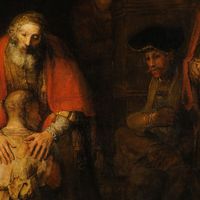
In this excerpt, the French monastic leader Frere Pierre Marie, shares an interpretation of Jesus as the true prodigal son—bringing all of us home with him: He, who is born not from human stock, or ...
Philippians 2:8, John 12:32, Isaiah 53:4-6, Luke 23:39-43, Hebrews 12:2
Another example struck me forcibly during the 2014 season of Promenade Concerts in the Albert Hall in London. (The “Proms,” as they are known, make up a major annual festival, offering world-class mus...
Check out our video discussion of the text with the author, Austin D. Hill. Click here to view! Ancient Lens What can we learn from the historical context? Exile and Catastrophe There is deba...
AIM Commentary Check out our video discussion of the text with the author, Austin D. Hill. Click here to view! Ancient Lens What can we learn from the historical context? Exile and Catastrop...
Romans 12:1, Matthew 22:37-38, James 2:14-17, John 14:15, Luke 9:23, Philippians 2:5-8, Romans 10:9-10, Psalm 1:1-6
New Testament theology is ‘inherently self-involving as it summons the reader to believe, confess, obey, and understand the entirety of one’s existence—both her or his thinking and willing—in light of...
Isaiah 1:1, 10-20, 2 Corinthians 12:9, Matthew 6:10, Matthew 5:3, 10, 1 Corinthians 1:27, 2 Corinthians 12:9, Matthew 26:28, Matthew 19:24, Philippians 3:7, Hebrews 12:2, Matthew 5:6, Matthew 28:19
The context The parables we hear this week are part of a collection of parables of the Kingdom collected by Matthew in chapter 13 of his gospel account. As with the Sermon on the Mount (Matthew 5-7),...
Introduction Our text falls within a larger section (Luke 16) in which Jesus deals head-on with questions of money, specifically the need to choose God over mammon (the worship of money), in other wo...
Introduction Our text falls within a larger section (Luke 16) in which Jesus deals head-on with questions of money, specifically the need to choose God over mammon (the worship of money), in other wo...
Matthew 13:31-33, 2 Corinthians 12:9, Matthew 6:10, Matthew 5:3, 6, 10, 1 Corinthians 1:27, Matthew 26:28, Matthew 19:24, Philippians 3:7, Hebrews 12:2, Matthew 28:19
The context The parables we hear this week are part of a collection of parables of the Kingdom collected by Matthew in chapter 13 of his gospel account. As with the Sermon on the Mount (Matthew 5-7),...
Ancient Lens What can we learn from the historical context? Israel’s State of Mind The Book of Isaiah is a remarkable accounting of the history of the relationship people of Israel with God. By t...
Context Layers The responsible interpretation of any biblical text requires one to consider multiple levels of context, but these contextual strata are especially important to define and explore in ...
James 3:13-4:3, 7-8a, James 3:13-18, James 4:1-3, 7-8, James 1:16-27, Galatians 5:22, Proverbs 1:7, Psalm 37:4, James 4:3, Philippians 2:1-5, Psalm 121:null, Psalm 30:null, Jeremiah 11:18-20, Psalm 54:null, James 1:16-27, Galatians 5:22, Proverbs 1:7, Psalm 37:4, James 4:3, Philippians 2:1-5, Psalm 121:null, Psalm 30:null
Preaching Commentary James' Intent James, the brother of Jesus, the leader of the earliest Christian church in Jerusalem, writes this letter to scattered Jewish believers who were going through...
Kevin Vanhoozer draws on 1 Corinthians 4 to argue powerfully for reading and teaching the Bible as drama. As Paul talks about his apostolic ministry, he says this: “For, I think, God has exhibite...
Preaching Commentary Paul’s Gospel In 1 Corinthians 1:17-25 we find the gospel that Paul preaches summarized in Christ’s crucifixion. Here in 2 Timothy 2:8, Paul’s gospel is encapsulated in Christ’...
Matthew 13:31-33, 44-52, 2 Corinthians 12:9, Matthew 6:10, Matthew 5:3, 6, 10, 1 Corinthians 1:27, Matthew 26:28, Matthew 19:24, Philippians 3:7, Hebrews 12:2, Matthew 5:6, Matthew 28:19
preaching commentary The context The parables we hear this week are part of a collection of parables of the Kingdom collected by Matthew in chapter 13 of his gospel account. As with the Sermon on t...
James 3:13-4:3; 7-8a, James 3:13-18, James 4:1-3, 7-8, James 1:16-27, Galatians 5:22, Proverbs 1:7, Psalm 37:4, James 4:3, Philippians 2:1-5, Psalm 121:null, Psalm 30:null, Jeremiah 11:18-20, Psalm 54:null, James 1:16-27, Galatians 5:22, Proverbs 1:7, Psalm 37:4, James 4:3, Philippians 2:1-5, Psalm 121:null, Psalm 30:null
James' Intent James, the brother of Jesus, the leader of the earliest Christian church in Jerusalem, writes this letter to scattered Jewish believers who were going through very difficult times. ...
Preaching Commentary Paul’s Gospel In 1 Corinthians 1:17-25 we find the gospel that Paul preaches summarized in Christ’s crucifixion. Here in 2 Timothy 2:8, Paul’s gospel is encapsulated in Christ’...
Writing to his parents while imprisoned on the day of Pentecost, the German Dietrich Bonhoeffer said this: At the tower of Babel all the tongues were confounded, and as a result men could no longe...
This passage from Joshua underscores a central element of the biblical view of meditation: obedience. This is in marked contrast to the various forms of meditation in many religions around the world. ...
2 Corinthians 12:2-10, Philippians 2:7-8, John 1:11, John 14:2-3
Inexpressible Things This chapter of Paul’s Corinthian correspondence is rich indeed, revealing so much about Paul and his relationship to the Corinthian church, a church which he himself founded. Bu...
Context Paul in Ephesus: His Third Missionary Journey This passage describes Paul’s arrival in Ephesus during his third missionary journey. He finds there some disciples who know only of John’s bapt...
Introduction Believed to be some of Paul’s last words of his long ministry, 2 Tim. 4:6ff are Paul’s closing remarks to his beloved disciple, Timothy. Imprisoned in Rome by this point, Paul concludes ...
The biblical narrative begins and ends at home. From the Garden of Eden to the New Jerusalem we are hardwired for place and for permanence, for rest and refuge, for presence and protection. We long fo...
John 12:1-8, Mark 14:1-2, Matthew 26:3-13, John 11:45, Luke 7:44-47, Matthew 26:6, Mark 14:3, Luke 7:40, John 11:50-53, Luke 24:41-43, John 21:10-14, Acts 10:40-41, John 12:7, Philippians 2:6-8, Romans 6:1-10
Introduction This narrative is slightly changed from the Synoptic accounts. Matthew and Mark’s Gospels place this narrative two days prior to the Passover (Matt: 26:6-13; Mark 14:1). Three Evangelist...
Background to the Letter and Passage Paul’s letter to the Ephesians was probably intended for wider distribution and use among the various churches around Ephesus. As such, there is no particular cri...
Proverbs 3:5-6, Isaiah 55:8-9 , Luke 9:23-24, Philippians 2:3-4 , Matthew 6:33-34, Psalm 37:5-6
Archbishop of Canterbury Rowan Williams observes that the biblical ideal is not so much that we need to deny the self as to decenter the self: To see the self in truth, as an integral member of a comm...
The Hebrew word yada (“to know”) is, in fact, used for both sexual intercourse as well as our relationship with God. Every relational event is a stage that affords one a glimpse into the consumm...