The biblical narrative begins and ends at home. From the Garden of Eden to the New Jerusalem we are hardwired for place and for permanence, for rest and refuge, for presence and protection. We long fo...
The Hebrew word yada (“to know”) is, in fact, used for both sexual intercourse as well as our relationship with God. Every relational event is a stage that affords one a glimpse into the consumm...
Proverbs 3:5-6, Isaiah 55:8-9 , Luke 9:23-24, Philippians 2:3-4 , Matthew 6:33-34, Psalm 37:5-6
Archbishop of Canterbury Rowan Williams observes that the biblical ideal is not so much that we need to deny the self as to decenter the self: To see the self in truth, as an integral member of a comm...
This passage from Joshua underscores a central element of the biblical view of meditation: obedience. This is in marked contrast to the various forms of meditation in many religions around the world. ...
I believe that it is the paradox between serving a healing God and the persistence of illness and even death that ultimately lies behind most theological debates about divine healing in the Church. ...
John 17:1, Philippians 4:6, James 5:16, 1 Thessalonians 5:17, Matthew 6:6, Acts 6:4, Mark 1:35
It’s no secret that too many evangelical leaders are captivated more by business culture than biblical culture, spending more time absorbed in strategies and effectiveness and relatively little time i...
AIM Commentary Check out our video discussion of the text with the author, Austin D. Hill. Click here to view! Ancient Lens What can we learn from the historical context? Exile and Catastrop...
Context Layers The responsible interpretation of any biblical text requires one to consider multiple levels of context, but these contextual strata are especially important to define and explore in ...
Introduction Our text falls within a larger section (Luke 16) in which Jesus deals head-on with questions of money, specifically the need to choose God over mammon (the worship of money), in other wo...
Introduction Our text falls within a larger section (Luke 16) in which Jesus deals head-on with questions of money, specifically the need to choose God over mammon (the worship of money), in other wo...
Preaching Commentary Context Paul in Ephesus: His Third Missionary Journey This passage describes Paul’s arrival in Ephesus during his third missionary journey. He finds there some disciples who k...
Colossians 3:2, Philippians 3:20, 2 Corinthians 4:18, Romans 12:2, Hebrews 11:13-16, Matthew 6:19-21, 1 John 2:15-16, Luke 12:33-34, Luke 18:22, Matthew 19:21
The life of a Christian is wondrously ruled in this world, by the consideration and meditation of the life of another world.
Context Paul in Ephesus: His Third Missionary Journey This passage describes Paul’s arrival in Ephesus during his third missionary journey. He finds there some disciples who know only of John’s bapt...
Preaching Commentary Background to the Letter and Passage Paul’s letter to the Ephesians was probably intended for wider distribution and use among the various churches around Ephesus. As such, the...
Psalm 118:, Matthew 21:9, Mark 11:9, Luke 19:38, John 12:13, Ezra 5:null, Ezra 6:, Mark 12:10-11, 1 Peter 2:5, Deuteronomy 7:8, 1 Corinthians 1:26-27, 1 Corinthians 12:9, Romans 8:26-27, Philippians 2:8-10
Introduction This guide is often read on Palm Sunday and it is especially interesting when read in light of Jesus' triumphal entry into Jerusalem. All the gospels include a quotation of part of P...
Preaching Commentary Introduction As we use our acronym (AIM) for understanding the lectionary Psalm 118:1-2, 19-29, we should remind ourselves that the lectionary texts are chosen very carefully t...
Background to the Letter and Passage Paul’s letter to the Ephesians was probably intended for wider distribution and use among the various churches around Ephesus. As such, there is no particular cri...
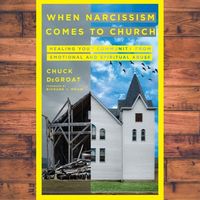
Pride, and its more serious cousin, narcissism, really shouldn’t have any place in leadership circles in the church. When I became a serious follower of Jesus at a teenager, Philippians 2 became one o...
September 2018 The Millennial Stereotype There is perhaps no stronger stereotype of the millennial generation than that of “entitled.” For those of us who were born between 1981-1996, we’ve been lab...
Matthew 5:43-45, Romans 12:17-21, Luke 17:20-21, Matthew 6:25-33, Acts 4:18-20, 2 Corinthians 10:3-4, Isaiah 2:4, James 3:17-18, Philippians 3:20, John 18:36
A young Russian, deeply moved by the teachings of Tolstoy and the New Testament, had become a conscientious objector. Standing before a magistrate, he spoke passionately about a life that loves its en...
Philippians 2:5-8, Mark 10:45, John 13:3-5, 12-15 , Matthew 25:21, Colossians 3:23-24, Matthew 6:3-4, 1 Peter 5:5-6
The Swiss-German novelist Hermann Hesse published a short story in 1932 called "Journey to the East." In it, a group of men go on a long journey. Throughout their trip, they are accompanied ...
Jesus, you do not exploit Power over Power used as advantage Power plays You empty yourself of power’s privileges You choose solidarity, even with slaves You choose womb and flesh vulnerability and b...
We all live between two worlds. We are planted here on earth while our hope is in heaven. We are given work to do in temporary soil that, we’re told, has the potential to spring up into unending fruit...
John 18:36, Matthew 6:9-10, Matthew 6:33, Luke 17:20-21, Matthew 5:3, 10, Philippians 2:9-11
While I don’t agree with late professor and scholar Marcus Borg on significant theological positions, I appreciate how he described the context surrounding Jesus’ new paradigm of kingdom living: In hi...
And I was reminded of an event from my father’s childhood: He was in a Sunday school class, listening to his teacher expound on Genesis 1 and a young earth, and asked his teacher how to make sense o...
Isaiah 1:1, 10-20, 2 Corinthians 12:9, Matthew 6:10, Matthew 5:3, 10, 1 Corinthians 1:27, 2 Corinthians 12:9, Matthew 26:28, Matthew 19:24, Philippians 3:7, Hebrews 12:2, Matthew 5:6, Matthew 28:19
The context The parables we hear this week are part of a collection of parables of the Kingdom collected by Matthew in chapter 13 of his gospel account. As with the Sermon on the Mount (Matthew 5-7),...
Bear one another’s burdens, the Bible says. It is a lesson about pain that we all can agree on. Some of us will not see pain as a gift; some will always accuse God of being unfair for allowing it. But...
Matthew 13:31-33, 2 Corinthians 12:9, Matthew 6:10, Matthew 5:3, 6, 10, 1 Corinthians 1:27, Matthew 26:28, Matthew 19:24, Philippians 3:7, Hebrews 12:2, Matthew 28:19
The context The parables we hear this week are part of a collection of parables of the Kingdom collected by Matthew in chapter 13 of his gospel account. As with the Sermon on the Mount (Matthew 5-7),...
Check out our video discussion of the text with the author, Austin D. Hill. Click here to view! Ancient Lens What can we learn from the historical context? Exile and Catastrophe There is deba...
God's Kingdom is "present in its beginnings, but still future in its fullness. This guards us from an under-realized eschatology (expecting no change now) and an over-realized eschatology (ex...