The biblical narrative begins and ends at home. From the Garden of Eden to the New Jerusalem we are hardwired for place and for permanence, for rest and refuge, for presence and protection. We long fo...
This passage from Joshua underscores a central element of the biblical view of meditation: obedience. This is in marked contrast to the various forms of meditation in many religions around the world. ...
The Hebrew word yada (“to know”) is, in fact, used for both sexual intercourse as well as our relationship with God. Every relational event is a stage that affords one a glimpse into the consumm...
Jesus, you do not exploit Power over Power used as advantage Power plays You empty yourself of power’s privileges You choose solidarity, even with slaves You choose womb and flesh vulnerability and b...
Proverbs 3:5-6, Isaiah 55:8-9 , Luke 9:23-24, Philippians 2:3-4 , Matthew 6:33-34, Psalm 37:5-6
Archbishop of Canterbury Rowan Williams observes that the biblical ideal is not so much that we need to deny the self as to decenter the self: To see the self in truth, as an integral member of a comm...
Philippians 2:8, John 12:32, Isaiah 53:4-6, Luke 23:39-43, Hebrews 12:2
Another example struck me forcibly during the 2014 season of Promenade Concerts in the Albert Hall in London. (The “Proms,” as they are known, make up a major annual festival, offering world-class mus...
Introduction Our text falls within a larger section (Luke 16) in which Jesus deals head-on with questions of money, specifically the need to choose God over mammon (the worship of money), in other wo...
Introduction Our text falls within a larger section (Luke 16) in which Jesus deals head-on with questions of money, specifically the need to choose God over mammon (the worship of money), in other wo...
Picture this: you are just about a year into your first call as a minister. Everything seems to be going swimmingly. You caught up with a seminary friend over the weekend and you slightly brag about h...
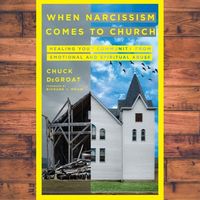
Pride, and its more serious cousin, narcissism, really shouldn’t have any place in leadership circles in the church. When I became a serious follower of Jesus at a teenager, Philippians 2 became one o...
Philippians 2:5-8, Mark 10:45, John 13:3-5, 12-15 , Matthew 25:21, Colossians 3:23-24, Matthew 6:3-4, 1 Peter 5:5-6
The Swiss-German novelist Hermann Hesse published a short story in 1932 called "Journey to the East." In it, a group of men go on a long journey. Throughout their trip, they are accompanied ...
“Good work! You did your job well” (Matt. 25:23 MSG). That phrase reminds me of a story Joe Stowell told me about a time he met the president at the White House. Joe was president of Moody Bible Insti...
Check out our video discussion of the text with the author, Austin D. Hill. Click here to view! Ancient Lens What can we learn from the historical context? Exile and Catastrophe There is deba...
Matthew 13:31-33, 44-52, 2 Corinthians 12:9, Matthew 6:10, Matthew 5:3, 6, 10, 1 Corinthians 1:27, Matthew 26:28, Matthew 19:24, Philippians 3:7, Hebrews 12:2, Matthew 5:6, Matthew 28:19
preaching commentary The context The parables we hear this week are part of a collection of parables of the Kingdom collected by Matthew in chapter 13 of his gospel account. As with the Sermon on t...
And I was reminded of an event from my father’s childhood: He was in a Sunday school class, listening to his teacher expound on Genesis 1 and a young earth, and asked his teacher how to make sense o...
AIM Commentary Check out our video discussion of the text with the author, Austin D. Hill. Click here to view! Ancient Lens What can we learn from the historical context? Exile and Catastrop...
Mark 1:4-11, Isaiah 40:3, Mark 2:7, Philippians 2:7, Isaiah 53:null, Hebrews 4:15, 2 Corinthians 8:9, Mark 1:1-3
Enter John the Baptist John the Baptist enters the stage in Mark 1 as the “voice of one crying in the wilderness,” (Isaiah 40:3) whose message and ministry is to “prepare the way of the Lord.” Mark d...
Mark 1:4-11, Mark 1:1-3, Isaiah 40:3, Mark 2:7, Philippians 2:7, Isaiah 53:null, Hebrews 4:15, 2 Corinthians 8:9
Preaching Commentary Enter John the Baptist John the Baptist enters the stage in Mark 1 as the “voice of one crying in the wilderness,” (Isaiah 40:3) whose message and ministry is to “prepare the w...
Isaiah 1:1, 10-20, 2 Corinthians 12:9, Matthew 6:10, Matthew 5:3, 10, 1 Corinthians 1:27, 2 Corinthians 12:9, Matthew 26:28, Matthew 19:24, Philippians 3:7, Hebrews 12:2, Matthew 5:6, Matthew 28:19
The context The parables we hear this week are part of a collection of parables of the Kingdom collected by Matthew in chapter 13 of his gospel account. As with the Sermon on the Mount (Matthew 5-7),...
Matthew 13:31-33, 2 Corinthians 12:9, Matthew 6:10, Matthew 5:3, 6, 10, 1 Corinthians 1:27, Matthew 26:28, Matthew 19:24, Philippians 3:7, Hebrews 12:2, Matthew 28:19
The context The parables we hear this week are part of a collection of parables of the Kingdom collected by Matthew in chapter 13 of his gospel account. As with the Sermon on the Mount (Matthew 5-7),...
Psalm 118:, Matthew 21:9, Mark 11:9, Luke 19:38, John 12:13, Ezra 5:null, Ezra 6:, Mark 12:10-11, 1 Peter 2:5, Deuteronomy 7:8, 1 Corinthians 1:26-27, 1 Corinthians 12:9, Romans 8:26-27, Philippians 2:8-10
Introduction This guide is often read on Palm Sunday and it is especially interesting when read in light of Jesus' triumphal entry into Jerusalem. All the gospels include a quotation of part of P...
Ancient Lens What can we learn from the historical context? Israel’s State of Mind The Book of Isaiah is a remarkable accounting of the history of the relationship people of Israel with God. By t...
Will the Real Jesus, Please Stand Up? Quite a few years have passed since I sat through a systematic theology class and had the professor pitch a variety of difficult to hit balls at us regarding the...
Ancient lens What’s the historical context? Historical Background We need to understand several things about Psalm 107 before we can put it all together. First, it is the beginning psalm of Book...
Revelation 21:1-8, Acts 3:19-21, John 14:2-3, John 14:2-3, 1 Thessalonians 4:17, Philippians 3:20-21, 1 Corinthians 13:12
In the epic conclusion to the Narnia Chronicles, C.S. Lewis attempts to express the absolute joy that will come as our earthly lives come to an end and we are reunited with our God for all of eternity...
Ancient lens What’s the historical context? Historical Background We need to understand several things about Psalm 107 before we can put it all together. First, it is the beginning psalm of Book...
Preaching Commentary Ancient Lens What can we learn from the historical context? Israel’s State of Mind The Book of Isaiah is a remarkable accounting of the history of the relationship people o...
Preaching Commentary Context Paul in Ephesus: His Third Missionary Journey This passage describes Paul’s arrival in Ephesus during his third missionary journey. He finds there some disciples who k...
John 12:1-8, Mark 14:1-2, Matthew 26:3-13, John 11:45, Luke 7:44-47, Matthew 26:6, Mark 14:3, Luke 7:40, John 11:50-53, Luke 24:41-43, John 21:10-14, Acts 10:40-41, John 12:7, Philippians 2:6-8, Romans 6:1-10
Introduction This narrative is slightly changed from the Synoptic accounts. Matthew and Mark’s Gospels place this narrative two days prior to the Passover (Matt: 26:6-13; Mark 14:1). Three Evangelist...
Matthew 13:44, Hebrews 14:26, Colossians 2:2-3, Philippians 3:8, Luke 12:33-34
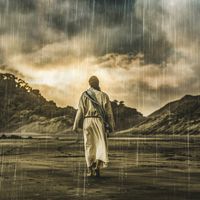
A first-century Hebrew walks alone on a hot afternoon, staff in hand. His shoulders are stooped, his tunic stained with sweat. But he doesn’t stop to rest. He has pressing business in the city. He vee...