Matthew 14:19-20, John 9:6-7, Mark 2:3-4, John 13:4-5, Mark 1:40-42, Luke 2:7, John 1:14
The gospels are earthy. People are close to the earth. They travel here and there by foot. They eat the live heads of grain growing from the soil as they walk through the fields. They get grubby and h...
Ezekiel 144:6, Colossians 3:5, 1 John 5:21, 1 Corinthians 10:14, Jeremiah 10:14-15, Matthew 22:34-40, Exodus 20:3
Tertullian was an early church leader (a bishop in Carthage) in North Africa. His voluminous writing and ministry have led many to acknowledge him as the father of Latin Theology/Western Theology. Ter...
Acts 1:3, Luke 10:9, Matthew 10:7, John 3:16, Matthew 6:33, Luke 4:43
The call to 'believe in the gospel', or to 'believe in me', does not suggest that Jesus was inviting Galilean villagers to embrace a body of doctrine – not even a basic 'theory'...
Matthew 5:17-18, Mark 2:27-28, John 8:58, Luke 4:18-21, Matthew 5:7, John 8:1-11, Luke 24:13-27
Jesus appears in the Gospels as a theologian who begins with a mastery of the tradition and then reshapes it by offering a new vision centered on his own person.
John 6:68, Matthew 7:28-29, Mark 12:29-31, Matthew 5:7, John 14:6, Matthew 16:15-16, John 18:33-38
The discrepancy between the depth and sanity, and (let me add) shrewdness, of his moral teaching and the rampant megalomania which must lie behind his theological teaching unless he is indeed God, has...
John 6:53-56, Matthew 26:26-28, Colossians 1:19-20, Hebrews 2:14-15, 1 Corinthians 11:24-25, Philippians 2:6-8
The Incarnation [and I might add Communion] remains a scandal to anyone who wants religion to be a purely spiritual matter, an etherized, bloodless bliss.
Romans 12:1, Matthew 22:37-38, James 2:14-17, John 14:15, Luke 9:23, Philippians 2:5-8, Romans 10:9-10, Psalm 1:1-6
New Testament theology is ‘inherently self-involving as it summons the reader to believe, confess, obey, and understand the entirety of one’s existence—both her or his thinking and willing—in light of...
2 Timothy 2:12, James 1:2-4, Matthew 5:11-12, Philippians 1:29, Romans 8:18, 2 Corinthians 4:17, John 15:20
Nevertheless, what was shameful, even odious, to the critics of Christ, was in the eyes of his followers most glorious. They had learnt that the servant was not greater than the master, and that for t...
Romans 10:9-10, Luke 1:26-38, Romans 8:11, Matthew 1:20-23, Philippians 2:6-11, John 1:1-3
I believe in one God, the Father Almighty, maker of heaven and earth, and of all things visible and invisible; And in one Lord Jesus Christ, the only-begotten Son of God, begotten...
Isaiah 55:1-3, John 3:1-5, Matthew 1:25-27, John 3:16-17, Psalm 145:8-9
Justin Martyr (ca. 100–165), the most renowned apologist of the second century, dedicated his life to defending Christianity as the one true philosophy. Engaging the Greek philosophers and intellectua...
Yet for all that, God, for the salvation of them that were in error, endured to be served by these things, whereby those without were used to serve devils; only He slightly altered them; that He might...
Romans 10:9-10, Luke 1:26-38, Romans 8:11, Matthew 1:20-23, Philippians 2:6-11, John 1:1-3, Genesis 1:1
We believe in one God, the Father, the Almighty, maker of heaven and earth, of all that is, seen and unseen. We believe in one Lord, Jesus Christ, the only Son of God, eternally b...
Romans 14:17, John 6:1-14, Matthew 5:7, Matthew 4:18-22, Luke 17:20-21
The call to ‘believe in the gospel’, or to ‘believe in me’, does not suggest that Jesus was inviting Galilean villagers to embrace a body of doctrine — not even a basic ‘theory’ about ‘salvation’ and ...
John 1:1, 14, Luke 1:26-38, Luke 2:1-7, Matthew 2:1-12, Matthew 17:1-5
The dogma of the Incarnation is the most dramatic thing about Christianity, and indeed, the most dramatic thing that ever entered the mind of man; but if you tell people so, they stare at you in bewil...
Context This text comes near the midpoint of the Gospel of Mark, and its central narrative position is more than matched by its pivotal thematic content. Jesus has turned from his focus on ministry i...
Matthew 2:1-4, Luke 15:3-7, John 8:1-11, Luke 19:10, John 1:16, Revelation 22:17
During a British conference on comparative religions, experts from around the world debated what, if any, belief was unique to the Christian faith. They began eliminating possibilities. Incarnation? O...
John 14:6, Matthew 7:13-14, Acts 24:14, Luke 9:23, Psalm 1:1-2, Psalm 25:4-5
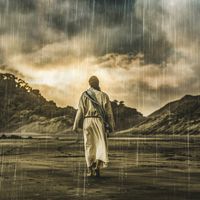
[The] earliest name for Christianity was the Way, suggesting that it was not a set of doctrines to master but a path to travel. Suggesting that each step was a deepening of the familiar and a discover...
John 1:46, 1 Corinthians 1:26-29, Matthew 20:16, Luke 1:51-53, James 2:1-9, Matthew 11:25, Isaiah 52:2-3, Philippians 2:5-8
The world has always despised people from the wrong places and with the wrong credentials. We are always trying to justify ourselves. We need desperately to feel superior to others. And everything abo...
Deuteronomy 13:1-3, 1 Kings 22:19-23, Isaiah 53:3-5, Matthew 24:23-25, John 20:27, Psalm 34:18, John 20:25, 1 Corinthians 1:23; 2:2, Galatians 1:8-9
St. Martin of Tours was a Frankish soldier in the Roman army who abandoned his military post to follow Jesus at a time when Christianity had only begun to take root in France. He later became the bish...
Galatians 6:10, Hebrews 11:13-16, 2 Corinthians 6:9-10, Matthew 5:44, 1 Peter 2:11-12, John 17:15-16
In an early Christian document known as the Epistle to Diognetus (c. A.D. 120-200), the author wrote a response to some propaganda circulating in the Roman Empire. People had spread false rumors about...
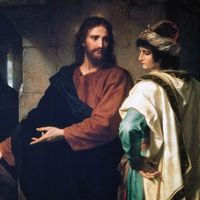
Mark 8:35-36, Mark 10:25, Matthew 19:16-26, Luke 18:18-29
Those not familiar with ancient Greek philosophy may be surprised to find deep resonance with the teachings of Jesus. When on trial for his life, the 70-year-old Socrates pugnaciously responded that,...
Ecclesiastes 7:10, Colossians 2:8, Matthew 9:17, 1 Thessalonians 5:21, Romans 12:2, Mark 7:8-9, Isaiah 43:19
It’s funny how sometimes members of the church can associate anything new with “heresy.” We often make the mistake of confusing technological innovations or scientific discoveries for changes to the g...
John 14:6, Matthew 22:37-38, Matthew 4:18-19, 2 Corinthians 5:14-15, Luke 10:40-42, John 10:11
Christianity is not a collection of truths to be believed, of laws to be obeyed. Christianity is a person, one who loved us so much, one who calls for our love. Christianity is Christ.
Because the gospel of Jesus is not an ideology or a philosophy or a methodology or a therapy but a supernatural in-breaking of God into our lives, I am concerned at how many Christians do not bring it...
Isaiah 53:3–5, Daniel 3:16–18, Micah 6:6–8, Matthew 23:23–24, Luke 4:16–30, Psalm 2:1
Jesus, as always, gets caught in the middle—along with a good number of his followers. Many people in America today were brought up in strict Christian homes and churches of one sort or another. There...
Isaiah 29:13, Amos 5:21-24, Proverbs 1:7, James 1:22-25 , Matthew 23:27-28, Psalm 51:16-17
We artful dodgers act as if we do not understand the New Testament, because we realize full well that [if we let on that we did] we should have to change our way of life drastically. That is why we in...









![[The] earliest name for Christianity](https://images.unsplash.com/photo-1535856326707-98d0b5dbe639?ixid=M3w1NzU0OTZ8MHwxfHNlYXJjaHwxfHxKb3VybmV5c3xlbnwxfDJ8fHwxNzEwNTM0MTcxfDA&ixlib=rb-4.0.3&q=80&auto=compress&fit=crop&w=200&h=200)