Jeremiah 29:13, Psalm 63:1-4, 1 Samuel 3:, Colossians 3:16, Philippians 4:8, Matthew 22:37-38
To love God intellectually is to become a student of God—a student who really takes an interest in God. Have you ever noticed that a fair number of Christians are not particularly interested in God? S...
Proverbs 2:2–6, Romans 12:1–2, Isaiah 1:18, Daniel 1:17–20, Matthew 22:37, Psalm 119:97–100
At a Christian high school, a theology teacher strode to the front of the classroom, where he drew a heart on one side of the blackboard and a brain on the other. The two are as divided as the two sid...
Matthew 11:16-19, Ephesians 4:14, Mark 10:14, 1 Samuel 16:7, 1 Thessalonians 2:4, 1 Corinthians 6:14, 2 Timothy 2:15, Proverbs 23:12, Proverbs 3:5, Acts 26:24
The Missing “Advent” Text A lectionary preacher moving from the fifth to the sixth Sunday after Pentecost in Year A will notice that a familiar chunk is missing, sent back in time to the third Sunday...
Matthew 11:16-19, 25-30, Ephesians 4:14, Mark 10:14, 1 Samuel 16:7, 1 Thessalonians 2:4, 1 Corinthians 6:14, 2 Timothy 2:15, Proverbs 23:12, Proverbs 3:5, Acts 26:24
Preaching Commentary The Missing “Advent” Text A lectionary preacher moving from the fifth to the sixth Sunday after Pentecost in Year A will notice that a familiar chunk is missing, sent back in t...
The challenge each of these faced in their deconstruction—and what we may face—is walking the tightrope between becoming our own person and honoring our past. In The Homeless Mind , sociologist P...
In the land whose founding metaphor was the mutuality of John Winthrop’s seventeenth-century vision of a “city set on a hill,” we live more and more in estranged, hostile, exclusive enclaves, linked o...
In 1889, the French novelist Paul Bourget penned The Disciple , where he depicted the life of a renowned philosopher and psychologist, whose existence was marked by a seemingly monotonous routine...
Leviticus 19:15, Proverbs 18:17, 1 Kings 3:9, Matthew 7:1–5, John 7:24, Psalm 141:5
At a recent gathering of seminary professors, one teacher reported that at his school the most damaging charge one student can lodge against another is that the person is being “judgmental.” He found ...
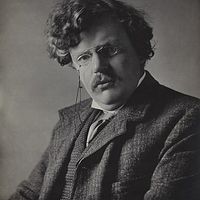
G. K. Chesterton was well-known (and iconoclastic) in his defense of tradition in a time when progress was all the rage in Western Europe- in technology, in the sciences, in philosophy. Chesterton, on...
Matthew 25:40, Jeremiah 22:3, James 2:1, Psalm 82:3-4, Micah 6:8
Frederick Douglass describes how the evils of slavery and racism acts as a sap on the integrity of both our country and our faith in a God where there is neither Jew nor Greek, slave nor free: Fello...
John 5:39-40, Hebrews 4:12-13, Matthew 16:13-15, Mark 10:17-22, John 3:1-10, John 18:33-38, Matthew 12:30
We had thought intellectually to examine him; we find he is spiritually examining us. The roles are reversed between us...A person may study Jesus with intellectual impartiality, he cannot do it with ...
1 Corinthians 13:2, James 2:19-20, 1 Corinthians 8:1-2, Ecclesiastes 1:18, 1 Corinthians 2:5, Philippians 3:10, Matthew 7:21, 24-27, James 1:22
The Oxford scholar and apologist C. S. Lewis... once closed a lecture to a group of apologists like this: I have found that nothing is more dangerous to one’s own faith than the work of an apologis...
Philippians 4:8, Exodus 32:, Ecclesiastes 12:13, Matthew 19:16-30, Proverbs 4:23, Romans 12:2, 1 John 2:15-17
Orwell feared we would become a captive culture. Huxley feared that we would become a trivial culture. . . . Orwell feared that what we hate will ruin us. Huxley feared that what we love will ruin us.
Exodus 1:15–21, Daniel 3:16–18 , 1 Kings 3:16–28 , Matthew 4:1–11, Galatians 1:6–10, Psalm 73:
Pragmatism may be defined simply as the approach to reality that defines truth as “that which works.” The pragmatist is concerned about results, and the results determine the truth. The problem with t...
Isaiah 53:3–5, Daniel 3:16–18, Micah 6:6–8, Matthew 23:23–24, Luke 4:16–30, Psalm 2:1
Jesus, as always, gets caught in the middle—along with a good number of his followers. Many people in America today were brought up in strict Christian homes and churches of one sort or another. There...
Many economic fallacies are due to conceiving of economic activity as a zero-sum contest, in which what is gained by one is lost by another. This in turn is often due to ignoring the fact that wealth ...
1 Peter 3:8-9, Galatians 3:28, Proverbs 31:8-9, Matthew 5:9, Romans 12:18
Just as Socrates felt that it was necessary to create a tension in the mind so that individuals could rise from the bondage of myths and half-truths to the unfettered realm of creative analysis and ob...
Galatians 5:14-15, John 8:32, Micah 6:8, 1 Corinthians 1:10, Matthew 7:3-5, Romans 12:2, James 3:17
People bind themselves into political teams that share moral narratives. Once they accept a particular narrative, they become blind to alternative moral worlds.
Matthew 5:17-18, Ecclesiastes 12:13-14, Romans 6:23, Proverbs 14:12, James 4:17, 1 John 1:8-9
Postmodernism (the thinking of our age) is fiercely antinomian (without law). It is admitted that people make mistakes, but the word ‘sin’ is seldom mentioned and the idea that we all sin against God ...
Matthew 6:19-21, Isaiah 9:6, Luke 2:10-11, Matthew 2:1-12, 1 Timothy 6:6-7, Luke 12:16-21
If you ever find yourself sympathizing with Charles Dickens’ character Ebenezer Scrooge regarding the commercialization of Christmas, you’re not alone—this has been a common complaint for quite some t...
Proverbs 1:5, Jeremiah 9:23-24, Matthew 11:25, James 1:21, Colossians 2:3, Matthew 18:3
Becoming a teachable person has two prerequisites: There must be a teacher and a person willing to be taught. Increasingly, Western culture has become an environment that celebrates and platforms the ...
Romans 12:16, John 13:14-15, Luke 6:20-21, Matthew 7:12, Proverbs 22:2
I read George Orwell’s book about class and working conditions in early-twentieth-century England, The Road to Wigan Pier . The book’s most famous passage considers smell: Here you come to the...
There are many people who will always want to return to the time when America was great. But was there ever a time when America was a wonderful place for everyone? As I saw on a Facebook meme recently...
Psalm 37:8, Colossians 3:8, Galatians 5:22-23, Romans 12:17-18, Matthew 7:1-2
The political cartoonist and Op-Ed writer Tim Kreider has provided us with some insight into the “world of outrage” we currently inhabit. A world that has been amplified by the dawn of the Internet an...
Matthew 5:10-12, Luke 6:22-23, Luke 12:51-53, Galatians 6:9, Galatians 1:10, Proverbs 29:25
Jane Addams (1860–1935), a leading American social reformer, was a dedicated advocate for racial equality, women’s suffrage, and pacifism. In 1931, she was honored with the Nobel Peace Prize. In 1900,...
Matthew 25:40, Romans 12:21, Luke 4:18-19, James 1:27, Micah 6:8, Isaiah 1:17
In October 2014 Wired magazine reported on the dirty work every social media company must somehow handle: moderating the deluge of exploitative, degrading content posted in unimaginable quantities aro...
Micah 6:8, Colossians 3:2, Isaiah 58:10, John 6:27, James 2:15-17, Matthew 6:33
In his excellent little book, A Testament of Devotion , written almost a hundred years ago, Thomas Kelly describes the tension that all ministries must live in; the focus on this world or the wor...
In one of his letters, the philosopher and psychologist William James shares a conviction regarding his focus not on big, grand things, but with the small “almost invisible” decisions: I am done wit...
Matthew 6:24, 1 Timothy 6:9-10, Colossians 3:5, Psalm 115:4-8, Matthew 13:22, Mark 8:36, Ecclesiastes 2:11
Andrew Carnegie rose to become among the world's richest individuals through his steel empire. In the midst of this acquisition of massive wealth at just thirty-three years old—Carnegie conducted ...







![[The decay of Logic results from an]](https://images.unsplash.com/photo-1709399610754-921b7a9ef3b7?ixid=M3w1NzU0OTZ8MHwxfHNlYXJjaHw0NXx8bG9naWN8ZW58MHwwfHx8MTcxMjA3NTI4Mnww&ixlib=rb-4.0.3&q=80&auto=compress&fit=crop&w=200&h=200)