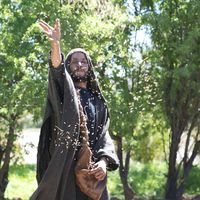
Save my soul, Good Gardener Evil flies in wanting to steal my hope Work piles up, insecure boulders ready to crash, leaving no room to root My faith begins to wither as does our relationship Distract...
Glimpses of God’s Kingdom In these parables, Jesus provides two glimpses of God’s Kingdom: the slow growth of a seed into a stalk of wheat and the growth of a humble mustard seed. Both of Jesus’ para...
Jesus, you sow yourself The Word of Truth, generously The Word of Life, graciously Defend us from the Evil One Who seeks to snatch us away Fortify us for hard times and costly discipleship That we m...
Glimpses of God’s Kingdom In these parables, Jesus provides two glimpses of God’s Kingdom: the slow growth of a seed into a stalk of wheat and the growth of a humble mustard seed. Both of Jesus’ para...
Ecclesiastes 3:1-8, John 15:1-2, Psalm 1:3, Galatians 6:9, Genesis 8:20-22, Mark 4:26-29, James 5:7-8, 2 Timothy 4:1-7, Hosea 6:3, Daniel 2:21, Acts 1:7, Psalm 104:19, Genesis 1:14
I have observed through the years that most Christians have little understanding of the word ‘season’. Our Lord is a seasonal God; He comes, He departs. His faithfulness never changes, but His seasons...
Merciful and mighty God, you plant your seed in all kinds of soil. You speak, hoping that the whole world will listen and heed what you say. We struggle to follow your word. We fail to live up to your...
Matthew 5:null, 1 Peter 2:9, Galatians 5:22-23, James 2:17, Romans 12:1, Mark 4:21, Philippians 2:15
Jesus describes his followers as being “salt” and “light” in the world in Matthew 5. When you think about salt, it doesn’t really have a whole lot of value when it’s just sitting in a salt shaker. Si...
Mark 6:1-13, Isaiah 11:2, 1 Peter 2:8, Mark 9:42-47, Mark 14:27-29, Mark 4:16-17, 1 Corinthians 1:23
Context As we read the opening chapters of Mark, it becomes clear that Mark is not primarily interested in telling us things about Jesus but showing Jesus to us. We see Jesus the healer, the exor...
Luke 15:11-32, Matthew 18:22-35, Luke 16:19-31, Matthew 13:3-8, Matthew 20:1-16, Matthew 13:24-33, Matthew 13:44-50, Mark 4:26-29
The child became a man and the man became a preacher whose sermons were full of commonplace things: seeds and nets, coins and fishes, lilies of the field, and birds of the air. Wherever he was, he had...
Mark 6:1-13, Isaiah 11:2, 1 Peter 2:8, Mark 9:42-47, Mark 14:27-29, Mark 4:16-17, 1 Corinthians 1:23
Context As we read the opening chapters of Mark, it becomes clear that Mark is not primarily interested in telling us things about Jesus but showing Jesus to us. We see Jesus the healer, the exor...
The inordinate desire in the west to increase productivity, to go faster and faster, especially in business, can actually become counterproductive. In this short story from the Chinese philosopher Men...
Luke 12:49, Matthew 10:34, Mark 4:41, Hebrews 12:29, Revelation 1:14-15, John 1:14
When our daughter Sara was four years old, she burst into the house carrying a water-filled baggie in which swam a wide-eyed burst of sunshine. “Look what they gave us at the birthday party!” (Gee tha...
John 1:14, Luke 2:4-7, Matthew 4:1-2, John 4:6-7, Mark 4:38-39, John 4:6
Man's maker was made man that He, Ruler of the stars, might nurse at His mother's breast; that the Bread might hunger, the Fountain thirst, the Light sleep, the Way be tired on its journey; th...
Mark 4:35-41, Job 38:1-11, Psalm 107:, Jonah 1:, Genesis 1:, Matthew 8:23-27, Luke 8:22-25, Psalm 74:14, Psalm 104:26, Genesis 1:21
A Sopping Wet Week in the Lectionary Today’s readings are thoroughly wet. In Job, God is master of the sea, Psalm 107 concerns mariners in the storm, Paul is a little drier, but still gets shipwrecke...
Mark 4:35-41, Jonah 1:, Psalm 107:23-32, Matthew 8:23-27, Luke 8:22-25
Peter's Perspective? While this narrative of Jesus calming the storm occurs in Matthew (8:23-27) and Luke (8:22-25), Mark’s account in 4:35-41 is the fullest account of that day. This has led som...
Jeremiah 17:7-8, Colossians 2:6-7, Psalm 1:3, Ephesians 3:16-19, Matthew 13:3-8, Mark 4:1-9
The word radical comes from the same root as the word radish and literally means “root.” It’s truly a root word! But apart from the painful pun, it has something to teach us. So often, when we think o...
Mark 4:35-41, Psalm 107:, Jonah 1:, Genesis 1:, Matthew 8:23-27, Luke 8:22-25, Psalm 74:14, Psalm 104:26, Genesis 1:21
Note: This was originally part of a guide for the Fifth Sunday after Pentecost (RCL Year B) , which includes Job 38:1-11 and Mark 4:35-11. I have adapted the discussion of each of these two...
Every happening, great and small, is a parable whereby God speaks to us, and the art of life is to get the message. To see all that is offered us at the windows of the soul, and to reach out and rece...
John 18:36, Romans 14:17, Mark 4:26-29, Colossians 1:13, John 3:3, Matthew 13:33
Continually, Jesus described the Kingdom in terms that one can’t point to and identify specifically—but in every story, the Kingdom was the essential piece. The Kingdom is mixed in and present already...
Rabbis spoke of parables as handles for understanding Torah; before parables no one understood the Torah, but when Solomon and others created parables, then people understood.
Mark 4:35-41, Jonah 1:, Psalm 107:23-32, Matthew 8:23-27, Luke 8:22-25
Peter's Perspective? While this narrative of Jesus calming the storm occurs in Matthew (8:23-27) and Luke (8:22-25), Mark’s account in 4:35-41 is the fullest account of that day. This has led som...
Leader: King Jesus, you taught your disciples a great deal about your kingdom, and we confess that we have thought much more about our own kingdoms than about yours. In fact, you are the king over all...
Matthew 13:, Mark 4:1-20, Luke 8:4-15, Mark 4:30-32, Matthew 13:47-50, Luke 18:1-8, Matthew 13:44
Parables were the means Jesus used most frequently to explain the kingdom of God and to show the character of God and the expectations that God has for humans.
Luke 15:11-32, Matthew 18:22-35, Luke 16:19-31, Matthew 13:3-8, Matthew 20:1-16, Matthew 13:24-33, Matthew 13:44-50, Mark 4:26-29
The thrust of the parables is to subvert the distorted myths in which people live their lives. To understand what we mean by “living in a myth” just think of a couple of our own contemporary myths. Ta...
Luke 15:11-32, Matthew 18:22-35, Luke 16:19-31, Matthew 13:3-8, Matthew 20:1-16, Matthew 13:24-33, Matthew 13:44-50, Mark 4:26-29
The Parable is a form of speech that has a style all of its own. It is a way of saying something that requires the imaginative participation of the listener. Inconspicuously, even surreptitiously, a p...
The key to interpreting most allegories [i.e., parables] lies in recognizing what a small handful of characters, actions or symbols correspond to and then fitting the rest of the story in with them.
Matthew 13:31-32, Mark 4:30-32, Luke 13:18-19, 1 Corinthians 12:, Romans 12:4-8
With their striking white bark and shimmering leaves (green in spring and summer, bright gold in fall), aspens are beloved in the Mountain West. They are a remarkable image of the body of Christ. From...
Matthew 14:22-23, Mark 4:35-41, James 1:2-4, Acts 27:13-26, Jonah 1:4-16
The disciples are tossed on the waves again. They are in a storm, fully as bad as the previous one. Gently and by degrees he excites and urges the disciples on toward greater responsiveness, even to t...