Matthew 14:19-20, John 9:6-7, Mark 2:3-4, John 13:4-5, Mark 1:40-42, Luke 2:7, John 1:14
The gospels are earthy. People are close to the earth. They travel here and there by foot. They eat the live heads of grain growing from the soil as they walk through the fields. They get grubby and h...
Ezekiel 144:6, Colossians 3:5, 1 John 5:21, 1 Corinthians 10:14, Jeremiah 10:14-15, Matthew 22:34-40, Exodus 20:3
Tertullian was an early church leader (a bishop in Carthage) in North Africa. His voluminous writing and ministry have led many to acknowledge him as the father of Latin Theology/Western Theology. Ter...
Luke 24:36b-48, Luke 24:36-48, Luke 24:1-12, Luke 24:13-15, Luke 24:36-48, Luke 24:47-48, John 20:19-29, John 14:27, Luke 24:37, Luke 24:39-43, Romans 5:12, Romans 5:17, Colossians 1:null, Luke 24:44-49, Luke 24:46-47, Luke 24:48-49, John 16:7
Preaching Commentary Context Post-Resurrection Appearances The four Gospel writers vary in which and how many of Jesus’ thirteen post-resurrection appearances they choose to record. Luke reserves ...
Acts 1:3, Luke 10:9, Matthew 10:7, John 3:16, Matthew 6:33, Luke 4:43
The call to 'believe in the gospel', or to 'believe in me', does not suggest that Jesus was inviting Galilean villagers to embrace a body of doctrine – not even a basic 'theory'...
Matthew 5:17-18, Mark 2:27-28, John 8:58, Luke 4:18-21, Matthew 5:7, John 8:1-11, Luke 24:13-27
Jesus appears in the Gospels as a theologian who begins with a mastery of the tradition and then reshapes it by offering a new vision centered on his own person.
Christianity is almost the only one of the great religions which thoroughly approves of the body—which believes that matter is good, that God himself once took on a human body, that some kind of body ...
We hear of wild new theories about Jesus. Every month or two some publisher comes up with a blockbuster saying that he was a New Age guru, an Egyptian freemason or a hippie revolutionary. Every year o...
A friend of mine, lecturing in a theological college in Kenya, introduced his students to “The Quest for the Historical Jesus.” This, he said, was a movement of thought and scholarship that in its ear...
John 6:68, Matthew 7:28-29, Mark 12:29-31, Matthew 5:7, John 14:6, Matthew 16:15-16, John 18:33-38
The discrepancy between the depth and sanity, and (let me add) shrewdness, of his moral teaching and the rampant megalomania which must lie behind his theological teaching unless he is indeed God, has...
John 6:53-56, Matthew 26:26-28, Colossians 1:19-20, Hebrews 2:14-15, 1 Corinthians 11:24-25, Philippians 2:6-8
The Incarnation [and I might add Communion] remains a scandal to anyone who wants religion to be a purely spiritual matter, an etherized, bloodless bliss.
In the book of Hebrews (and elsewhere in the New Testament and theology, generally), the Greek and Jewish worlds collide. A funny parallel may be drawn between this and George's complete meltdown ...
1 Corinthians 12:8-12, John 1:, John 17:18, Philippians 2:6-11, 1 John 1:7, Romans 8:1, Colossians 1:13-14
The Cave One of the most famous passages in Plato's Republic is his "Allegory of the Cave," which is found at the beginning of book seven . Socrates imagines the human condition al...
Romans 12:1, Matthew 22:37-38, James 2:14-17, John 14:15, Luke 9:23, Philippians 2:5-8, Romans 10:9-10, Psalm 1:1-6
New Testament theology is ‘inherently self-involving as it summons the reader to believe, confess, obey, and understand the entirety of one’s existence—both her or his thinking and willing—in light of...
2 Timothy 2:12, James 1:2-4, Matthew 5:11-12, Philippians 1:29, Romans 8:18, 2 Corinthians 4:17, John 15:20
Nevertheless, what was shameful, even odious, to the critics of Christ, was in the eyes of his followers most glorious. They had learnt that the servant was not greater than the master, and that for t...
Isaiah 9:6-7, Hebrews 1:1-3, Colossians 1:15-17, Philippians 2:6-8, John 3:16-17, John 1:1-4, Luke 1:30-35
In the ancient world, a place where the veil between the earthly and spiritual was easily pierced, rumors and gossip about great leaders being born of the gods, especially amongst royals, was somewhat...
Romans 10:9-10, Luke 1:26-38, Romans 8:11, Matthew 1:20-23, Philippians 2:6-11, John 1:1-3
I believe in one God, the Father Almighty, maker of heaven and earth, and of all things visible and invisible; And in one Lord Jesus Christ, the only-begotten Son of God, begotten...
Isaiah 55:1-3, John 3:1-5, Matthew 1:25-27, John 3:16-17, Psalm 145:8-9
Justin Martyr (ca. 100–165), the most renowned apologist of the second century, dedicated his life to defending Christianity as the one true philosophy. Engaging the Greek philosophers and intellectua...
Romans 10:9-10, Luke 1:26-38, Romans 8:11, Matthew 1:20-23, Philippians 2:6-11, John 1:1-3, Genesis 1:1
We believe in one God, the Father, the Almighty, maker of heaven and earth, of all that is, seen and unseen. We believe in one Lord, Jesus Christ, the only Son of God, eternally b...
Romans 14:17, John 6:1-14, Matthew 5:7, Matthew 4:18-22, Luke 17:20-21
The call to ‘believe in the gospel’, or to ‘believe in me’, does not suggest that Jesus was inviting Galilean villagers to embrace a body of doctrine — not even a basic ‘theory’ about ‘salvation’ and ...
That which distinguishes Christianity has not been stolen. For what makes Christianity absolutely distinct is the identity of our God. Which God we worship: that is the article of faith that stands be...
1 Peter 2:24, John 1:17, Galatians 2:21, Hebrews 4:16, 2 Corinthians 12:9, Titus 3:5
The Christian religion as a religion is not of God. It is on the contrary another example of a mortal road to God like the Buddhist or any other, although of course different in form. Christ is not th...
Genesis 3:1-24, Isaiah 6:1-8, Genesis 50:15-21, John 8:1-11, Luke 15:11-32, Psalm 51:1-17
In Guilt and Grace , Swiss physician and Christian, Paul Tournier, writes… I cannot study this very serious problem of guilt with you without raising the very obvious and tragic fact that rel...
John 1:1, 14, Luke 1:26-38, Luke 2:1-7, Matthew 2:1-12, Matthew 17:1-5
The dogma of the Incarnation is the most dramatic thing about Christianity, and indeed, the most dramatic thing that ever entered the mind of man; but if you tell people so, they stare at you in bewil...
Paul’s insight that Gentiles are co-heirs, co-members, and co-participants in the gospel is not a mere sociological adjustment—it is a radical theological revelation.
Matthew 2:1-4, Luke 15:3-7, John 8:1-11, Luke 19:10, John 1:16, Revelation 22:17
During a British conference on comparative religions, experts from around the world debated what, if any, belief was unique to the Christian faith. They began eliminating possibilities. Incarnation? O...
John 3:16, Romans 5:8, 1 John 4:9-10, 1 Peter 2:24, Colossians 2:13-14
It was more than I could believe that Jesus was the only incarnate Son of God, that only he who believed in him would have everlasting life…my reason was not ready to believe literally that Jesus by h...
I recently visited a missions school at a large church in Waco, Texas, and decided to try a similar test in a class-sized proportion. “Tell me,” I said to the group, “what is the gospel?” A young lady...
John 14:6, Matthew 7:13-14, Acts 24:14, Luke 9:23, Psalm 1:1-2, Psalm 25:4-5
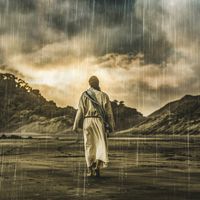
[The] earliest name for Christianity was the Way, suggesting that it was not a set of doctrines to master but a path to travel. Suggesting that each step was a deepening of the familiar and a discover...












![[The] earliest name for Christianity](https://images.unsplash.com/photo-1535856326707-98d0b5dbe639?ixid=M3w1NzU0OTZ8MHwxfHNlYXJjaHwxfHxKb3VybmV5c3xlbnwxfDJ8fHwxNzEwNTM0MTcxfDA&ixlib=rb-4.0.3&q=80&auto=compress&fit=crop&w=200&h=200)