Genesis 45:1-15, Matthew 18:21-35, Ephesians 4:32, Romans 5:10, Mark 11:25, Colossians 3:13, Matthew 5:44
Frederick William I was a king of Prussia in the early 18th century. Personality-wise, he was described as exacting, frugal and austere. He was known to beat his children when they disappointed him. H...
Looking through the lens of Holy Scripture, human work must be seen first and foremost as value contribution, not economic compensation. We can have a flourishing, fruitful life even if we don’t get a...
Genesis 41:46-57 , Proverbs 31:10-31, Deuteronomy 8:17-18, Matthew 25:14-30, Luke 12:13-21, Psalm 128:1-2
Seeing that wealth is neither to be avoided nor praised but rather stewarded wisely and generously, how should we think about material wealth creation? This is an important question worthy of thoughtf...
One day, a father bought his little boy some French fries. The father, doing what any dad would do, reaches over and moves to take one of the fries off of his kid’s plate. The little boy screams, slap...
Matthew 11:28-30, Genesis 22:, Acts 9:1-19, Matthew 4:18-22, Matthew 19:16-22, Philippians 3:7-8, Romans 6:22
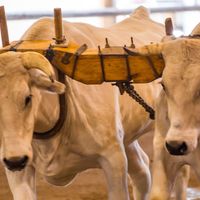
Grace is costly because it compels a person to submit to the yoke of Christ and follow him; it is grace because Jesus says: “My yoke is easy and my burden is light.”
There’s a somewhat naïve belief among some that, in general, most people are inherently good. While many Christians may not fully embrace John Calvin’s doctrine of total depravity (which I believe is ...
The first three items in Paul’s fruit basket sound very spiritual. Heavenly almost. Very nice for Sundays, at least. But his next one, patience, brings us back down to earth on a Monday. What are we l...
Genesis 2:2-3, Exodus 20:8-11, Leviticus 25:4-5, Mark 2:27, Isaiah 40:30-31
Sabbath honors the necessary wisdom of dormancy. If certain plant species, for example, do not lie dormant for winter, they will not bear fruit in the spring. If this continues for more than a season,...
Is God stingy? Mark D. Roberts observes that many writers and preachers focus on the prohibition of the Tree of the Knowledge of Good and Evil instead of Genesis 2:16: "You may freely eat of each...
2 Corinthians 12:9, Luke 15:11-32, Ephesians 2:8, Genesis 32:10, James 4:10, James 4:6, Isaiah 6:1-8
Growth in grace is growth downward. It is the forming of a lower estimate of ourselves. It is a deepening realization of our nothingness. It is a heartfelt recognition that we are not worthy of the le...
At the core of every project of self-salvation is the staunch unwillingness to believe that God’s love and forgiveness can be unmerited. Those who would try and save themselves prefer work to rest, ef...
Matthew 3:10 , John 15:5-6, Genesis 5:22-23, Hebrews 12:11, Psalm 139:23-24, Jeremiah 17:7-8, Luke 13:6-9
Dearly Beloved, the ax lying at the root of the trees is not for punishment, but pruning. Therefore, trusting in God’s tender mercy, we examine ourselves, that we may see ourselves clearly...
Genesis 2:2-3, Exodus 20:8-10, 1 Kings 19:11-12 , Matthew 6:25-27, Mark 6:31, Psalm 46:10
Dolce far niente—“the sweetness of doing nothing.” One of the most powerful soul-training exercises I have ever done is a practice called holy leisure. In simple terms, holy leisure is “doing nothi...
Two Latin words are used to describe useful and beautiful things: util and frui. Util means useful, beneficial, helpful. Frui means enjoyable, pleasurable, and delightful. The created world is both fr...
I would not give a fig for the simplicity this side of complexity, but I would give my life for the simplicity on the other side of complexity. On the near side of complexity is simplistic; on the far...
There is a tendency among readers and scholars of Genesis 2:16-17 to focus on the prohibition of verse 17: “but the tree of the knowledge of good and evil you shall not eat.” …I want to pause to cons...
Matthew 25:31-46, Galatians 3:28, 1 John 3:17-18, James 2:15-16, Romans 12:10, Genesis 1:26-31, Psalm 8:, Matthew 10:24, Mark 12:31
One day, as Leo Tolstoy, the renowned Russian author, was walking down the street when he encountered a man in worn, shabby clothing. The homeless man asked him if he had any money to spare. Tolstoy s...
We must learn to see our limits as the entrance into the good life, not what bars us from it. But as we grow older, waiting feels like an inconvenience or affront. We take out our phones when we’re...
There is a tendency among readers and scholars of Genesis 2:16-17 to focus on the prohibition of verse 17: “but the tree of the knowledge of good and evil you shall not eat.” …I want to pause to cons...
Known for their luxury watches, Swiss watchmaker Patek Philippe has also become well-known for its clever advertising slogan: “You never actually own a Patek Philippe; you merely take care of it for t...
Genesis 2:15, 1 Kings 19:11-13, Ecclesiastes 3:1, Matthew 25:14-30, Luke 16:10-12, Psalm 16:5-6
When we speak of being the steward of our life, something else must be stressed. We are called to be the steward not of some ideal life or even the life we wish we had; rather we are called to be stew...
As popularized in Richard Thaler and Cass Sunstein’s fascinating book by the same name, nudges are small changes in the environment around us that make it easier for us to make the choices we want to ...
Proverbs 15:1, Genesis 24:17-20, Daniel 1:8-9, Colossians 4:6, 1 Peter 3:15-16, Psalm 34:13-14
Manners are what vex or soothe, corrupt or purify, exalt or debase, barbarize or refine us, by a constant, steady, uniform, insensible operation, like that of the air we breathe in. They give their wh...
Luke 15:11-32, Acts 16:22-26, Genesis 39:41, 1 Peter 4:16, Psalm 34:18, Romans 5:3-5, 2 Corinthians 12:9
I spent a considerable amount of time with a guy I’ll call Martin. As a brand-new follower of Christ, Martin felt guilty for having previously embezzled a lot of money from his employer. After discuss...
Exodus 34:6–7, Genesis 50:19–21, 2 Samuel 9:1–13, Luke 18:1–8 , Luke 7:36–50, Psalm 103:8–14
I personally get some inspiration for getting at the nature of this work from a story told by one of my favorite spiritual writers, Saint Thérèse of Lisieux. Thérèse was born in 1873, to a devout Cath...
We might not say we believe a Jesus-plus-our-efforts idea of the gospel, but when we place our performances on the pedestal of personal progress, we’re not relying on the grace of God. We’re worshipin...