There’s a story that used to make the rounds about the German theologian Paul Tillich. Tillich’s theology was considered dangerous by many Christians in the U.S. Supposedly one time after delivering a...
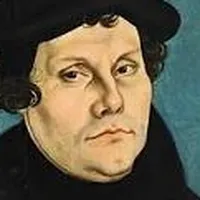
When asked to recant of his writings, Luther replied, “Unless I am convinced by sacred Scripture or by evident reason, I cannot recant. For my conscience is held captive by the word of God and to act ...
Noteworthy in this regard is the contribution of the Reformers, particularly Martin Luther, though John Calvin’s contribution is also very significant. Both called for a spirituality in the world that...
Daniel 3:16-18, 1 Kings 18:16-39, Matthew 16:13-17 , Romans 4:18-20, Romans 14:5-12 , Psalm 119:105
[M]ost Christians attach their convictions to Christ personally. In other words, we form our convictions in order to please Jesus, not ourselves. Convictions do not express what we think or feel or li...
There’s a quote by H. Richard Niebuhr that I believe is absolutely true. “The great Christian revolutions,” he argued, “come not by the discovery of something that was not known before. They happen w...
1 Corinthians 13:2, James 2:19-20, 1 Corinthians 8:1-2, Ecclesiastes 1:18, 1 Corinthians 2:5, Philippians 3:10, Matthew 7:21, 24-27, James 1:22
The Oxford scholar and apologist C. S. Lewis... once closed a lecture to a group of apologists like this: I have found that nothing is more dangerous to one’s own faith than the work of an apologis...
Spiritual timekeeping is nourished by Jesus’s promise that the Spirit will guide us into all truth across time… This stands in contrast to what I’ll call the “primitivism” of so much American Christia...
Jeremiah 29:13, Proverbs 3:5-6, Romans 8:24-25, Hebrews 11:1, John 20:27
Writer Michael Novak says that doubt is not so much a dividing line that separates people into different camps, as it is a razor’s edge that runs through every soul. Many believers tend to think doubt...
We live in a culture that has, for centuries now, cultivated the idea that the skeptical person is always smarter than one who believes. You can almost be as stupid as a cabbage as long as you doubt.
In Christian terms, evangelization and humanization are not alternatives. Nor are the 'vertical dimension' of faith and the 'horizontal dimension' of love for one's neighbor and po...
What we need to realize, however, is that there is no such thing as autonomous or “self-grounding” knowledge. All systems of interpretation and all claims to true knowledge are ultimately grounded out...
Ephesians 4:15, Leviticus 19:33–34, James 1:27, Proverbs 31:8–9, Matthew 25:35–40, Psalm 82:3–4
Whether we’re protecting the unborn, supporting fair prison sentences, or making sure the elderly are taken care of, politics provides a forum for advocating for our neighbor’s well-being and pursuing...
Isaiah 55:8-9, Jonah 4:1-11, Numbers 22:21-34, Matthew 9:10-13, Mark 2:23-28, Psalm 19:12-14
It takes a great deal of freedom and love to be therapeutic with a group. Many years ago when Emil Brunner, the great Swiss theologian, was lecturing in this country, it was reported that when he prea...
We must put away our convenient notions of God—the one who always agrees with us, the one who always favors our nation or political agenda, the one who feeds us candy and never vegetables.
In his book The Allure of Gentleness , Dallas Willard includes a thought-provoking excerpt from Richard Robinson, a prominent atheist thinker from the mid-20th century. In his work An Atheist’...
Every other religion and philosophy says you have to do something to connect to God; but Christianity says no, Jesus Christ came to do for you what you couldn’t do for yourself. Every other religion s...
The great danger is to always single out some aspect of God’s good creation and identify it, rather than the alien intrusion of sin, as the villain. Such an error conceives of the good-evil dichotomy ...
There is a virtuous fear, which is the effect of faith; and there is a vicious fear, which is the product of doubt. The former leads to hope, as relying on God, in whom we believe; the latter inclines...
If man tries to grasp at truth of himself, he tries to grasp at it a priori . But in that case he does not do what he has to do when the truth comes to him. He does not believe. If he did, he wou...
This much I can say with definiteness – namely, that there is no scientific basis for the denial of religion – nor is there in my judgment any excuse for a conflict between science and religion, for t...
A conversation in 1784 between Charles Simeon (a Calvinist and believer in unconditional predestination) and John Wesley (a follower of Arminius, who denied unconditional predestination) can help us u...
Faith and pessimism are incompatible. To be sure, we are not starry-eyed idealists; we are down to earth realists. We know well that sin is ingrained in human nature and in human society. We are not e...
In the land whose founding metaphor was the mutuality of John Winthrop’s seventeenth-century vision of a “city set on a hill,” we live more and more in estranged, hostile, exclusive enclaves, linked o...
True freedom is not found by seeking to develop the powers of the self without limits, for the human person is not made for autonomy but for true relatedness in love and obedience; and this also entai...
John 18:36, Matthew 6:9-10, Matthew 6:33, Luke 17:20-21, Matthew 5:3, 10, Philippians 2:9-11
While I don’t agree with late professor and scholar Marcus Borg on significant theological positions, I appreciate how he described the context surrounding Jesus’ new paradigm of kingdom living: In hi...
The world does not consist of 100 percent Christians and 100 percent non-Christians. There are people (a great many of them) who are slowly ceasing to be Christians but who still call themselves by th...