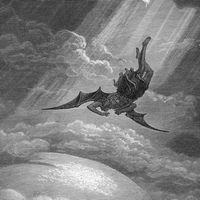
In his book “Where Is God When It Hurts?”, author Philip Yancey shares an unfortunate, yet central dynamic related to how Americans respond to pain: we do everything possible to avoid it. That means p...
There is a virtuous fear, which is the effect of faith; and there is a vicious fear, which is the product of doubt. The former leads to hope, as relying on God, in whom we believe; the latter inclines...
“Listen, Harriet. I do understand. I know you don't want either to give or to take ... You don't want ever again to have to depend for happiness on another person." "That's true....
Gracious God, We build walls to protect ourselves, but it leads to isolation. We make independence the highest value, instead of complete dependence on You. Forgive us for our inability to surrender e...
Cosmic ingratitude is living in the illusion that you are spiritually self-sufficient. It is taking credit for something that was a gift. It is the belief that you know best how to live, that you have...
Matthew 18:3, 2 Corinthians 12:9, James 4:6, James 4:6, Matthew 5:3, 1 Peter 5:6
Grace substitutes a full, childlike and delighted acceptance of our need, a joy in total dependence. The good man is sorry for the sins which have increased his need. He is not entirely sorry for the ...
Alexander Maclaren writes about the importance of recognizing our dependence on God for all we have: Up to the very edge we are driven before He puts out His hand to help us. It is best for us that w...
“Historical insecurity” and “cosmic instability” are the ingredients of existential fear that inspire this Psalm of Trust, according to James Mays in his Interpretation Commentary series on the Psal...
Writer Thomas Wolfe (1900–1938), after years of seeking happiness, articulated his gloomy assessment of life: The whole conviction of my life now rests upon the belief that loneliness, far from being ...
No soul can be really at rest until it has given up all dependence on everything else and has been forced to depend on the Lord alone. As long as our expectation is from other things, nothing but disa...
Of course we are meant to eat, and even to feast, but only when we fast do we make real progress toward being free of our dependence on food to soothe our depression and anesthetize our anxieties.
Lamentations 3:22-23, Psalm 136:1, Matthew 19:13-15, 1 John 4:9-10, Mark 10:21, Proverbs 3:5-6, John 15:5, Psalm 121:1-2
Father, as adults, we can fool ourselves into being quite self-sufficient. Yet, You have called us to be precariously dependent upon You. When we see how Jesus welcomes the little children, we can als...
Merciful God, if we are honest, we recognize that every fiber of our being is impacted by our imperfections and sins. Even our acts of obedience and faithfulness are overshadowed by our tendencies tow...
Matthew 6:24-26, Ephesians 4:1-3, Philippians 2:3-8, James 4:6, Psalm 82:3-4
Almighty God, we take pride in our self-sufficiency while we look down on the weak who cannot provide for themselves. We praise others for their efforts, yet we demand perfection from our own families...
The comedian Richard Pryor, who was critically injured in a severe accident, once shared on Johnny Carson’s show that when faced with life-threatening situations, worldly concerns lose their significa...
I turn to John Wyatt [cf. p. 103: professor of ethics and perinatology at University College Hospital in London] for an eloquent expression of the priority of dependence: “God’s design for our life is...
Self-made and self-sufficient people live in a fantasy world, empty of the reality of God. In contrast, the poor in spirit are deeply aware of being God-made and God-sufficient:
Luke 19:10, Ephesians 2:1-5, Ephesians 2:8-9, Isaiah 53:6, 1 John 1:9, Proverbs 3:5-6
God of our hearts, we come to You admitting that we are lost. In our lives of chaos, we have lost our peace. In our selfishness, we have lost our ability to care for others. In our self-reliance, we h...
preaching commentary Psalm 17 is a prayer, pleading for God to grant vindication to the psalmist (17:1-5), to intervene in the psalmist’s life that is beset with opposition (17:6-9), and specificall...
In his important book, The Crucifixion of Ministry, seminary professor Andrew Purves sees a paradigm in Elijah’s ministry: For many years I have taken Elijah’s story in 1 Kings 19 as a paradigm. Eli...
Genesis 1:31, Exodus 16:4–5, Isaiah 40:31, Mark 10:14–15, John 15:5,11, Psalm 16:11
I have a photo of one of my children: on a day of pure sunshine, he is running down the hillside, leading with his chest, his smile and stride wide as his speed picks up. Running is pure delight. Agai...
Mark 6:1-13, Isaiah 11:2, 1 Peter 2:8, Mark 9:42-47, Mark 14:27-29, Mark 4:16-17, 1 Corinthians 1:23
Context As we read the opening chapters of Mark, it becomes clear that Mark is not primarily interested in telling us things about Jesus but showing Jesus to us. We see Jesus the healer, the exor...
Romans 3:23, Luke 18:13-14, John 11:1-44, 1 John 4:13-14, Psalm 32:5, Acts 4:8-12, 2 Timothy 2:19
Prayer of Confession Leader: To prepare our hearts and minds for worship today, we begin by confessing our sins. People: Today, we recognize our need for our Savior. We confess that too often w...
Mark 6:1-13, Isaiah 11:2, 1 Peter 2:8, Mark 9:42-47, Mark 14:27-29, Mark 4:16-17, 1 Corinthians 1:23
Context As we read the opening chapters of Mark, it becomes clear that Mark is not primarily interested in telling us things about Jesus but showing Jesus to us. We see Jesus the healer, the exor...
2 Corinthians 12:9, Isaiah 40:29, 2 Corinthians 3:5, Hebrews 4:16, James 4:6, 1 Peter 5:6-7
Brother Lawrence, a 16th-century Carmelite monk, spent his days scrubbing pots and mending shoes. Largely uneducated, he filled his free time writing letters and notes that, after his death, friends g...