Mark 6:1-13, Isaiah 11:2, 1 Peter 2:8, Mark 9:42-47, Mark 14:27-29, Mark 4:16-17, 1 Corinthians 1:23
Context As we read the opening chapters of Mark, it becomes clear that Mark is not primarily interested in telling us things about Jesus but showing Jesus to us. We see Jesus the healer, the exor...
Mark 6:1-13, Isaiah 11:2, 1 Peter 2:8, Mark 9:42-47, Mark 14:27-29, Mark 4:16-17, 1 Corinthians 1:23
Context As we read the opening chapters of Mark, it becomes clear that Mark is not primarily interested in telling us things about Jesus but showing Jesus to us. We see Jesus the healer, the exor...
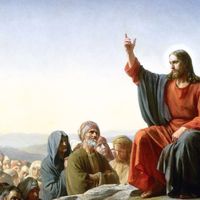
By describing his disciples as poor in spirit, Jesus points to their relationship with God. Their poverty has touched their inmost being so that they now depend entirely upon God.
Plenipotentiary Anyone know what a “plenipotentiary” is? Try that compound Latin word on for size! It is derived from the Latin words plenus “full” and potens “power.” It refers to a person who p...
Romans 5:8, Luke 15:11-32, Luke 10:25-37, John 4:1-26, John 3:16, Ephesians 4:32, 2 Timothy 1:9
Everyone: Holy God, we live our lives struggling in our own burdens and failing to trust You with all the things that hold us down. Leader: Your Scripture says, "Come to Me all you who are wear...
Preaching Commentary Plenipotentiary Anyone know what a “plenipotentiary” is? Try that compound Latin word on for size! It is derived from the Latin words plenus “full” and potens “power.” It r...
2 Corinthians 12:9, Isaiah 40:29, 2 Corinthians 3:5, Hebrews 4:16, James 4:6, 1 Peter 5:6-7
Brother Lawrence, a 16th-century Carmelite monk, spent his days scrubbing pots and mending shoes. Largely uneducated, he filled his free time writing letters and notes that, after his death, friends g...
Psalm 17 is a prayer, pleading for God to grant vindication to the psalmist (17:1-5), to intervene in the psalmist’s life that is beset with opposition (17:6-9), and specifically to deliver the psalmi...
Lamentations 3:22-23, Psalm 136:1, Matthew 19:13-15, 1 John 4:9-10, Mark 10:21, Proverbs 3:5-6, John 15:5, Psalm 121:1-2
Father, as adults, we can fool ourselves into being quite self-sufficient. Yet, You have called us to be precariously dependent upon You. When we see how Jesus welcomes the little children, we can als...
Every meal—not just Communion, but including Communion—is a reminder that we are dependent on God as creatures. We are not self-sustaining. Much of our food is grown, processed, distributed, and possi...
Jesus does not divide the world into the moral “good guys” and the immoral “bad guys.” He shows us that everyone is dedicated to a project of self-salvation, to using God and others in order to get po...
Matthew 18:3, 2 Corinthians 12:9, James 4:6, James 4:6, Matthew 5:3, 1 Peter 5:6
Grace substitutes a full, childlike and delighted acceptance of our need, a joy in total dependence. The good man is sorry for the sins which have increased his need. He is not entirely sorry for the ...
Romans 3:23, Luke 18:13-14, John 11:1-44, 1 John 4:13-14, Psalm 32:5, Acts 4:8-12, 2 Timothy 2:19
Prayer of Confession Leader: To prepare our hearts and minds for worship today, we begin by confessing our sins. People: Today, we recognize our need for our Savior. We confess that too often w...
It is only when you reach the very bottom, when everything falls apart, when all your schemes and resources are broken and exhausted, that you are finally open to learning how to completely depend on ...
Merciful God, if we are honest, we recognize that every fiber of our being is impacted by our imperfections and sins. Even our acts of obedience and faithfulness are overshadowed by our tendencies tow...
In his important book, The Crucifixion of Ministry, seminary professor Andrew Purves sees a paradigm in Elijah’s ministry: For many years I have taken Elijah’s story in 1 Kings 19 as a paradigm. Eli...
One key difference between much of the early church vs. the church of today (at least in the West) was the belief in, and regular experience of, miracles. As Joel Green, the noted professor and writer...
preaching commentary Psalm 17 is a prayer, pleading for God to grant vindication to the psalmist (17:1-5), to intervene in the psalmist’s life that is beset with opposition (17:6-9), and specificall...
I turn to John Wyatt [cf. p. 103: professor of ethics and perinatology at University College Hospital in London] for an eloquent expression of the priority of dependence: “God’s design for our life is...
Psalm 34:17-18, 2 Corinthians 1:3-4, 2 Corinthians 12:9-10, Hebrews 4:15-16, Hebrews 2:18, Matthew 26:38, Matthew 11:28-30
When do we hear God’s voice most clearly? It is often in our deepest struggles that we hear God’s voice. In the 1640s, George Fox, who would later establish the Quaker or Friends movement, wandered th...
Genesis 1:31, Exodus 16:4–5, Isaiah 40:31, Mark 10:14–15, John 15:5,11, Psalm 16:11
I have a photo of one of my children: on a day of pure sunshine, he is running down the hillside, leading with his chest, his smile and stride wide as his speed picks up. Running is pure delight. Agai...
Preaching Commentary “Historical insecurity” and “cosmic instability” are the ingredients of existential fear that inspire this Psalm of Trust, according to James Mays in his Interpretation Comment...
Your steadfast love, O Lord, Extends to the heavens, Your faithfulness to the clouds. Your righteousness is like the mountains of God, Your judgments are like the great deep; You save all of...
Gracious God, We build walls to protect ourselves, but it leads to isolation. We make independence the highest value, instead of complete dependence on You. Forgive us for our inability to surrender e...
“Historical insecurity” and “cosmic instability” are the ingredients of existential fear that inspire this Psalm of Trust, according to James Mays in his Interpretation Commentary series on the Psal...
John 10:27, 2 Peter 1:4, Psalm 119:50, Hebrews 10:23, Titus 3:4-5, Acts 17:8, Psalm 34:8, Psalm 42:1-2, Jeremiah 17:7-8
We gather today and recognize our need for You. We admit that it is easy to lose sight of Your goodness and purpose when faced with emotional, physical, and spiritual storms. Forgive us for the times ...
Self-made and self-sufficient people live in a fantasy world, empty of the reality of God. In contrast, the poor in spirit are deeply aware of being God-made and God-sufficient: