Ezekiel 144:6, Colossians 3:5, 1 John 5:21, 1 Corinthians 10:14, Jeremiah 10:14-15, Matthew 22:34-40, Exodus 20:3
Tertullian was an early church leader (a bishop in Carthage) in North Africa. His voluminous writing and ministry have led many to acknowledge him as the father of Latin Theology/Western Theology. Ter...
Genesis 3:1-7 , Exodus 32:1-6 , Ecclesiastes 2:1-11, Psalm 73:25-26, Matthew 4:1-11 , James 1:13-15
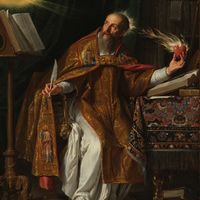
The church fathers consistently acknowledged the beauty and goodness of desire (e.g., Augustine, above), but they were not naive to the potential for desire to be bent by sin. They knew that our longi...
This concept [the parish system] has helped Christians understand how interconnected all the pieces within a community are and the importance of pursuing the common good there. Jesus’ call to be peace...
Isaiah 55:1-3, John 3:1-5, Matthew 1:25-27, John 3:16-17, Psalm 145:8-9
Justin Martyr (ca. 100–165), the most renowned apologist of the second century, dedicated his life to defending Christianity as the one true philosophy. Engaging the Greek philosophers and intellectua...
Matthew 22:37-39, Matthew 25:35-40, Luke 3:11, Ephesians 5:2, Acts 2:42-47, James 2:14-17, Galatians 2:10, Psalm 72:12-14
A passage often referred to in order to describe the sacrificial, countercultural quality of the early church comes to us interestingly enough, from one of its strongest critics, known later to histor...
It was this…intention that made the primitive Christians such eminent instances of piety, that made the goodly fellowship of the Saints and all the glorious army of martyrs and confessors. And if you ...
Matthew 5:10-12, John 15:18-20, 2 Timothy 3:12, Acts 14:22, Romans 8:35-37, 1 Peter 4:12-14, 2 Corinthians 12:9-10, Acts 1:8, Romans 8:11, Isaiah 41:10
What is the witness of the church in times of persecution? The historical record demonstrates that persecutions of Christians were regular and prolific in the first centuries of the church, especially...
Matthew 22:39, Philippians 2:3-4, 1 Corinthians 10:24, Romans 15:1-2, Galatians 6:10, Romans 12:10, Acts 20:35, Matthew 25:35-40, Isaiah 58:6-7, Proverbs 19:17, Luke 10:30-37, James 2:15-16, 1 John 3:17, Proverbs 31:8-9, Matthew 25:40, Acts 11:29-30, 2 Corinthians 8:13-15, Acts 2:44-45, Acts 4:32-35, 1 Corinthians 12:25-26
Pursuing the common good has been a strong marker of the Christian church from the very beginning. The early church had many habits that they became known for, of course—including meeting frequently, ...
Karl Barth (1886-1968), the famous Swiss theologian, once wrote that all human sin finds its roots in three basic human problems. He included pride (hubris), dishonesty and slothfulness in his list of...
Proverbs 28:20, Revelation 2:10, Matthew 5:10-12, Matthew 10:22, 2 Corinthians 4:8-10, 1 Peter 4:12-14, Romans 8:35-37, John 15:18-20, Psalm 31:23, Matthew 25:21, 1 Corinthians 4:2, 1 Timothy 6:12, Matthew 24:45-46
Pliny, a Roman Governor serving around 112 AD, faced a challenging situation regarding Christianity. Many Church historians believe that by his time, it had become illegal to profess the Christian fai...
Matthew 19:21, Philippians 3:8, Luke 9:23, Romans 8:29, 2 Corinthians 4:17, Hebrews 12:11, Isaiah 58:6-7
Given life’s unpredictability and the inevitability of pain and hardship, what do we do when that pain and hardship show up on our doorsteps? In roughly AD 270, there was a man in Lower Egypt named An...
Matthew 6:19-21, Malachi 3:10, Acts 20:35, Luke 6:38, Proverbs 3:9-10, 2 Corinthians 9:6-7
John Chrystostom was an early church father and Bishop of Constantinople from 347-407. The name “Chrysostom” is not a surname, but rather an epithet “golden tongued,” given to him because of his excel...
Matthew 5:10-12, Matthew 10:28-29, John 15:18-21, Revelation 20:4, Romans 8:35, Revelation 6:9-11, 1 Peter 4:16, Matthew 24:9, Luke 19:16-17, John 16:2-4, Hebrews 11:35-39
The blood of the martyrs is the seed of the church.
Matthew 22:37-40, 2 Timothy 3:16-17, Hebrews 4:12, Psalm 119:105, Colossians 3:16, Matthew 4:4, Acts 17:11, John 5:39, 2 John 1:9, 1 Timothy 4:16
The Catholic Christians (Early Church) will neither speak nor endure to hear anything in religion that is a stranger to Scripture; it being an evil heart of immodesty to speak those things which are n...
1 Kings 20:40, Matthew 6:34, Romans 7:19, Romans 8:11-14
One common mistake is assuming that everyone else finds faith easy, while we alone struggle. Yet there is comfort in recognizing that we are not alone in our pursuit of Christ in the midst of a broken...
Revelation 7:17, Luke 15:1-7, John 10:1-18, Psalm 23:1-3, Matthew 4:19, John 15:5, John 10:11
At the same time Church historian Philip Schaff was writing his 8-volume history of the Church, the Roman catacombs were being discovered. Schaff had this to say about symbols Christians used to adorn...
2 Timothy 3:14-4:5, 2 Timothy 3:14-17, 2 Timothy 4:1-5, Matthew 4:5, 1 Corinthians 9:13, Genesis 2:7, 1 Peter 2:4-5
Introduction In Paul’s second extant letter to his beloved Timothy, the passage of 3:10-4:5 records Paul’s final charge to Timothy. Calling on Timothy’s trust of Paul’s ministry and character (3:10-1...
Matthew 28:16-20, Acts 1:8, Hebrews 1:1-4, John 1:1-5
An Incomplete Trinity? Protestant churches who lean evangelical but not charismatic have occasionally been accused of being more “binitarian” than “trinitarian.” The suggestion is that such churches...
Isaiah 55:8-9, Jonah 4:1-11, Numbers 22:21-34, Matthew 9:10-13, Mark 2:23-28, Psalm 19:12-14
It takes a great deal of freedom and love to be therapeutic with a group. Many years ago when Emil Brunner, the great Swiss theologian, was lecturing in this country, it was reported that when he prea...
James 1:27, Isaiah 1:17, Psalm 68:5, Matthew 25:34-40, 1 Timothy 5:3-4, Zechariah 7:9-10, Matthew 12:48-50, Romans 8:14-17, Luke 4:18, Acts 4:34-35, James 2:15-16
Christianity revitalized life in Greco-Roman cities by providing new norms and new kinds of social relationships able to cope with many urgent urban problems. To cities filled with the homeless and im...
Deuteronomy 13:1-3, 1 Kings 22:19-23, Isaiah 53:3-5, Matthew 24:23-25, John 20:27, Psalm 34:18, John 20:25, 1 Corinthians 1:23; 2:2, Galatians 1:8-9
St. Martin of Tours was a Frankish soldier in the Roman army who abandoned his military post to follow Jesus at a time when Christianity had only begun to take root in France. He later became the bish...
Matthew 11:16-19, Ephesians 4:14, Mark 10:14, 1 Samuel 16:7, 1 Thessalonians 2:4, 1 Corinthians 6:14, 2 Timothy 2:15, Proverbs 23:12, Proverbs 3:5, Acts 26:24
The Missing “Advent” Text A lectionary preacher moving from the fifth to the sixth Sunday after Pentecost in Year A will notice that a familiar chunk is missing, sent back in time to the third Sunday...
Matthew 6:14-15, Colossians 3:12-13, 2 Timothy 4:7-8, Matthew 10:32-33, Ephesians 4:31-32, Mark 11:25, 1 John 1:7, Matthew 18:21-35, Matthew 5:23-24
In the second century, a priest from Antioch named Sulpicius had steadfastly refused to sacrifice to the gods, even under torture, and was being led away to be beheaded. As he walked, a Christian name...
Matthew 16:13-20, Daniel 7:13-14, Mark 3:16, John 1:42, Daniel 7:13-14
A Bombshell Confession Simon Peter’s confession that Jesus was, indeed, the “Messiah, the Son of the living God” is the climax of Matthew’s account of Jesus’ earthly ministry. It’s noteworthy that pr...
Genesis 1:1, Psalm 19:1, John 3:16, Matthew 16:16, Isaiah 7:14, Matthew 27:24-26, 1 Peter 3:18-19
I believe in God, the Father almighty, maker of heaven and earth; And in Jesus Christ his only Son our Lord; who was conceived by the Holy Ghost, born of the Virgin Mary, ...
Matthew 5:17-18, Mark 2:27-28, John 8:58, Luke 4:18-21, Matthew 5:7, John 8:1-11, Luke 24:13-27
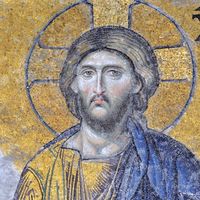
Jesus appears in the Gospels as a theologian who begins with a mastery of the tradition and then reshapes it by offering a new vision centered on his own person.
John 14:6, Matthew 7:13-14, Acts 24:14, Luke 9:23, Psalm 1:1-2, Psalm 25:4-5
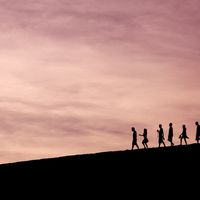
[The] earliest name for Christianity was the Way, suggesting that it was not a set of doctrines to master but a path to travel. Suggesting that each step was a deepening of the familiar and a discover...
Romans 12:1, Matthew 22:37-38, James 2:14-17, John 14:15, Luke 9:23, Philippians 2:5-8, Romans 10:9-10, Psalm 1:1-6
New Testament theology is ‘inherently self-involving as it summons the reader to believe, confess, obey, and understand the entirety of one’s existence—both her or his thinking and willing—in light of...
Isaiah 29:13, Amos 5:21-24, Proverbs 1:7, James 1:22-25 , Matthew 23:27-28, Psalm 51:16-17
We artful dodgers act as if we do not understand the New Testament, because we realize full well that [if we let on that we did] we should have to change our way of life drastically. That is why we in...
Matthew 13:, Exodus 14:21-31, Daniel 3:13-30 , 1 Kings 18:20-40, Luke 15:11-32, Psalm 23:
In the second century before Christ the great rival to Roman power in the Mediterranean world was Carthage, the Phoenician city-state located on the north African coast. It had been founded in 822 B.C...












![[The] earliest name for Christianity](https://images.unsplash.com/photo-1535856326707-98d0b5dbe639?ixid=M3w1NzU0OTZ8MHwxfHNlYXJjaHwxfHxKb3VybmV5c3xlbnwxfDJ8fHwxNzEwNTM0MTcxfDA&ixlib=rb-4.0.3&q=80&auto=compress&fit=crop&w=200&h=200)