Matthew 20:26-28, Micah 6:8, Philippians 2:3, Ephesians 4:2, 1 Peter 5:5, Colossians 3:12, James 4:10
I begin with humility, I act with humility, I end with humility. Humility leads to clarity. Humility leads to an open mind and a forgiving heart. With an open mind and a forgiving heart, I see every p...
Colossians 1:15-17, Hebrews 1:3, John 1:1-5, Matthew 16:13-20, John 14:6, Acts 4:12
There’s Republican Jesus who is against tax increases and activists judges, and for family values and owning firearms. There’s Democrat Jesus who is against Wall Street and Walmart, and for reducing ...
Ephesians 4:2-3, Matthew 5:9, Proverbs 15:1, 2 Timothy 2:24-25, Philippians 2:3-4, James 1:19-20, Colossians 4:6
The mission of Christian humility in social life is not merely to edify, but to keep minds open to many alternatives. The rigidity of a certain type of Christian thought has seriously impaired this ca...
John 4:20-21, John 13:34-35, 1 John 3:17, Matthew 5:23-24, Hebrews 10:24-25
We cannot be closed off to one another and be open to God. That’s not how this works. Do you remember the commercial when the woman says “that’s not how this works, that's not how any of this work...
Philippians 3:13-14, Matthew 11:12, Galatians 1:10, Daniel 3:18, 1 Corinthians 1:27, Acts 17:6
The reasonable man adapts himself to the world; the unreasonable one persists to adapt the world to himself. Therefore all progress depends on the unreasonable man.
Isaiah 40:3-5, Luke 3:2-6, Malachi 3:1-3, Matthew 3:1-3, 2 Peter 3:10-14
We ask that you stir up our hearts, O Lord, to prepare the ways of your only-begotten Son, that by his Advent we may serve you with purified minds, through the same Jesus Christ our Lord.
Exodus 1:15–21, Daniel 3:16–18 , 1 Kings 3:16–28 , Matthew 4:1–11, Galatians 1:6–10, Psalm 73:
Pragmatism may be defined simply as the approach to reality that defines truth as “that which works.” The pragmatist is concerned about results, and the results determine the truth. The problem with t...
1 Peter 3:8-9, Galatians 3:28, Proverbs 31:8-9, Matthew 5:9, Romans 12:18
Just as Socrates felt that it was necessary to create a tension in the mind so that individuals could rise from the bondage of myths and half-truths to the unfettered realm of creative analysis and ob...
Matthew 6:32; 11:28-30, Luke 12:7, Hebrews 4:15- 16, 1 Peter 5:7
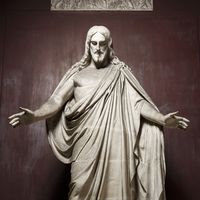
When Albert Berte Thorwaldsen, the renowned Dutch sculptor, finished the clay model of his statue of Christ with arms raised in blessing, he left it to harden overnight in his studio. The next morni...
John 5:39-40, Hebrews 4:12-13, Matthew 16:13-15, Mark 10:17-22, John 3:1-10, John 18:33-38, Matthew 12:30
We had thought intellectually to examine him; we find he is spiritually examining us. The roles are reversed between us...A person may study Jesus with intellectual impartiality, he cannot do it with ...
1 Kings 3:16-28, Micah 6:8, Proverbs 3:5-7, Matthew 22:15-22 , James 1:5 , Psalm 119:105
Richard Mouw, the former president of Fuller Seminary and a professor of philosophy, shares an amusing anecdote from a lecture by the esteemed Catholic ethicist Charles Curran. During his talk, Curran...
Too many people hear the word capacity and assume it’s a limitation. They assume their capacity is set—especially if they’re beyond a certain age. People give up on the idea that their capacity or the...
Luke 14:12-14, Deuteronomy 10:19, Titus 1:8, Matthew 25:35, 1 Peter 4:9
Scripture calls us to offer a radical welcome to strangers, but we are not able to give what we do not have. Before we can love our neighbor, we must love and care for ourselves so we can have somethi...
Matthew 25:40, Matthew 25:31-46, Micah 6:8, James 2:15-17, Luke 6:27-36, Isaiah 58:6-7, 1 John 3:17, Zechariah 7:9-10, Colossians 3:12, Proverbs 21:13
All: Gracious God, we have become callous to those in need, holding back compassion yet unsparing with judgment. We defend our motivations, rather than using all you have given us to love and care for...
The challenge each of these faced in their deconstruction—and what we may face—is walking the tightrope between becoming our own person and honoring our past. In The Homeless Mind , sociologist P...
Proverbs 1:5, Jeremiah 9:23-24, Matthew 11:25, James 1:21, Colossians 2:3, Matthew 18:3
Becoming a teachable person has two prerequisites: There must be a teacher and a person willing to be taught. Increasingly, Western culture has become an environment that celebrates and platforms the ...
We are meant to be part of the flow of abundance: to open our hands to receive what we need and share what we have with others. Jesus taught his followers to be radically generous when he said: “Sell ...
In this short poem, the psychologist Daniel Goleman (the developer of the concept of Emotional Intelligence (E.Q.)) builds on the work of R. D. Laing’s “knots.” The poem is a helpful reminder that our...
“Moral”…is an orientation toward understandings about what is right and wrong, just and unjust, that are not established by our own actual desires or preferences but instead are believed to exist apar...
Matthew 28:18-20, Acts 1:8, Acts 10:34-35, Galatians 3:28, Romans 1:16, John 4:21-24, Psalm 22:27-28
[Speaking of the early church] A cosmopolitan spirit grew, particularly in the cities, that transcended national barriers. Old tribal distinctions and identities were breaking down, leaving people rip...
Matthew 25:35-36, James 2:15-17, Proverbs 19:17, 1 John 3:17-18, Isaiah 58:6-7
God of mercy, we ignore the needs of people around us all too often. We get caught up in our own issues and forget that there are millions of people who struggle for basic necessities on a daily basis...
Luke 10:5, Matthew 7:1-5, Luke 6:37-42, Romans 14:10, James 4:11-12, 1 Corinthians 4:5
Even for those of us who follow Jesus on a daily basis, the reality is, our sinful nature has infiltrated our minds, and we often find ourselves, either consciously or unconsciously, judging those aro...
We hear you knocking, O God, as you stand outside the locked doors of our hearts, waiting and wanting to enter. Help us to throw open those doors, that in this time of worship you may come in as a liv...
Colossians 3:12-13, Matthew 5:44, Ecclesiastes 7:9, Philippians 2:3-4, James 3:17, Proverbs 15:1, 2 Timothy 2:24-25
The key word in our definition of a disagreement (an unacceptable difference between two perspectives), isn’t “difference.” It’s “unacceptable.” Once the clash between perspectives becomes unacceptabl...
Luke 10:25-37, Matthew 16:24, Acts 2:44-45, James 2:14-17, Mark 10:43-45, 1 John 3:17-18, John 13:14-15, Isaiah 58:6-7
Free us, Lord, from our obsession with ourselves long enough to care for others; to be so concerned about the well-being of the human community that me don’t have to worry about our place, our church,...

















![[Speaking of the early church] A](https://a-us.storyblok.com/f/1016915/1200x801/ed572a4861/the-early-church.jpg/m/200x200/smart)


