Romans 8:18, Revelation 19:16, Matthew 2:2, John 18:36-37, Revelation 17:14, Zechariah 9:9, Isaiah 9:6, Psalm 24:7-10, Colossians 1:15-20, Matthew 21:1-11, Mark 11:1-11, Luke 19:28-40, John 12:12-16
In Romans 8:18, Paul describes the future of those who persevere in the faith: “I consider that the sufferings of this present time are not worth comparing with the glory that is to be revealed to us....
1 Peter 1:3, Luke 24:1-12, Mark 16:1-8, Matthew 28:1-10, John 11:25-26, John 20:1-18, 1 Corinthians 15:3-8, 1 Corinthians 15:54-55
Here, then, is the message of Easter, or at least the beginning of that message. The resurrection of Jesus doesn’t mean, “It’s all right. We’re going to heaven now.” No, the life of heaven has been bo...
Intertwined Narratives Jesus’ encounters with Jairus’ daughter and the bleeding woman are sandwiched together with the intention that the two narratives would unlock and help to interpret the other....
Intertwined Narratives Jesus’ encounters with Jairus’ daughter and the bleeding woman are sandwiched together with the intention that the two narratives would unlock and help to interpret the other....
John 12:1-8, Mark 14:1-2, Matthew 26:3-13, John 11:45, Luke 7:44-47, Matthew 26:6, Mark 14:3, Luke 7:40, John 11:50-53, Luke 24:41-43, John 21:10-14, Acts 10:40-41, John 12:7, Philippians 2:6-8, Romans 6:1-10
Introduction This narrative is slightly changed from the Synoptic accounts. Matthew and Mark’s Gospels place this narrative two days prior to the Passover (Matt: 26:6-13; Mark 14:1). Three Evangelist...
John 12:1-8, Mark 14:1-2, Matthew 26:3-13, John 11:45, Luke 7:44-47, Matthew 26:6, Mark 14:3, Luke 7:40, John 11:50-53, Luke 24:41-43, John 21:10-14, Acts 10:40-41, John 12:7, Philippians 2:6-8, Romans 6:1-10
Preaching commentary Introduction This narrative is slightly changed from the Synoptic accounts. Matthew and Mark’s Gospels place this narrative two days prior to the Passover (Matt: 26:6-13; Mark ...
Revelation 21:10, Revelation 21:2, 10, 22-27, Revelation 22:1-5, 1 Kings 6:20, Genesis 12:1-3, Genesis 2:9, Genesis 3:23-24, Genesis 1:28, Genesis 2:15, Genesis 3:17-19, 1 Corinthians 15:58, Ephesians 6:5-9, Colossians 3:23, Genesis 1:26-27, Exodus 33:20-23, John 14:9, Colossians 1:15, Hebrews 1:3, Mark 15:34, 2 Corinthians 5:21, Exodus 28:15-21, 29-30, John 4:13-14, John 7:37-38, Matthew 27:46, John 3:2, Romans 8:29
Pulling Back the Curtain The Revelation of Jesus Christ is a “pulling back of the curtain” to reveal both the unseen realities of the present (what is really going on in the world from God’s perspect...
Matthew 26:14-27:66, Luke 22:3, John 13:2, Mark 14:10-11, Luke 22:3-4
AIM Commentary Ancient Lens What can we learn from the historical context? Betrayal and Supper Judas’ motivation for betraying Jesus is not clear in Matthew and Mark. It certainly was not the ...
Mark 2:23-28, 3:1-6, Mark 2:23-28, Mark 3:1-6, Acts 12:12, Acts 12:25, Acts 15:37-39, Colossians 4:10, 2 Timothy 4:11, Philemon 1:24, 1 Peter 5:13, Mark 1:14-15, Mark 2:1-22, Exodus 20:8-11, Deuteronomy 5:12-15, Exodus 34:21, 1 Samuel 21:1-6, Luke 11:37-54, Mark 2:1-17, Genesis 1:26-31, Genesis 2:1-2, Genesis 3:null, John 19:30
Preaching Commentary Context Authorship of Mark Mark’s account of the story of Jesus is commonly held to be the earliest of the four canonical Gospels. Early church tradition identifies the author...
Acts 7:55-60, Luke 9:22, Luke 12:8, Acts 2:34, Mark 1:14-15, Luke 23:34, Acts 8:1, Acts 9:1, Mark 9:40, Romans 5:6-11
Preaching Commentary Preaching Angle: Jesus’ Crucifixion, Stephen’s Martyrdom When Stephen saw “the Son of Man standing at the right hand of God,” the surrounding crowd of God’s people should have...
Mark 2:23-28, Mark 3:1-6, Acts 12:12, Acts 12:25, Acts 15:37-39, Colossians 4:10, 2 Timothy 4:11, Philemon 1:24, 1 Peter 5:13, Mark 1:14-15, Mark 2:1-22, Exodus 20:8-11, Deuteronomy 5:12-15, Exodus 34:21, 1 Samuel 21:1-6, Luke 11:37-54, Mark 2:1-17, Genesis 1:26-31, Genesis 2:1-2, Genesis 3:null, John 19:30
Context Authorship of Mark Mark’s account of the story of Jesus is commonly held to be the earliest of the four canonical Gospels. Early church tradition identifies the author as Mark (or John Mark)...
Mark 14:36, Colossians 3:12, Matthew 6:1, Philippians 2:6-11, Romans 1:1, Isaiah 53:7, Mark 14:61, 1 Timothy 1:15, Ephesians 2:8, Luke 18:10-14, Matthew 5:23-24, Mark 7:8, Matthew 7:1-6, Matthew 16:52
Gentled by grace. That’s the incredible and inspiring story of Abba Moses the Black. He was a violent thief who became a humble and kind monk and one of the great Desert Fathers who served the Lord ...
Revelation 22:12-14, 16-17, 20-21, Mark 12:35-37, Psalm 110:1, Matthew 1:1, 6, Matthew 24:36-44, Acts 1:7
Preaching Commentary Introduction to Revelation 21-22 The Revelation of Jesus Christ is a “pulling back of the curtain” to reveal both the unseen realities of the present (what is really going on i...
Exodus 12:1-14, Psalm 31:9-16, Philippians 2:5-11, Mark 11:1-11
AIM commentary Ancient lens What's the historical context? Original Passover If you frequent any web sites that have thread or message board formats, you occasionally run into the acronym “...
Luke 20:27-38, Mark 12:18-27, Matthew 22:23-33, 1 Corinthians 15:, Genesis 2:18-25
Ancient Lens What can we learn from the historical context? Worldviews Collide In this passage, we have a clash of worldviews similar to some that we find today. While the Sadducees were not mat...
Revelation 22:12-21, Mark 12:35-37, Psalm 110:1, Matthew 1:1, 6, Matthew 24:36-44, Acts 1:7
Introduction to Revelation 21-22 The Revelation of Jesus Christ is a “pulling back of the curtain” to reveal both the unseen realities of the present (what is really going on in the world from God’s ...
Philippians 2:6-8, John 1:10-11, Isaiah 53:3-4, Matthew 11:19, Mark 15:34, Isaiah 53:12, Luke 15:20-24, Revelation 7:13-14
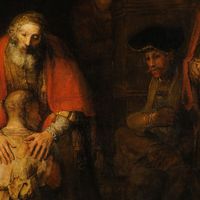
In this excerpt, the French monastic leader Frere Pierre Marie, shares an interpretation of Jesus as the true prodigal son—bringing all of us home with him: He, who is born not from human stock, or ...
Luke 20:27-38, Mark 12:18-27, Matthew 22:23-33, 1 Corinthians 15:, Genesis 2:18-25
Ancient Lens What can we learn from the historical context? Worldviews Collide In this passage, we have a clash of worldviews similar to some that we find today. While the Sadducees were not mat...
Hebrews 1:1-4, 2:5-12, Hebrews 1:1-4, Hebrews 2:5-12, Acts 18:24-26, John 1:1-18, Acts 18:24, Psalm 8:null, Acts 15:39, Mark 13:1-8, Daniel 12:1-3, Psalm 16:, 1 Samuel 1:4-20, 1 Samuel 2:1-10
Preaching Commentary Introduction, 1:1-4 While Hebrews is an anonymous letter, it is interesting to note that the KJV’s first verse is, “God, who at sundry times and in divers manners spake in time...
Matthew 6:1-6, Deuteronomy 6:4-9, Matthew 23:4, 5, 13-36, Mark 12:42, Luke 21:2, Isaiah 58:6, Joel 2:1-2, 12-17
Ancient Lens What can we learn from the historical context? "Hear O Israel..." The Shema (Deuteronomy 6:4-9) commands the Israelites to love the Lord their God with heart, soul, and m...
Hebrews 1:1-4, 2:5-12, Hebrews 1:1-4, Hebrews 2:5-12, Acts 18:24-26, John 1:1-18, Acts 18:24, Psalm 8:null, Acts 15:39, Mark 13:1-8, Daniel 12:1-3, Psalm 16:, 1 Samuel 1:4-20, 1 Samuel 2:1-10
Introduction, 1:1-4 While Hebrews is an anonymous letter, it is interesting to note that the KJV’s first verse is, “God, who at sundry times and in divers manners spake in time past unto the fathers ...
Matthew 6:1-6, 16-21, Deuteronomy 6:4-9, Matthew 23:4, 5, 13-36, Mark 12:42, Luke 21:2, Isaiah 58:6, Joel 2:1-2, 12-17
AIM Commentary Ancient Lens What can we learn from the historical context? "Hear O Israel..." The Shema (Deuteronomy 6:4-9) commands the Israelites to love the Lord their God with h...
Mark 6:14-29, Mark 6:6b-13, Mark 6:30, John 1:14, Mark 6:30, Mark 8:29, Mark 6:4, Mark 8:27-28, 1 Kings 19:1-10, 1 Kings 21:17-26, Mark 9:13, Romans 7:18-25, Mark 14:1-12
Between the Sending and Return of the Twelve The fate of John the Baptist appears in a Markan ‘sandwich,’ where the story is told almost as a detour between the sending (ἀποστέλλω) of the Twelve (6...
Mark did not know exactly what we would be scared of all these years later; he just knew we would be. By ending his gospel right there, right in the middle of a sentence, he also left us free to decid...
Mark 13:24-27, Daniel 7:13-14, Revelation 21:null, Revelation 21:3-4
Ancient lens What's the historical context? The Worst Is Yet To Come I wonder if some of Jesus’ Galilean crew regretted volubly admiring the beauty of Herod the Great’s temple. I can see Pete...
Matthew 13:31-32, Matthew 5:5, Romans 14:17, Mark 1:15, Matthew 12:28, Luke 11:20, Matthew 4:17
The phrase “kingdom of heaven,” which we find frequently in Matthew’s Gospel where the others have “kingdom of God,” does not refer to a place, called “heaven,” where God’s people will go after death....
Context This text comes near the midpoint of the Gospel of Mark, and its central narrative position is more than matched by its pivotal thematic content. Jesus has turned from his focus on ministry i...
Mark 13:24-37, Daniel 7:13-14, Revelation 21:null, Revelation 21:3-4
Advent 2023: Make some noise Alive, Awake, and Alert AIM commentary Ancient lens What's the historical context? The Worst Is Yet To Come I wonder if some of Jesus’ Galilean crew regre...
Mark 4:35-41, Job 38:1-11, Psalm 107:, Jonah 1:, Genesis 1:, Matthew 8:23-27, Luke 8:22-25, Psalm 74:14, Psalm 104:26, Genesis 1:21
A Sopping Wet Week in the Lectionary Today’s readings are thoroughly wet. In Job, God is master of the sea, Psalm 107 concerns mariners in the storm, Paul is a little drier, but still gets shipwrecke...
Genesis 45:1-15, Matthew 18:21-35, Ephesians 4:32, Romans 5:10, Mark 11:25, Colossians 3:13, Matthew 5:44
Frederick William I was a king of Prussia in the early 18th century. Personality-wise, he was described as exacting, frugal and austere. He was known to beat his children when they disappointed him. H...