The people God used to record his words were themselves uncommonly moved by them. They said the Word of God is honey in my mouth (Ezekiel 3:3) spiritual food for the hungry (Job 23:12) dwel...
Blessed Lord, who hast caused all holy Scriptures to be written for our learning; Grant that we may in such wise hear them, read, mark, learn, and inwardly digest them, that by patience and comfort of...
Matthew 13:18-23, Jeremiah 17:8, Colossians 3:16, Hebrews 4:12, Psalm 119:11
Pastor: “Hear then the parable of the sower: When anyone hears the word of the kingdom and does not understand it, the evil one comes and snatches away what has been sown in his heart. This is what wa...
Psalm 119:105, 2 Timothy 3:16-17, Nehemiah 8:8, Acts 17:10-15, Galatians 5:1, Hebrews 4:12, Isaiah 55:10-11, John 15:15, 1 John 2:27
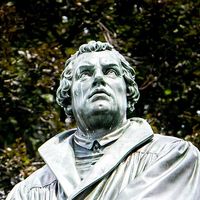
The Bible ceased to be a foreign book in a foreign tongue, and became naturalized, and hence far more clear and dear to the common people. Hereafter the Reformation depended no longer on the works of ...
Hebrews 1:1-4, 2:5-12, Hebrews 1:1-4, Hebrews 2:5-12, Acts 18:24-26, John 1:1-18, Acts 18:24, Psalm 8:null, Acts 15:39, Mark 13:1-8, Daniel 12:1-3, Psalm 16:, 1 Samuel 1:4-20, 1 Samuel 2:1-10
Introduction, 1:1-4 While Hebrews is an anonymous letter, it is interesting to note that the KJV’s first verse is, “God, who at sundry times and in divers manners spake in time past unto the fathers ...
Hebrews 1:1-4, 2:5-12, Hebrews 1:1-4, Hebrews 2:5-12, Acts 18:24-26, John 1:1-18, Acts 18:24, Psalm 8:null, Acts 15:39, Mark 13:1-8, Daniel 12:1-3, Psalm 16:, 1 Samuel 1:4-20, 1 Samuel 2:1-10
Preaching Commentary Introduction, 1:1-4 While Hebrews is an anonymous letter, it is interesting to note that the KJV’s first verse is, “God, who at sundry times and in divers manners spake in time...
Matthew 28:16-20, Acts 1:8, Hebrews 1:1-4, John 1:1-5
An Incomplete Trinity? Protestant churches who lean evangelical but not charismatic have occasionally been accused of being more “binitarian” than “trinitarian.” The suggestion is that such churches...
Isaiah 1:1, 10-20, 2 Corinthians 12:9, Matthew 6:10, Matthew 5:3, 10, 1 Corinthians 1:27, 2 Corinthians 12:9, Matthew 26:28, Matthew 19:24, Philippians 3:7, Hebrews 12:2, Matthew 5:6, Matthew 28:19
The context The parables we hear this week are part of a collection of parables of the Kingdom collected by Matthew in chapter 13 of his gospel account. As with the Sermon on the Mount (Matthew 5-7),...
Isaiah 5:1-7, Psalm 8:8-16, Jeremiah 2:21, John 15:1-8, Hebrews 9:15
Ancient Lens “ What’s the historical context?” The Fruits of a Loving God Wine, grapes, vines, vineyards, fertile hillsides, are all products of a loving creator God. All are also elements of ...
The heart is used in Scripture as the most comprehensive term for the authentic person. It is the part of our being where we desire, deliberate, and decide. It has been described as “the place of cons...
Matthew 13:31-33, 44-52, 2 Corinthians 12:9, Matthew 6:10, Matthew 5:3, 6, 10, 1 Corinthians 1:27, Matthew 26:28, Matthew 19:24, Philippians 3:7, Hebrews 12:2, Matthew 5:6, Matthew 28:19
preaching commentary The context The parables we hear this week are part of a collection of parables of the Kingdom collected by Matthew in chapter 13 of his gospel account. As with the Sermon on t...
Isaiah 5:1-7, Psalm 8:8-16, Jeremiah 2:21, John 15:1-8, Hebrews 9:15
AIM Commentary Ancient Lens “ What’s the historical context?” The Fruits of a Loving God Wine, grapes, vines, vineyards, fertile hillsides, are all products of a loving creator God. All are ...
Matthew 28:16-20, Acts 1:8, Hebrews 1:1-4, John 1:1-5
Preaching Summary An Incomplete Trinity? Protestant churches who lean evangelical but not charismatic have occasionally been accused of being more “binitarian” than “trinitarian.” The suggestion i...
Matthew 13:31-33, 2 Corinthians 12:9, Matthew 6:10, Matthew 5:3, 6, 10, 1 Corinthians 1:27, Matthew 26:28, Matthew 19:24, Philippians 3:7, Hebrews 12:2, Matthew 28:19
The context The parables we hear this week are part of a collection of parables of the Kingdom collected by Matthew in chapter 13 of his gospel account. As with the Sermon on the Mount (Matthew 5-7),...
Matthew 13:1-9, 18-23, 1 Corinthians 3:6, Romans 12:2, Matthew 7:22, Hebrews 6:4-5, Isaiah 6:9-10, Matthew 12:34-35
Preaching Commentary Preaching Angle: Preach the Word, Rest in God’s Work Maybe I tend to focus on the negative, but when I read the parable of the soils, I tend to focus on the soils that struggle...
Matthew 13:1, 1 Corinthians 3:6, Romans 12:2, Matthew 7:22, Hebrews 6:4-5, Isaiah 6:9-10, Matthew 12:34-35
Preaching Angle: Preach the Word, Rest in God’s Work Maybe I tend to focus on the negative, but when I read the parable of the soils, I tend to focus on the soils that struggle (the soil too close to...
There’s a story that used to make the rounds about the German theologian Paul Tillich. Tillich’s theology was considered dangerous by many Christians in the U.S. Supposedly one time after delivering a...
John 12:1-8, Acts 9:1-19, Luke 24:13-35, Isaiah 53:5, Philippians 2:6-8, Hebrews 12:2
Dear Lord, I pray that You would open my mind to the truth of Your Word by means of the Holy Spirit. Open my eyes to see Jesus. Open my heart to love Him more and more. Open my will to do only that wh...
Ancient Lens What can we learn from the historical context? A Letter to Real People In the understanding of, and preaching on, any section of the Revelation of John , it is critical to know that t...
What, then, does the author intend to communicate in verses 1-4? He proclaims that an authoritative and authentic high priest must both identify with and be distinct from those to whom he ministers. ...
Jeremiah 31:31-34, John 12:16, John 12:23-26, John 12:31-32, Romans 11:26-27, Hebrews 10:5-12, Galatians 6:2
Bonus Content: Video prep session with Jonathan Cornell on Jeremiah 31:31-34 . Ancient Lens What can we learn from the historical context? Covenants and Kings God’s people Israel lived in rela...
Opening Illustration A friend of mine has a slate roof business that has been passed down in his family. He is a true artisan in copper and slate, and has completed custom work on buildings as famou...
Ancient Lens What’s the historical context? Background Structure This Psalm of David is unique. “It is the only hymn in the Old Testament composed completely as a direct address to God.” [1] It e...
2 Timothy 3:16-17, Romans 15:4, Hebrews 4:12-13, 2 Peter 1:19-21, Matthew 4:4, Matthew 4:4, Matthew 24:35
Christians feed on Scripture. Holy Scripture nurtures the holy community as food nurtures the human body. Christians don’t simply learn or study or use Scripture; we assimilate it, take it into our li...
Pastor: Let us pray for the whole Church of God in Christ Jesus and for all people according to their needs. God of mercy, You provide us with Your Holy Word, that we might know and believe in Ch...
As Christians, we must read the Bible not only “for” ourselves, for nourishment and encouragement, but also “against” ourselves at times, to hear what God in Christ is really saying.
After I graduated from seminary, I stopped reading the Bible. It’s been said that for all the gain that comes from dissecting a frog, all the hands-on knowledge one amasses from cutting out the organs...
Mahatma Gandhi speaking to Christians, “You Christians have in your keeping a document with enough dynamite in it to blow the whole of civilization to bits; to turn society upside down; to bring peace...
2 Timothy 3:16-17, Romans 15:4, Isaiah 55:11, Hebrews 4:12-13, 2 Peter 1:19-21, Matthew 4:4, Matthew 24:35
In the book A Peculiar Glory , John Piper describes how he maintained a traditional view of scripture, even after he went on to advanced theological studies in California and Germany. He describes hi...
Hebrews 4:12-16, Hebrews 3:1-4, Mark 10:17-31, Mark 10:21-22, Job 23:16-17
Unbelief in the Wilderness The author of Hebrews concludes chapter 3 with the history of Israel’s unbelief in the wilderness which kept the unfaithful among them from entering into the rest of His pr...