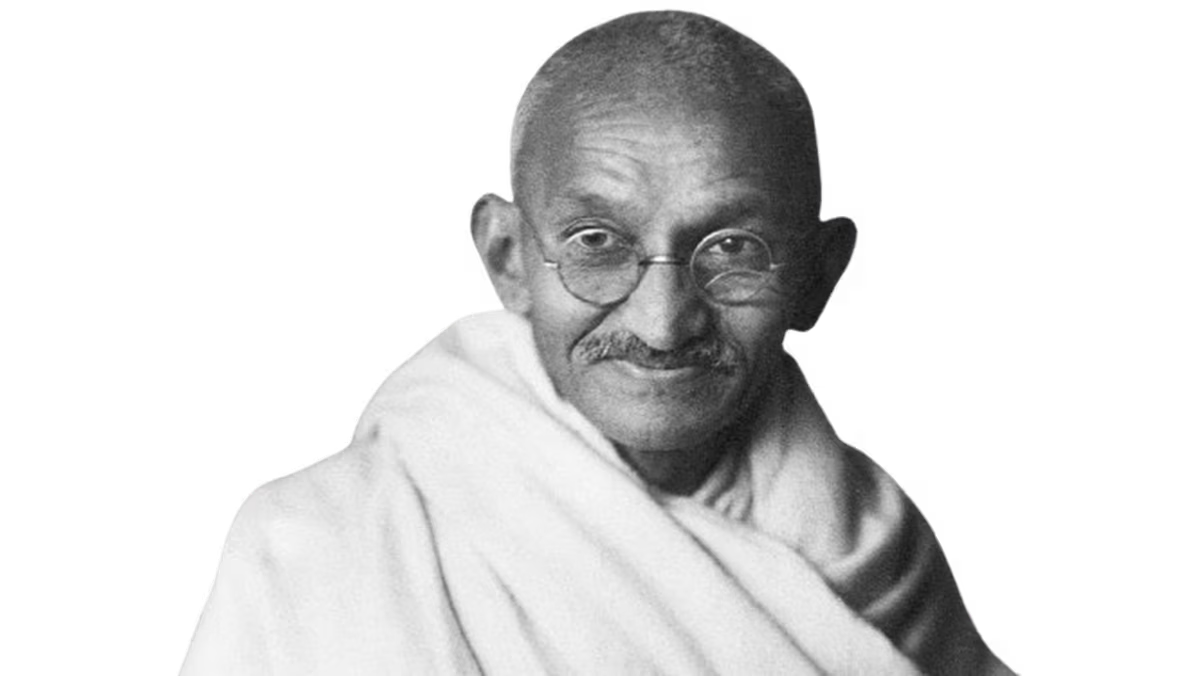
Mahatma Gandhi
Mohandas Karamchand Gandhi (1869–1948), globally revered as Mahatma Gandhi, was an Indian lawyer, political ethicist, and leader who played a pivotal role in India’s struggle for independence from British colonial rule. Born on October 2, 1869, in Porbandar, Gujarat, Gandhi was deeply influenced by his devoutly religious mother and the principles of nonviolence and self-discipline embedded in Jainism and Hinduism.
After studying law in London, Gandhi moved to South Africa in 1893, where he faced racial discrimination and began his lifelong quest for justice and equality. It was in South Africa that he developed and tested the concept of satyagraha (truth force), a philosophy of nonviolent resistance. Gandhi used satyagraha to challenge unjust laws, paving the way for its application on a larger scale in India.
Returning to India in 1915, Gandhi emerged as a leader in the Indian National Congress and spearheaded movements such as the Non-Cooperation Movement (1920), the Salt March (1930), and the Quit India Movement (1942). His leadership was marked by nonviolent protests, civil disobedience, and advocacy for self-reliance, including the promotion of hand-spun textiles and simple living.
Gandhi’s vision extended beyond politics; he championed social reform, working to eradicate untouchability, bridge religious divides, and uplift rural communities. Despite opposition, his unwavering commitment to nonviolence and truth inspired millions and left a profound global legacy.
On January 30, 1948, Gandhi was assassinated by Nathuram Godse, a Hindu nationalist. His death marked the end of an era but solidified his place as a symbol of peace, resilience, and the transformative power of nonviolence.
Today, Gandhi’s teachings continue to inspire movements for justice and freedom worldwide, embodying the ideals of compassion, humility, and unwavering commitment to truth.