Exodus 5:1-21, 1 Samuel 8:4-22, Isaiah 1:10-17 , Matthew 23:23-28 , Galatians 3:26-29, Psalm 146:3-9
One of the gravest dangers to the Christian faith is its wholesale appropriation of the larger culture. When this happens, the citizens of those places cannot recognize the difference between their cu...
Context of Galatians I still remember my intro to New Testament class in college and the professor discussing Paul’s letter to the Galatians. All of Paul’s other letters begin with words of adoration...
Preaching Commentary Context of Galatians I still remember my intro to New Testament class in college and the professor discussing Paul’s letter to the Galatians. All of Paul’s other letters begin ...
The success of every culture hinges not on big points of morality—there will always be issues like abortion or school prayer over which people differ—but on smaller values, like being considerate of o...
Isaiah 49:6, Revelation 7:9, John 3:16, Galatians 3:28, Romans 10:12, Acts 1:8, Matthew 28:19-20
The Gospel as such has no native country. He who goes out humbly with Christ in the world of all races will perpetually discover the multiple, but constant, relevance of what he takes. It takes a whol...
Galatians 1:10, Jeremiah 29:7, Matthew 5:13-14, Colossians 2:8, John 17:15-16, Acts 17:22-23, Romans 12:2
To reach people we must appreciate and adapt to their culture, but we must also challenge and confront it. This is based on the biblical teaching that all cultures have God's grace and natural rev...
Romans 12:2, Galatians 6:1, Proverbs 9:10, James 1:4, Isaiah 61:3
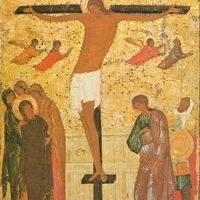
Think of an ancient icon of Christ. Imagine that a thousand-year-old Christ Pantocrator painted on a wooden panel is discovered in some forgotten monastery. The image of Christ is there, but it’s cove...
Matthew 28:18-20, Acts 1:8, Acts 10:34-35, Galatians 3:28, Romans 1:16, John 4:21-24, Psalm 22:27-28
[Speaking of the early church] A cosmopolitan spirit grew, particularly in the cities, that transcended national barriers. Old tribal distinctions and identities were breaking down, leaving people rip...
A strong church once inscribed these words on an archway leading to the churchyard. Over time, two things happened: the church lost its passion for Jesus and His gospel, and ivy began to grow on the a...
Luke 18:10-14, Matthew 6:1, Ephesians 2:8-9, James 4:10, Galatians 6:4, Micah 6:8, Romans 12:3
In the Christian subculture, there is an unspoken standard, a notorious goal to “win the contest.” It’s there, the contest. We don’t say it out loud, because it sounds ludicrous spoken into the open a...
Matthew 22:39, Philippians 2:3-4, 1 Corinthians 10:24, Romans 15:1-2, Galatians 6:10, Romans 12:10, Acts 20:35, Matthew 25:35-40, Isaiah 58:6-7, Proverbs 19:17, Luke 10:30-37, James 2:15-16, 1 John 3:17, Proverbs 31:8-9, Matthew 25:40, Acts 11:29-30, 2 Corinthians 8:13-15, Acts 2:44-45, Acts 4:32-35, 1 Corinthians 12:25-26
Pursuing the common good has been a strong marker of the Christian church from the very beginning. The early church had many habits that they became known for, of course—including meeting frequently, ...
Former Archbishop of Canterbury William Temple describing original sin I am the centre of the world I see; where the horizon is depends on where I stand…Education may make my self-centeredness less ...
God could have chosen any method to save us, but he used the cross. The cross is our spiritual centerpiece, the sign of our soul’s emancipation. However, the pre-Christian cross might offer a sliver ...
Galatians 6:2-3, Matthew 6:1-4, Romans 12:10, Isaiah 58:6-7, 1 Peter 5:5-6, James 4:10, Micah 6:8
In the context of justice, I think what Christians need to confess about their pride isn’t so much about taking credit away from God but from the people we help. One version of this is sometimes refer...
The Christian’s life in all its aspects—intellectual and ethical, devotional and relational, upsurging in worship and outgoing in witness—is supernatural; only the Spirit can initiate and sustain it.
Matthew 5:48, 1 John 3:2-3, Galatians 5:16-17, Philippians 3:13-14, Colossians 3:1-2, Ephesians 4:22-24
The scholastics used to say: Homo non proprie humanus sed superhumanus est —which means that to be properly human, you must go beyond the merely human.
Galatians 5:22-23, Ruth 1:16, Luke 10:38-42, Luke 10:25-37, Colossians 3:17, 1 John 3:18, Matthew 22:37-40
Identities—what makes us who we are, the kind of people we are—is what we love. More specifically, our identity is shaped by what we ultimately love or what we love as ultimate—what, at the end of the...
Use what you have, use what the world gives you. Use the first day of fall: bright flame before winter's deadness; harvest; orange, gold, amber; cool nights and the smell of fire. Our tree-lined s...
Truth-oriented Christians love studying Scripture and theology. But sometimes they’re quick to judge and slow to forgive. They’re strong on truth, weak on grace. Grace-oriented Christians love forgive...
Hebrews 11:39-40, Jeremiah 1:5, Philippians 3:14, Galatians 6:9, Matthew 25:21
In his landmark work, Habits of the Heart, the sociologist Robert Bellah describes thee distinct orientations people take with respect to their work. The first orientation is to see your work as a job...
I’ve been reading Donald Miller’s Searching for God Knows What . Miller took this point to an even further extreme. In his book, he tells a story about one occasion when he was speaking to a class at...
Far too many people, especially within evangelicalism, think that the individual is all that matters, and that the corporate dimension is a distraction or diversion. Of course Christianity is deeply p...
Galatians 6:10, Hebrews 11:13-16, 2 Corinthians 6:9-10, Matthew 5:44, 1 Peter 2:11-12, John 17:15-16
In an early Christian document known as the Epistle to Diognetus (c. A.D. 120-200), the author wrote a response to some propaganda circulating in the Roman Empire. People had spread false rumors about...
Galatians 5:13, John 8:36, Isaiah 30:1, Proverbs 14:12, Genesis 3:6-7
Modern man is “a bleak business…To our chagrin we discover that the declaration of autonomy has issued not in a race of free, masterly men, but rather in a race that can be described by its poets and ...
Galatians 5:1, 2 Corinthians 3:17, Colossians 2:20-23, Matthew 11:28-30, Luke 10:41-42
The purpose of the Disciplines is freedom. Our aim is the freedom, not the Discipline. The moment we make the Discipline our central focus, we will turn it into law and lose the corresponding freedom....







![[Speaking of the early church] A](https://a-us.storyblok.com/f/1016915/1200x801/ed572a4861/the-early-church.jpg/m/200x200/smart)