Revelation 11:15, Matthew 28:19, Galatians 3:28, Matthew 8:10-11, 1 Corinthians 15:25-26
What shall I say of the Romans themselves, who fortify their own empire with garrisons of their own legions, nor can extend the might of their kingdom beyond these nations? But Christ’s name is extend...
Matthew 22:37-39, Matthew 25:35-40, Luke 3:11, Ephesians 5:2, Acts 2:42-47, James 2:14-17, Galatians 2:10, Psalm 72:12-14
A passage often referred to in order to describe the sacrificial, countercultural quality of the early church comes to us interestingly enough, from one of its strongest critics, known later to histor...
Galatians 6:10, Hebrews 11:13-16, 2 Corinthians 6:9-10, Matthew 5:44, 1 Peter 2:11-12, John 17:15-16
In an early Christian document known as the Epistle to Diognetus (c. A.D. 120-200), the author wrote a response to some propaganda circulating in the Roman Empire. People had spread false rumors about...
For years, Bible scholars have danced around the matter by saying slavery in Rome was far different from slavery in the first few centuries of American history. No doubt their observations carry a mea...
James 1:27, Hebrews 13:2-3, 1 Peter 2:12, Galatians 6:10, Romans 12:13, Acts 2:44-45
The fourth-century emperor Julian (AD 331-336) feared [Christians] might take over the empire. Referring to Christians as “Galileans” and Christianity as “atheism” (because of their denial of the exis...
The resurrection affirms that sin and death do not have the last word. At the cross the finest religion of the ancient world (Judaism) and the finest system of justice of the ancient world (Rome), joi...
So if we want to get the church right, we have to learn to see it as a salad in a bowl, made the Right Way of course. For a good salad is a fellowship of different tastes, all mixed together with the ...
Matthew 22:39, Philippians 2:3-4, 1 Corinthians 10:24, Romans 15:1-2, Galatians 6:10, Romans 12:10, Acts 20:35, Matthew 25:35-40, Isaiah 58:6-7, Proverbs 19:17, Luke 10:30-37, James 2:15-16, 1 John 3:17, Proverbs 31:8-9, Matthew 25:40, Acts 11:29-30, 2 Corinthians 8:13-15, Acts 2:44-45, Acts 4:32-35, 1 Corinthians 12:25-26
Pursuing the common good has been a strong marker of the Christian church from the very beginning. The early church had many habits that they became known for, of course—including meeting frequently, ...
At the beginning of the third century in North Africa, persecution of Christians broke out in Carthage. One of the catechumens taken into custody was Perpetua, a noblewoman still nursing her son. Whe...
Ancient lens What's the historical context? Ancient Boundaries The world of Jesus and of the early church saw a Jewish people that had well-established boundary practices. These were behavior...
Matthew 28:18-20, Acts 1:8, Acts 10:34-35, Galatians 3:28, Romans 1:16, John 4:21-24, Psalm 22:27-28
[Speaking of the early church] A cosmopolitan spirit grew, particularly in the cities, that transcended national barriers. Old tribal distinctions and identities were breaking down, leaving people rip...
Its [Romans] message is not that ‘man was born free, and everywhere he is in chains’, as Rousseau put it at the beginning of The Social Contract (1762); it is rather that human beings are born in sin ...
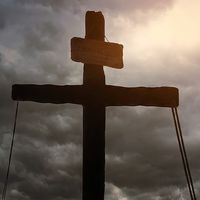
The cross is the center of the world's history; the incarnation of Christ and the crucifixion of our Lord are the pivot round which all the events of the ages revolve. The testimony of Christ was ...
Hebrews 13:8, Galatians 3:28, John 10:16, Matthew 28:19-20, Acts 1:8, Revelation 22:13
Christ was born in the first century, yet He belongs to all centuries. He was born a Jew, yet He belongs to all races. He was born in Bethlehem, yet He belongs to all countries.
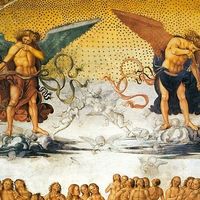
In 2000, the National Gallery in London put on a millennial exhibition entitled “Seeing Salvation.” That was a case in point—especially remembering that European countries tend to be far more “secular...
Matthew 5:48, 1 John 3:2-3, Galatians 5:16-17, Philippians 3:13-14, Colossians 3:1-2, Ephesians 4:22-24
The scholastics used to say: Homo non proprie humanus sed superhumanus est —which means that to be properly human, you must go beyond the merely human.
Romans 8:12-17, 1 Corinthians 6:, Galatians 5:18, Matthew 7:9-11
Preaching Commentary Context Matters If you have ever taken an introduction to exegesis course, you may remember one of the most important rules for properly understanding a given text: look at wha...
One of my favorite Bible illustrations of someone willing to go against the norms of society to befriend another based on love and forgiveness is found in the New Testament book of Philemon. It is a m...
Paul give us an excellent example of what looking at people from a worldly point of view looks like in Philippians chapter 3: If someone else thinks they have reasons to put confidence in the flesh, ...
Hebrews 13:20, Genesis 1:26-28, Genesis 1:26, Genesis 3:14-19, Genesis 3:14, Genesis 8:20-9, Genesis 9:5-6, Genesis 12:1-3, Galatians 3:16, John 8:56-58, 2 Corinthians 3:7-9, Deuteronomy 30:1-10, Deuteronomy 30:1, 2 Samuel 7:4-17, Luke 1:31-33, Acts 1:6, Revelation 19:16, Matthew 26:28, Mark 14:24, Luke 22:20, Hebrews 8:8-12, Galatians 3:13-20
Eternal covenant, Heb 13:20—The redemptive covenant before time began, between the Father and the Son. By this covenant we have eternal redemption, an eternal peace from the ‘God of peace’, through th...
“But when the fullness of time had come, God sent forth his Son, born of woman, born under the law, to redeem those who were under the law, so that we might receive adoption as sons. And because you a...
God could have chosen any method to save us, but he used the cross. The cross is our spiritual centerpiece, the sign of our soul’s emancipation. However, the pre-Christian cross might offer a sliver ...
Isaiah 60:1, Matthew 5:14-16, 1 Corinthians 12:12-14, Colossians 1:18, Ephesians 2:19-22, Galatians 6:2, 1 Peter 2:9
Leader: Arise! Shine! Christ’s Church has assembled. People: We are one body, with Christ as our head. Leader: What kind of body is this? People: The Body of Christ, brought together not by huma...
Matthew 14:13-21, Matthew 13:55, Matthew 14:2, Matthew 16:16, Matthew 17:1-13, Isaiah 55:1, John 6:1-15, Matthew 13:31, 2 Kings 4:42-44, Matthew 26:26, Matthew 8:null, Galatians 6:2
Context The feeding of the 5,000 in Matthew occurs within a section where questions of Jesus’ identity are heightened. Two incorrect answers of who Jesus truly is are given in 13:55 (“isn’t this the...
The cross, Martin Luther wrote, was the devil’s mousetrap. The devil smelled cheese, and wham, felt steel. Thus, we see a little baby lying defenseless in a crib at Bethlehem, and a tortured man hangi...
Matthew 1:1-6, Luke 5:31-32, Matthew 9:12-13, Matthew 5:3, Galatians 3:26-28
We find hope in the ancestry of Jesus that no matter what we’ve done or where we come from, we too can be included in Jesus’ family. Jesus does not look for people who are perfect and have never faile...
Lent 2024: Do This in Remembrance Remembrance and Gratitude AIM commentary Ancient lens What's the historical context? Ancient Boundaries The world of Jesus and of the early church sa...
What is the meaning of life? Why is it that we exist? Or to put it in the immortal words of Douglas Adams, “what is the meaning of life?” If you ask Google, which I did, various answers come up. Wiki...