Deuteronomy 6:20-23, Exodus 12:26-27, Joel 1:3, Psalm 78:4-7, Romans 5:12
Some stories, however, have been handed down to us. For some, we were not yet cognizant, and for others, we weren’t even born when experiences, memories, and stories affected our family and communitie...
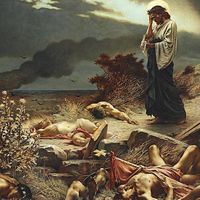
After the fall of our first parents, boundaries were something to push past, to transgress. It’s worth pausing to note how we use the word transgression for “sin.” With its Latin roots, “across” and ...
Exodus 16:4, 1 Samuel 1:27–28, Isaiah 55:1–2, Luke 17:15–16, Romans 5:8, Psalm 100:4
The words “gratitude” and “grace” come from the same root word, gratia in Latin and kharis in Greek, as mentioned earlier. In addition to being the name of a goddess, “grace” is a theological word, on...
Genesis 50:20, Exodus 4:10–12, 1 Samuel 17:, Matthew 18:1–4 , Romans 5:3–5, Psalm 139:14
A young boy was heard talking to himself as he wandered through his backyard, sporting a full baseball uniform, jersey and cap included, as well as a ball and bat. "I'm the best hitter in the...
Martin Luther said that every Christian ought to read the Bible from cover to cover every year. But, likening the Bible to a forest, he also said that reading the Bible doesn’t become really enjoyable...
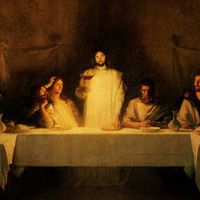
Loving God, we will betray you; yet you invite us to your table. We will deny you; yet you give us yourself in love. We will fail to pray with you; yet you pray for us. We will crucify you; yet ...
Pastor: When the day of Pentecost came, they were all together in one place. Suddenly a sound like the blowing of a violent wind came from heaven and filled the whole house where they were sitting. ...
1 Peter 2:2, 1 Thessalonians 3:12, Genesis 37:50, Exodus 3:11–12 , Isaiah 40:29–31 , John 15:1–5, Romans 5:3–5, Psalm 1:1–3, Luke 2:40, 52; 1
Christian character is not an act but a process, not a sudden creation but a development. It grows and bears fruit like a tree; it requires patient care and unwearied cultivation.
People: Oh God, whose name is great in all the earth, You have been good and gracious to give us Your name and for making Yourself known through your titles, qualities, regulations, word, and works. Y...
John 18:1-19:42, Exodus 4:13-15, Romans 5:null, Matthew 27:24, Psalm 22:15, Psalm 69:21, Matthew 25:21
Preaching Commentary The lectionary text from John is an exceedingly long passage, but covers the main events that we commemorate on Good Friday. For that reason, I am going to break up the text int...
2 Corinthians 12:9-10, Proverbs 24:16, James 1:12, Philippians 3:13-14, Psalm 103:13-14, Hebrews 4:15-16, Matthew 25:14-30, Luke 18:1-8, Exodus 16:, Mark 5:25-34, Romans 5:3-5
God knows our situation; He will not judge us as if we had no difficulties to overcome. What matters is the sincerity and perseverance of our will to overcome them.
Romans 5:18-19, Exodus 1:14, Luke 15:11-32, John 3:16-17, 1 Corinthians 15:22, Romans 3:23-24, Genesis 3:1-7
The first attempt at a response: there must have been a fall, a decline, and the road to salvation can only be the return of the sensible finite into the intelligible infinite.
It takes a profound conversion to accept that God is relentlessly tender and compassionate toward us just as we are—not in spite of our sins and faults (that would not be total acceptance), but with t...