In this short (and humorous) excerpt, author David Zahl shares a definition of the secular: Perhaps secular warrants its own explanation, though. My most immediate association comes from the belov...
In this excerpt, author David Zahl challenges the common belief that religion is “in decline.” He argues that while Westerners, particularly younger generations, may be distancing themselves from the ...
Identifying the idols of the city takes place in the untamed context of spiritual warfare. Those who are engaged in mapping the idolatry of the city know that this process is not simply a rational, co...
Identifying the idols of the city takes place in the untamed context of spiritual warfare. Those who are engaged in mapping the idolatry of the city know that this process is not simply a rational, co...
Colossians 3:5, Psalm 115:4-8, 1 John 5:21, Acts 17:22-23, Matthew 6:24, Romans 1:25, Isaiah 44:13-17
Martin Lindstrom observes: When people viewed images associated with the strong brands-the iPods, the Harley-Davidson, the Ferrari, and others-their -their brains registered the exact same patterns of...
Preaching Commentary Setting the Context: After the introductory tag from 2:14a this week’s text begins with “therefore” in 2:36 (Greek oun , which is the second word in verse 36 in the Greek text...
Across all barriers of land and language, wealth and poverty, knowledge and ignorance, we are one, created from the same dust, subject to the same laws, and destined for the same end. With this compas...
Luke 15:11-32 , Revelation 3:20 , Matthew 6:33, Acts 17:26-28 , Psalm 139:7-10 , Jeremiah 29:13, 1 Thessalonians 5:19-21
Almighty God, throughout our days you seek us, yet we dismiss your presence. You stand ready to reveal yourself to us, yet we are distracted by our self-interests. Forgive our selfishness. Holy Spirit...
John 1:14, Galatians 4:4-5, Micah 5:2, Matthew 2:1-2, Acts 17:26-27
The Christian faith can never be separated from the soil of sacred events, from the choice made by God, who wanted to speak to us, to become man, to die and rise again, in a particular place and at a ...
In the book of Hebrews (and elsewhere in the New Testament and theology, generally), the Greek and Jewish worlds collide. A funny parallel may be drawn between this and George's complete meltdown ...
Luke 16:10, Acts 17:26-27, Zechariah 4:10, Matthew 25:21, Colossians 3:23-24
One of the seductions that continues to bedevil Christian obedience is the construction of utopias, whether in fact or fantasy, ideal places where we can live the good and blessed and righteous life w...
Draw us close, Holy Spirit, as the Scriptures are read and the Word is proclaimed. Let the word of faith be on our lips and in our hearts, and let all other words slip away. May there be one voice we ...
Preaching Commentary Preaching Angle: The God Who Transforms As the Lectionary readings traverse from last week’s readings in Acts 7 (Stephen’s sermon and martyrdom) into this week’s reading of Pau...
Setting the Context: After the introductory tag from 2:14a this week’s text begins with “therefore” in 2:36 (Greek oun , which is the second word in verse 36 in the Greek text), making it especially...
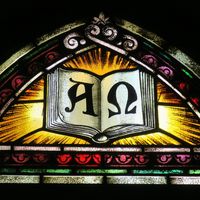
Come, Worship The Alpha and Omega The Beginning and the End The First and the Last Unmatched Majesty, drawing near closer than breath closer than pulse Meeting you here Meeting you now
Introduction There are two significant ways in which waiting is central to our passage today. First, there is the waiting to be reunited with the apostle Paul and the fledgling church in Thessalonica...
John 1:14, Psalm 139:7-10, Jeremiah 23:23-24, Matthew 28:20, Acts 17:27-28
The great pattern of life is the ecstasy and intimacy of God, who went out of the self to the extreme point, and so dwells among us in an intimacy we can hardly imagine.
What the early Christians did not have to deal with to the same extent that we do today is how race has become an idol. On both sides of the racial divide, so much is twisted by the social constructs ...
Preaching Angle: The God Who Transforms As the Lectionary readings traverse from last week’s readings in Acts 7 (Stephen’s sermon and martyrdom) into this week’s reading of Paul’s sermon at the Areop...
Almighty and Everlasting God, in whom we live and move and have our being, who has created us for yourself, so that our hearts are restless until they find rest in you, grant to us purity of heart and...
Within thy circling power I stand; On every side I find thy hand; Awake, asleep, at home, abroad, I am surrounded still with God. …O may these thoughts possess my breast, Where'er I rove...
Galatians 1:10, Jeremiah 29:7, Matthew 5:13-14, Colossians 2:8, John 17:15-16, Acts 17:22-23, Romans 12:2
To reach people we must appreciate and adapt to their culture, but we must also challenge and confront it. This is based on the biblical teaching that all cultures have God's grace and natural rev...
Holy God, we forget you are near. We forget that you are everywhere. We are so wrapped up in our own worlds that we cannot see beyond ourselves. God, you are so much greater! Lift up our head...
Acts 17:6, Revelation 5:9-10, Galatians 3:28, Romans 8:17, Matthew 5:3
The kingdom of God turns the Darwinist narrative of the survival of the fittest upside down (Acts 17:6–7). When the church honors and cares for the vulnerable among us, we are not showing charity. We ...
The world that we enter in the book of Acts is the most modern in all the Bible by virtue of its urban identity. Most of the action occurs in the famous cities of the Greco-Roman world, not in the loc...
Matthew 22:37-40, 2 Timothy 3:16-17, Hebrews 4:12, Psalm 119:105, Colossians 3:16, Matthew 4:4, Acts 17:11, John 5:39, 2 John 1:9, 1 Timothy 4:16
The Catholic Christians (Early Church) will neither speak nor endure to hear anything in religion that is a stranger to Scripture; it being an evil heart of immodesty to speak those things which are n...
Psalm 119:105, 2 Timothy 3:16-17, Nehemiah 8:8, Acts 17:10-15, Galatians 5:1, Hebrews 4:12, Isaiah 55:10-11, John 15:15, 1 John 2:27
The Bible ceased to be a foreign book in a foreign tongue, and became naturalized, and hence far more clear and dear to the common people. Hereafter the Reformation depended no longer on the works of ...